Max Planck Institute for Plant Breeding Research, Cologne, Germany.
Botanical Institute, University of Cologne, Cologne, Germany.
Mol Ecol. 2019 Mar;28(5):1183-1201. doi: 10.1111/mec.15034. Epub 2019 Mar 15.
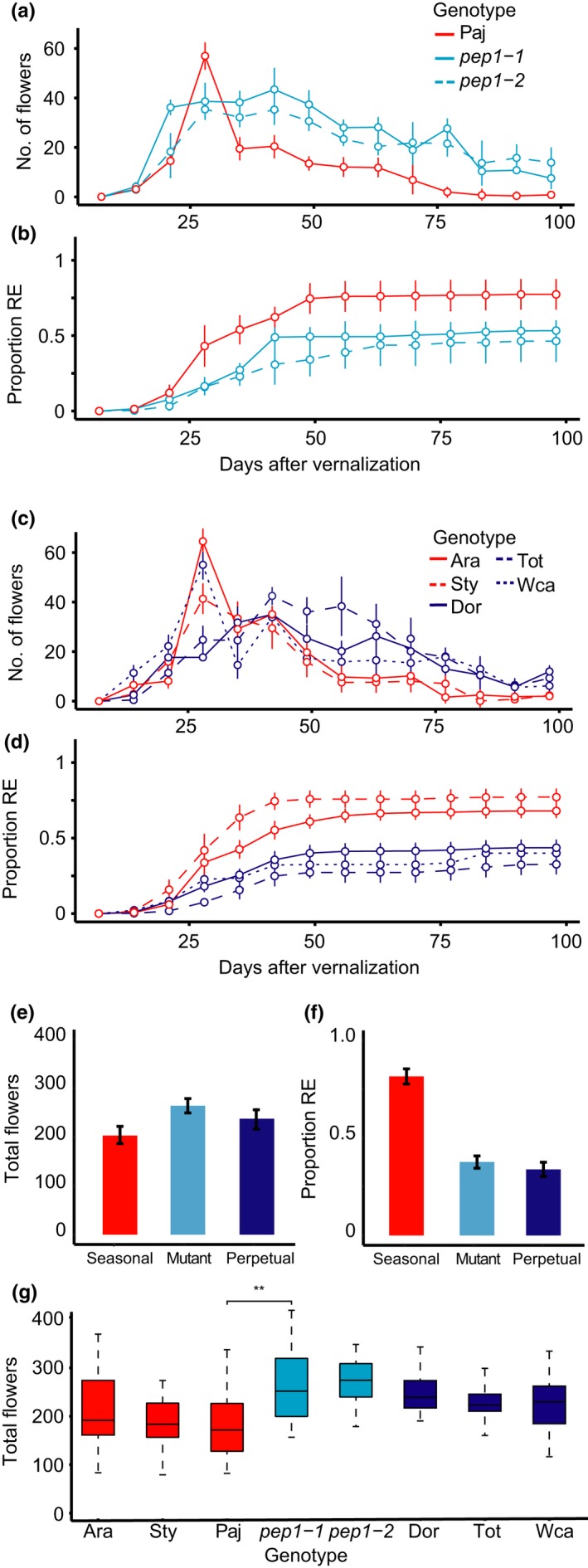
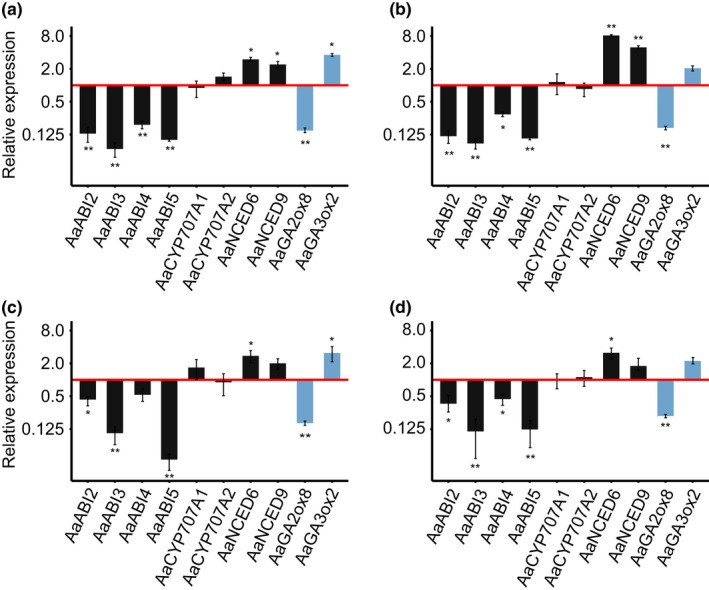
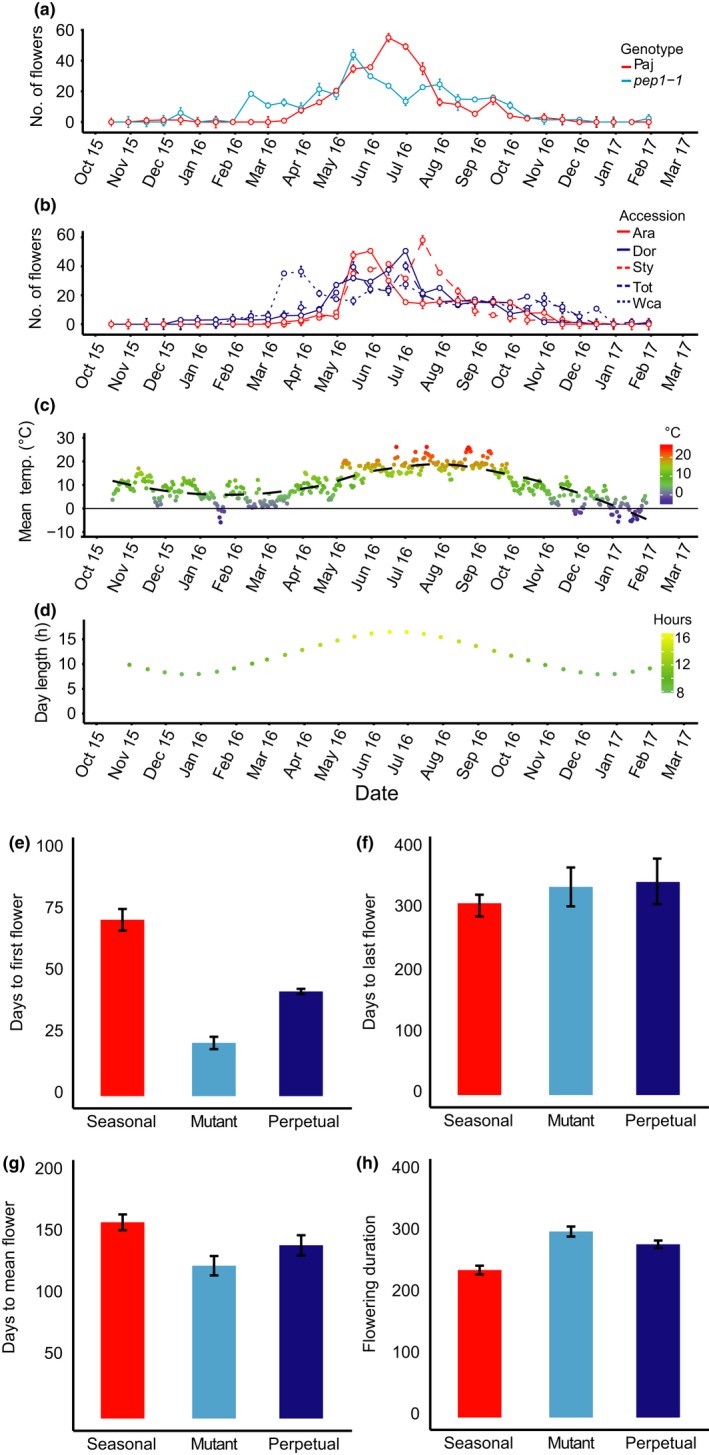
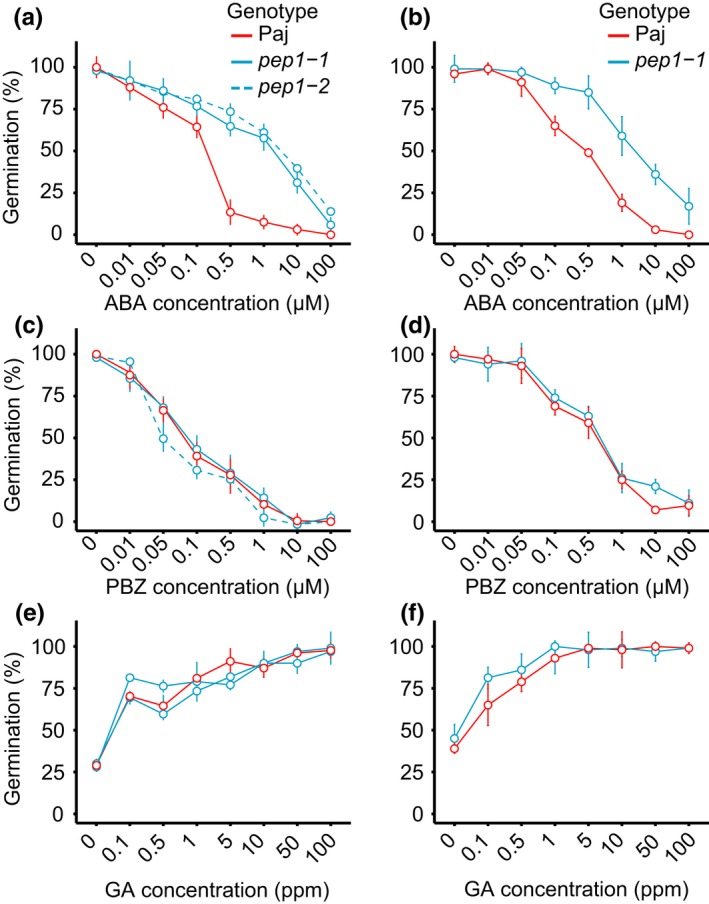
The life cycles of plants are characterized by two major life history transitions-germination and the initiation of flowering-the timing of which are important determinants of fitness. Unlike annuals, which make the transition from the vegetative to reproductive phase only once, perennials iterate reproduction in successive years. The floral repressor PERPETUAL FLOWERING 1 (PEP1), an ortholog of FLOWERING LOCUS C, in the alpine perennial Arabis alpina ensures the continuation of vegetative growth after flowering and thereby restricts the duration of the flowering episode. We performed greenhouse and garden experiments to compare flowering phenology, fecundity and seed traits between A. alpina accessions that have a functional PEP1 allele and flower seasonally and pep1 mutants and accessions that carry lesions in PEP1 and flower perpetually. In the garden, perpetual genotypes flower asynchronously and show higher winter mortality than seasonal ones. PEP1 also pleiotropically regulates seed dormancy and longevity in a way that is functionally divergent from FLC. Seeds from perpetual genotypes have shallow dormancy and reduced longevity regardless of whether they after-ripened in plants grown in the greenhouse or in the experimental garden. These results suggest that perpetual genotypes have higher mortality during winter but compensate by showing higher seedling establishment. Differences in seed traits between seasonal and perpetual genotypes are also coupled with differences in hormone sensitivity and expression of genes involved in hormonal pathways. Our study highlights the existence of pleiotropic regulation of seed traits by hub developmental regulators such as PEP1, suggesting that seed and flowering traits in perennial plants might be optimized in a coordinated fashion.
植物的生命周期以两个主要的生活史转折为特征——萌发和开花的开始——其时间是适应度的重要决定因素。与一年生植物不同,一年生植物仅在一个生命周期中从营养生长阶段过渡到生殖阶段,多年生植物则在连续的年份中重复生殖。高山多年生植物拟南芥中的花抑制因子 PERPETUAL FLOWERING 1(PEP1),是 FLOWERING LOCUS C 的同源物,它确保了开花后营养生长的继续,从而限制了开花期的持续时间。我们进行了温室和花园实验,比较了具有功能 PEP1 等位基因的拟南芥品种(表现出季节性开花)和 pep1 突变体及携带 PEP1 突变的品种的开花物候学、繁殖力和种子特性,这些品种表现出永久性开花。在花园中,永久性品种表现出异步开花,并比季节性品种表现出更高的冬季死亡率。PEP1 还以一种与 FLC 功能不同的方式多效调节种子休眠和寿命。无论在温室还是实验花园中生长的植物中后熟,永久性品种的种子休眠浅,寿命短。这些结果表明,永久性品种在冬季死亡率较高,但通过表现出更高的幼苗定植率来弥补。季节性和永久性品种之间的种子特性差异也与激素敏感性和激素途径相关基因的表达差异相关。我们的研究强调了发育调节因子(如 PEP1)对种子特性的多效调节的存在,表明多年生植物的种子和开花特性可能以协调的方式得到优化。