Senda Joe, Adachi Takeshi, Tago Mayumi, Mori Masaya, Imai Hajime, Ogawa Yasuhiro, Kawaguchi Katsuhiro
Department of Neurology and Rehabilitation, Komaki City Hospital, Japan.
Department of Cardiology, Komaki City Hospital, Japan.
Intern Med. 2019 Jun 1;58(11):1639-1642. doi: 10.2169/internalmedicine.2098-18. Epub 2019 Feb 1.
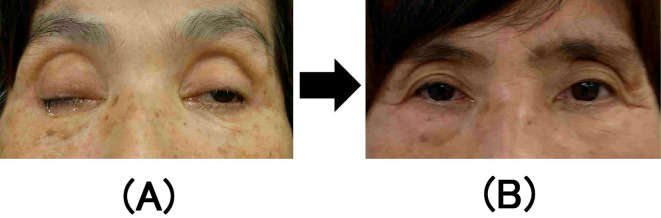
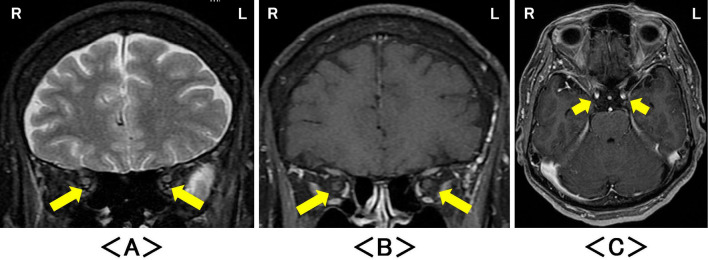
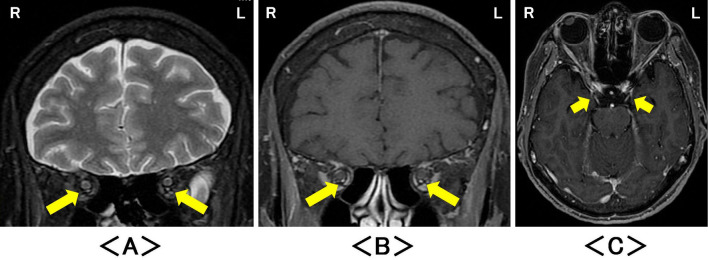
A 69-year-old woman was admitted to our hospital with a fever, dizziness, and headache caused by Neisseria meningitidis. After ceftriaxone was administered, she suddenly developed bilateral oculomotor nerve palsy. Intra-orbital magnetic resonance imaging using appropriate sequences revealed that her bilateral third intracranial nerves were enlarged and enhanced. She achieved complete recovery by two months after additional short-term treatment with intravenous immunoglobulin and methylprednisolone. Although intracranial nerve disorders that result from bacterial meningitis are most frequently reported in children, it is noteworthy that it can also cause focal intracranial nerve inflammation with ophthalmoparesis in N. meningitidis infection in adults.
一名69岁女性因脑膜炎奈瑟菌感染出现发热、头晕和头痛症状而入住我院。使用头孢曲松治疗后,她突然出现双侧动眼神经麻痹。采用适当序列进行的眶内磁共振成像显示其双侧颅内第三神经增粗并强化。在接受静脉注射免疫球蛋白和甲泼尼龙的额外短期治疗两个月后,她完全康复。虽然细菌性脑膜炎导致的颅内神经障碍在儿童中报道最为常见,但值得注意的是,在成人脑膜炎奈瑟菌感染中,它也可引起伴有眼肌麻痹的局灶性颅内神经炎症。