Alharris Esraah, Singh Narendra P, Nagarkatti Prakash S, Nagarkatti Mitzi
Department of Pathology, Microbiology and Immunology, University of South Carolina School of Medicine, Columbia, SC 29209, USA.
Oncotarget. 2019 Jan 1;10(1):45-59. doi: 10.18632/oncotarget.26534.
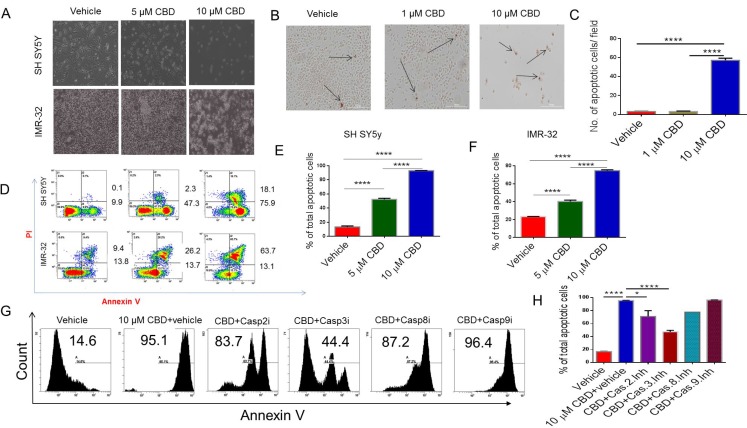
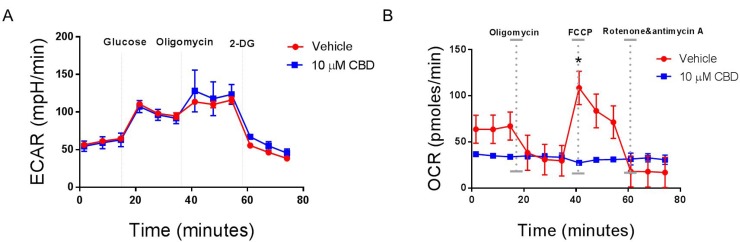
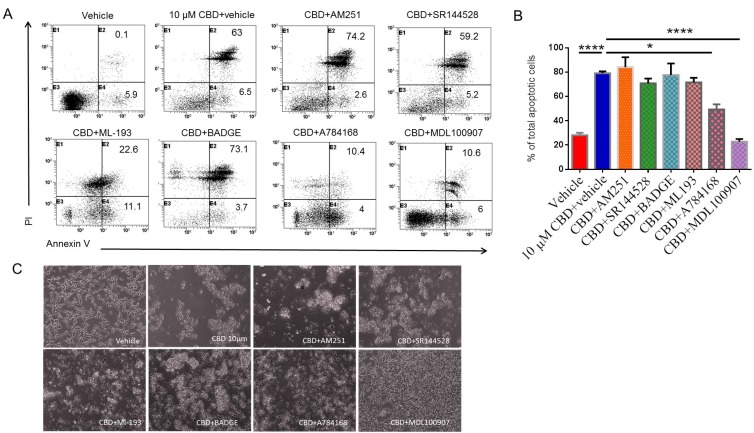
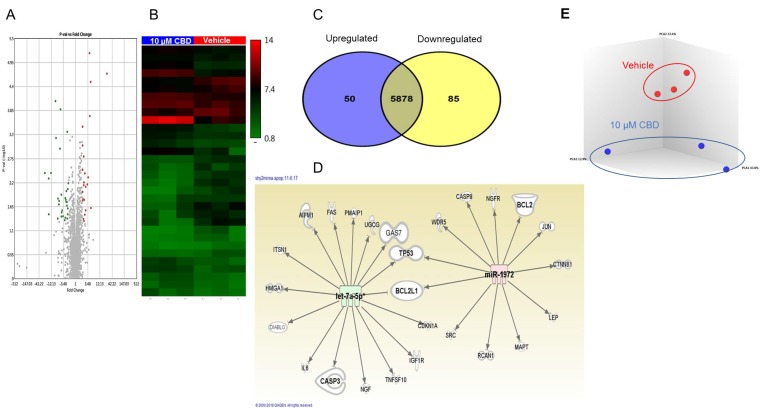
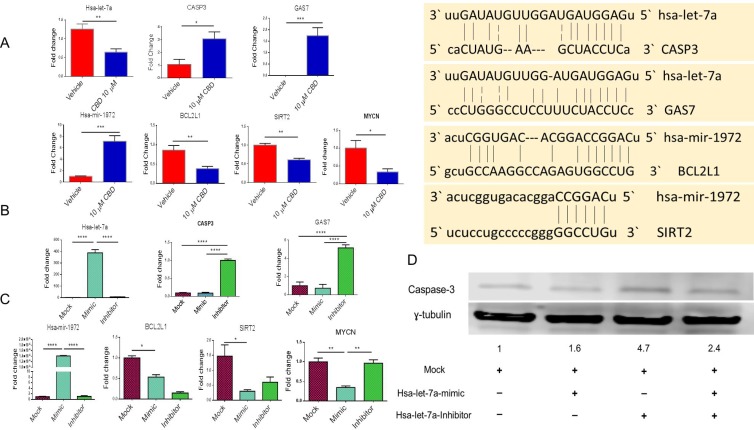
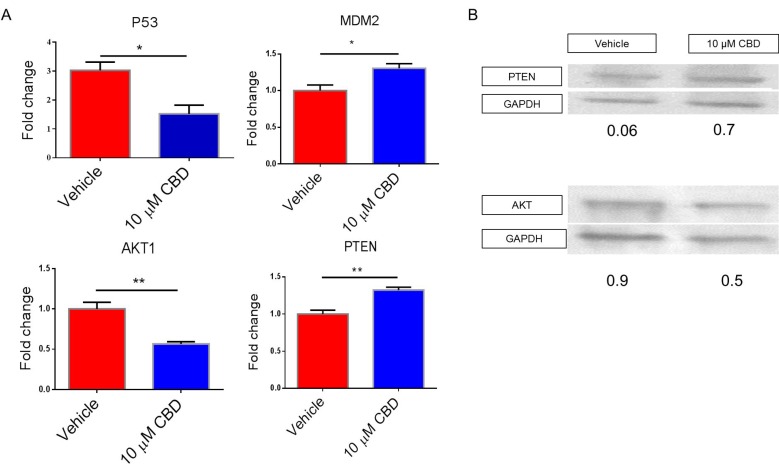
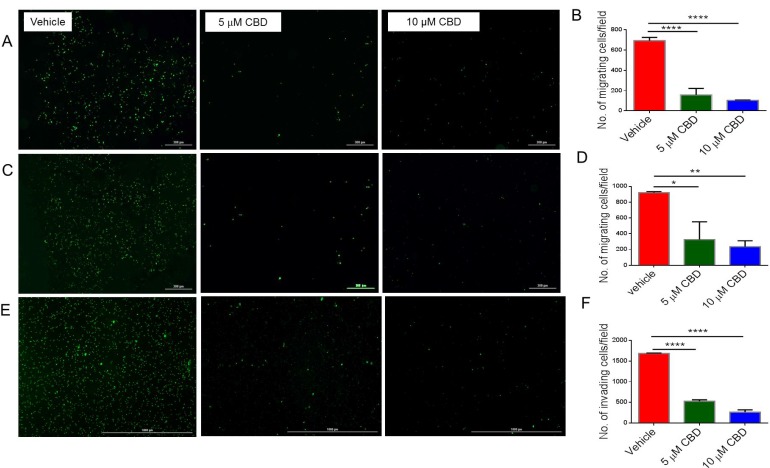
Neuroblastoma (NBL) is one of the most common childhood cancers that originate from the immature nerve cells of the sympathetic system. Studies with NBL cancers have also shown that miRNAs are dysregulated and may play a critical role in pathogenesis. Cannabidiol (CBD) is a non-psychoactive compound found in marijuana which has been previously shown by our laboratory and others to induce apoptosis in cancer cells. However, there are no studies reported to test if CBD mediates these effects through regulation of miRNA. In the current study, therefore, we investigated if CBD induces apoptosis in human NBL cell lines, SH SY5Y and IMR-32, and if it is regulated by miRNA. Our data demonstrated that CBD induces apoptosis in NBL cells through activation of serotonin and vanilloid receptors. We also found that caspase-2 and -3 played an important role in the induction of apoptosis. CBD also significantly reduced NBL cell migration and invasion . Furthermore, CBD blocked mitochondrial respiration and caused a shift in metabolism towards glycolysis. CBD altered the expression of miRNA specifically, down-regulating hsa-let-7a and upregulating hsa-mir-1972. Downregulation of let-7a increased expression of target caspase-3, and growth arrest specific-7 (GAS-7) genes. Upregulation of hsa-mir-1972 caused decreased expression of BCL2L1 and SIRT2 genes. Together, our studies suggest that CBD-mediated apoptosis in NBL cells is regulated by miRNA.
神经母细胞瘤(NBL)是起源于交感神经系统未成熟神经细胞的最常见儿童癌症之一。对NBL癌症的研究还表明,微小RNA(miRNA)失调,可能在发病机制中起关键作用。大麻二酚(CBD)是大麻中发现的一种无精神活性的化合物,我们实验室和其他研究先前已表明它能诱导癌细胞凋亡。然而,尚无研究报道测试CBD是否通过调控miRNA介导这些效应。因此,在本研究中,我们调查了CBD是否诱导人NBL细胞系SH SY5Y和IMR - 32凋亡,以及它是否受miRNA调控。我们的数据表明,CBD通过激活5-羟色胺和香草酸受体诱导NBL细胞凋亡。我们还发现,半胱天冬酶-2和-3在凋亡诱导中起重要作用。CBD还显著降低了NBL细胞的迁移和侵袭能力。此外,CBD阻断线粒体呼吸并导致代谢向糖酵解转变。CBD特异性地改变了miRNA的表达,下调了hsa-let-7a并上调了hsa-mir-1972。let-7a的下调增加了靶标半胱天冬酶-3和生长停滞特异性-7(GAS-7)基因的表达。hsa-mir-1972的上调导致BCL2L1和SIRT2基因的表达降低。总之,我们的研究表明,NBL细胞中CBD介导的凋亡受miRNA调控。