Dou Xiangnan, Zhang Qiang, Shah Syed Niaz Ali, Khan Mashooq, Uchiyama Katsumi, Lin Jin-Ming
Beijing Key Laboratory of Microanalytical Methods and Instrumentation , MOE Key Laboratory of Bioorganic Phosphorus Chemistry & Chemical Biology , Department of Chemistry , Tsinghua University , Beijing , 100084 , China . Email:
Department of Applied Chemistry , Graduate School of Urban Environmental Sciences , Tokyo Metropolitan University , Minamiohsawa, Hachioji , Tokyo 192-0397 , Japan.
Chem Sci. 2018 Oct 15;10(2):497-500. doi: 10.1039/c8sc03511c. eCollection 2019 Jan 14.
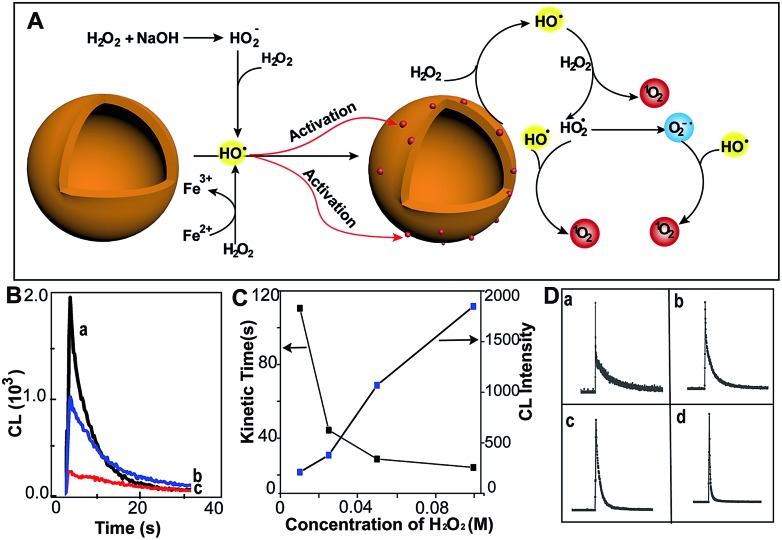
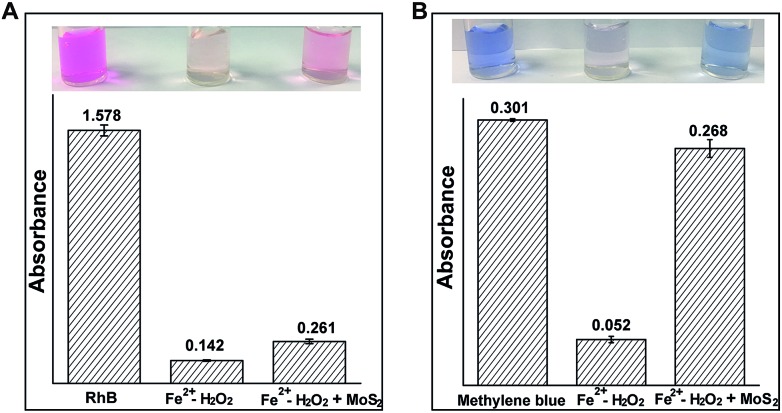
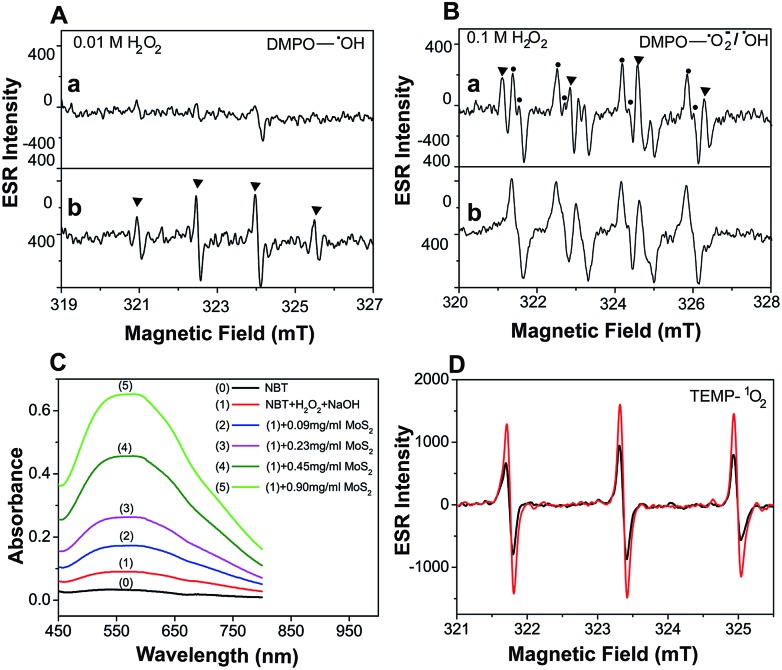
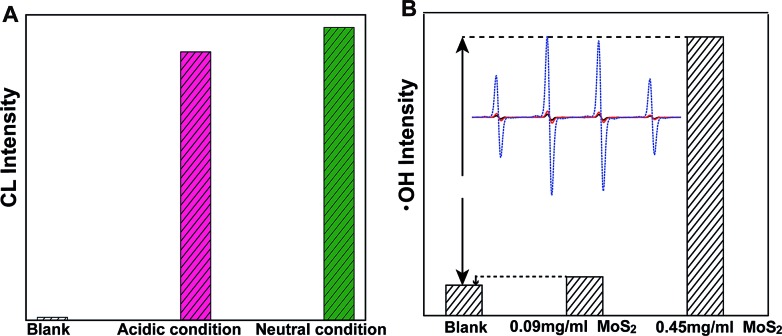
Reactive oxygen species (ROS) generation is of intense interest because of its crucial role in many fields. Here we demonstrate that MoS-QDs exhibit a promising capability for the generation of reactive oxygen species, which leads to enhanced chemiluminescence. We discovered that the unique performance is due to hydroxyl radical activation increasing the active catalytic sites on molybdenum sulphide quantum dots (MoS-QDs). The reactive oxygen species, such as hydroxyl radicals (˙OH), superoxide radicals (˙O ) and singlet oxygen (O) have been efficiently generated from HO solution in alkaline conditions. In particular, the maximum ˙OH yield was enhanced significantly (9.18 times) compared to the Fe(ii)/HO Fenton system under neutral conditions. These findings not only enrich our understanding of the fascinating performance of MoS QDs, but also provide a new pathway for ROS generation in all kinds of pH environment.
由于活性氧(ROS)在许多领域的关键作用,其生成备受关注。在此我们证明,硫化钼量子点(MoS-QDs)展现出产生活性氧的良好能力,这导致化学发光增强。我们发现这种独特性能归因于羟基自由基活化增加了硫化钼量子点(MoS-QDs)上的活性催化位点。在碱性条件下,已从过氧化氢溶液中高效生成了诸如羟基自由基(˙OH)、超氧自由基(˙O₂)和单线态氧(¹O₂)等活性氧。特别是,与中性条件下的Fe(ii)/H₂O₂芬顿体系相比,最大˙OH产率显著提高(9.18倍)。这些发现不仅丰富了我们对MoS量子点迷人性能的理解,还为在各种pH环境中产生活性氧提供了一条新途径。