Giraldo Juan C, Acosta Claudia, Giraldo-Grueso Manuel
Cardiothoracic Anesthesia Department, Fundación Cardioinfantil-Instituto de Cardiología, Bogotá, Colombia.
Universidad del Rosario, Bogotá, Colombia.
Med Gas Res. 2019 Jan 9;8(4):150-153. doi: 10.4103/2045-9912.248265. eCollection 2018 Oct-Dec.
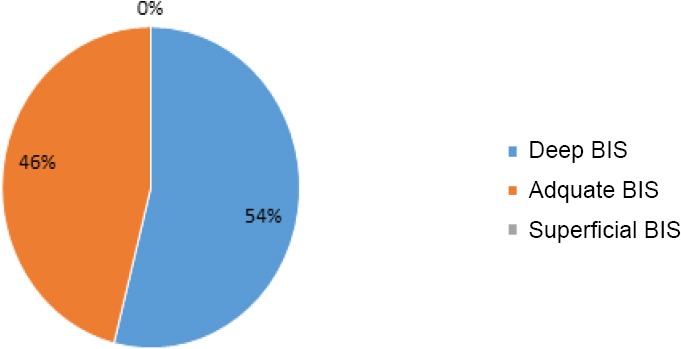
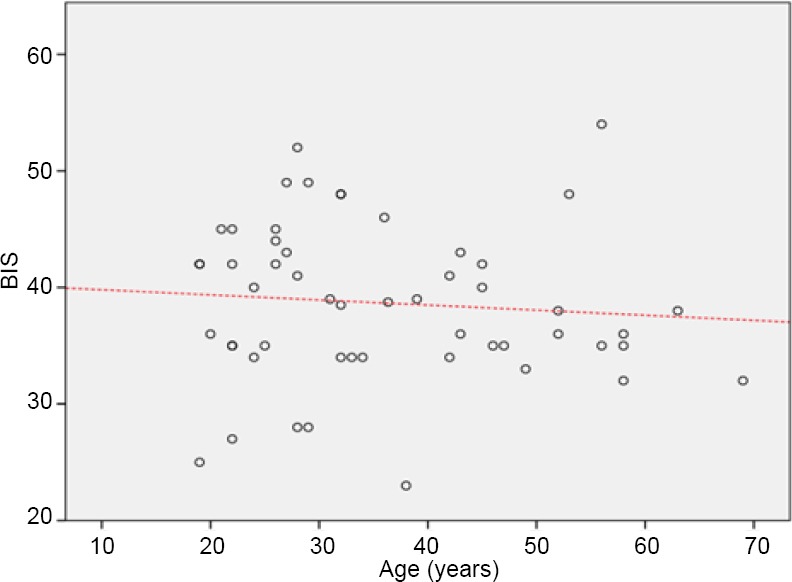
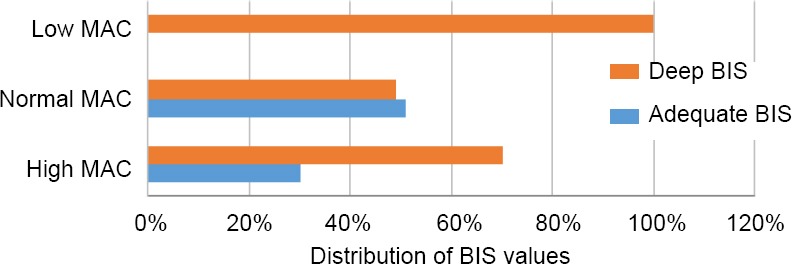
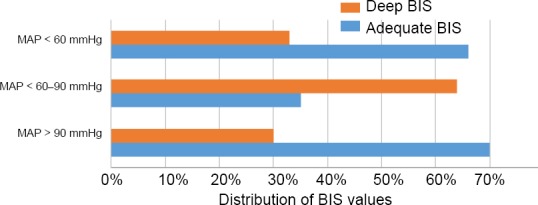
This study reported the frequency of anesthetic overdose measured with the bispectral index in a high altitude city (Bogotá-Colombia, 2600 meters above sea level). We assembled a prospective cohort of patients. Preoperative variables were described, and 10 minutes after the surgical incision, bispectral index, mean alveolar concentration, mean arterial pressure, and oxygen saturation were recorded. Bispectral index was classified as superficial (60), adequate (40-60), and deep (> 40). Mean alveolar concentration was classified as low (< 0.8), normal (0.8-1.2), and high (> 1.2). We included 50 patients. The mean age of the patients was 36.3 ± 13.5 years; 48% were male and 78% were categorized as ASA I. Mean values of mean alveolar concentration and bispectral index were 1.14 ± 0.18 and 38.66 ± 6.9, respectively. Frequency of anesthetic overdose measured with bispectral index was 54% and only 20% with mean alveolar concentration. In total, 78% of patients received normal mean alveolar concentration values, and among these patients, 49% had deep bispectral index levels and 51% were adequate. There was no correlation between mean alveolar concentration and bispectral index (Pearson = 0.161, = 0.246) or between bispectral index and mean arterial pressure (Pearson = 0.367, = 0.08). All patients older than 60 years exhibited deep bispectral index levels, and although we did not identify a correlation between age and bispectral index, a tendency was observed (Pearson = -0.087, = 0.538). Safe and effective anesthesia overdose could be a common phenomenon. Bispectral index-guided anesthesia could be a helpful and reliable tool in the assessment and prevention of anesthesia overdose at high altitude. The study was approved by the ethics committee of the Fundación Cardioinfantil-Instituto de cardiología, Bogota, Colombia (approved number: 312017).
本研究报告了在一个高海拔城市(哥伦比亚波哥大,海拔2600米)使用脑电双频指数测量麻醉过量的频率。我们组建了一个患者前瞻性队列。描述了术前变量,并在手术切口10分钟后,记录脑电双频指数、平均肺泡浓度、平均动脉压和血氧饱和度。脑电双频指数分为浅麻醉(60)、适当麻醉(40 - 60)和深麻醉(> 40)。平均肺泡浓度分为低(< 0.8)、正常(0.8 - 1.2)和高(> 1.2)。我们纳入了50例患者。患者的平均年龄为36.3 ± 13.5岁;48%为男性,78%被归类为美国麻醉医师协会(ASA)I级。平均肺泡浓度和脑电双频指数的平均值分别为1.14 ± 0.18和38.66 ± 6.9。用脑电双频指数测量的麻醉过量频率为54%,而用平均肺泡浓度测量时仅为20%。总共有78%的患者平均肺泡浓度值正常,在这些患者中,49%的患者脑电双频指数处于深麻醉水平,51%的患者处于适当麻醉水平。平均肺泡浓度与脑电双频指数之间无相关性(皮尔逊相关系数 = 0.161,P = 0.246),脑电双频指数与平均动脉压之间也无相关性(皮尔逊相关系数 = 0.367,P = 0.08)。所有60岁以上的患者脑电双频指数均处于深麻醉水平,尽管我们未发现年龄与脑电双频指数之间存在相关性,但观察到一种趋势(皮尔逊相关系数 = -0.087,P = 0.538)。安全有效的麻醉过量可能是一种常见现象。脑电双频指数引导的麻醉可能是评估和预防高海拔地区麻醉过量的一种有用且可靠的工具。该研究得到了哥伦比亚波哥大卡迪奥因凡蒂尔基金会 - 心脏病学研究所伦理委员会的批准(批准号:312017)。