Jochems Caroline, Tritsch Sarah R, Knudson Karin M, Gameiro Sofia R, Smalley Rumfield Claire, Pellom Samuel T, Morillon Y Maurice, Newman Robby, Marcus Warren, Szeto Christopher, Rabizadeh Shahrooz, Wong Hing C, Soon-Shiong Patrick, Schlom Jeffrey
Laboratory of Tumor Immunology and Biology, Center for Cancer Research, National Cancer Institute, National Institutes of Health, Bethesda, MD, USA.
NantWorks, LLC, Culver City, CA, USA.
Oncoimmunology. 2018 Nov 27;8(2):e1532764. doi: 10.1080/2162402X.2018.1532764. eCollection 2019.
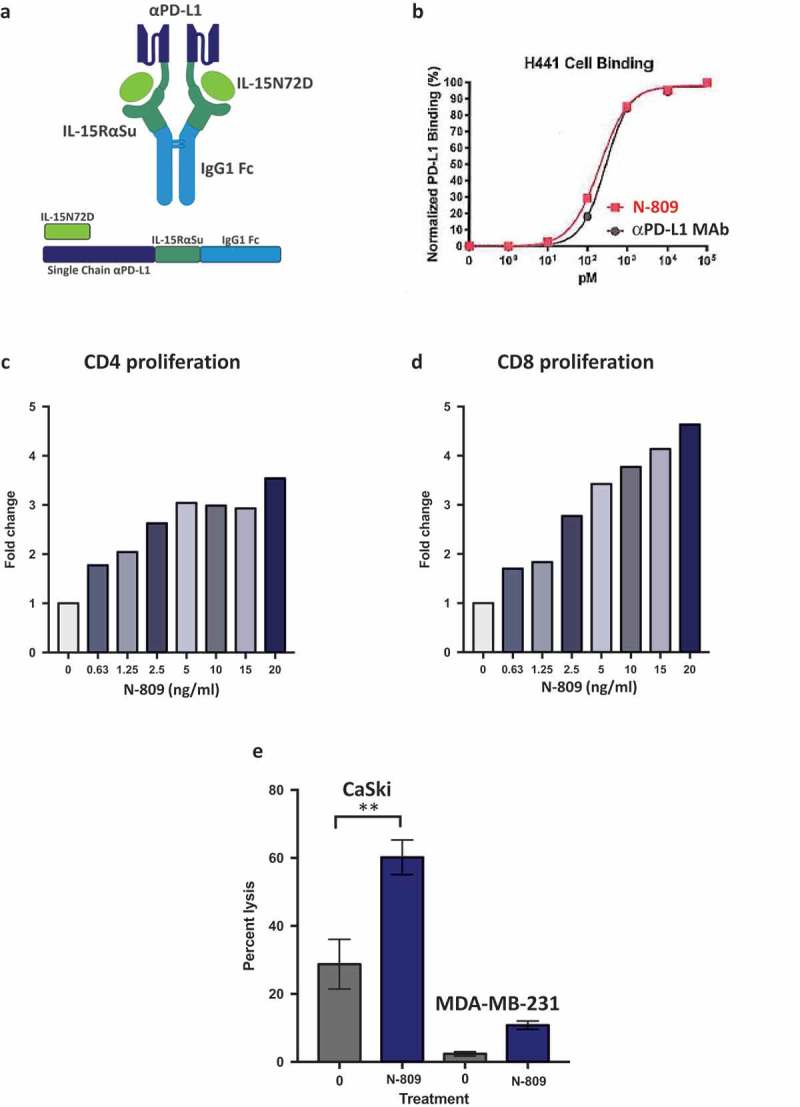
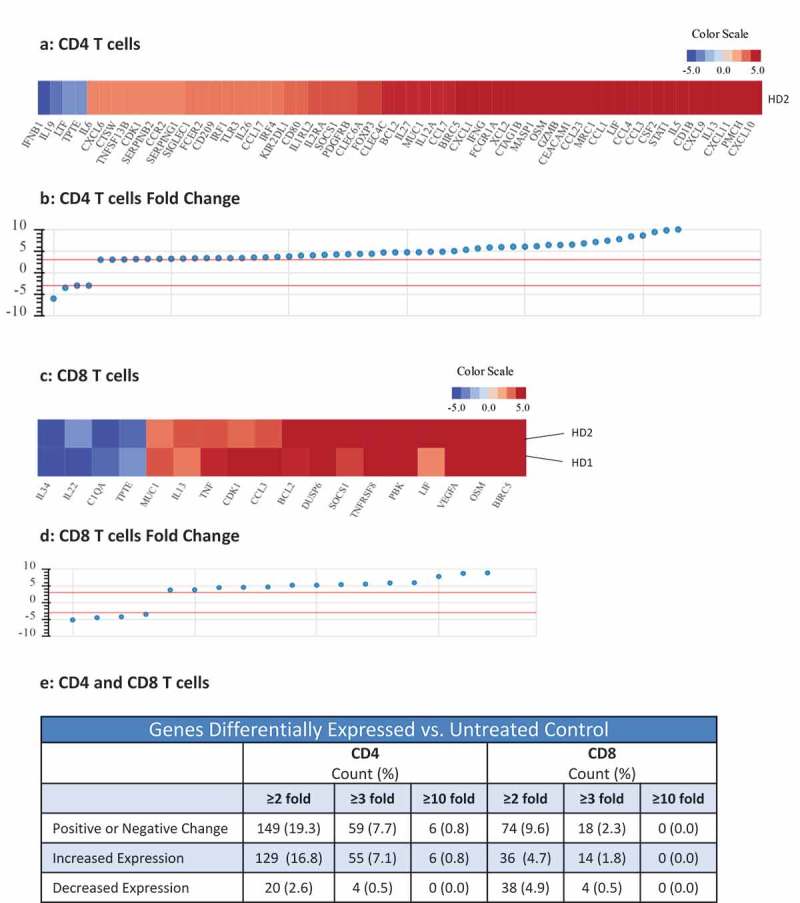
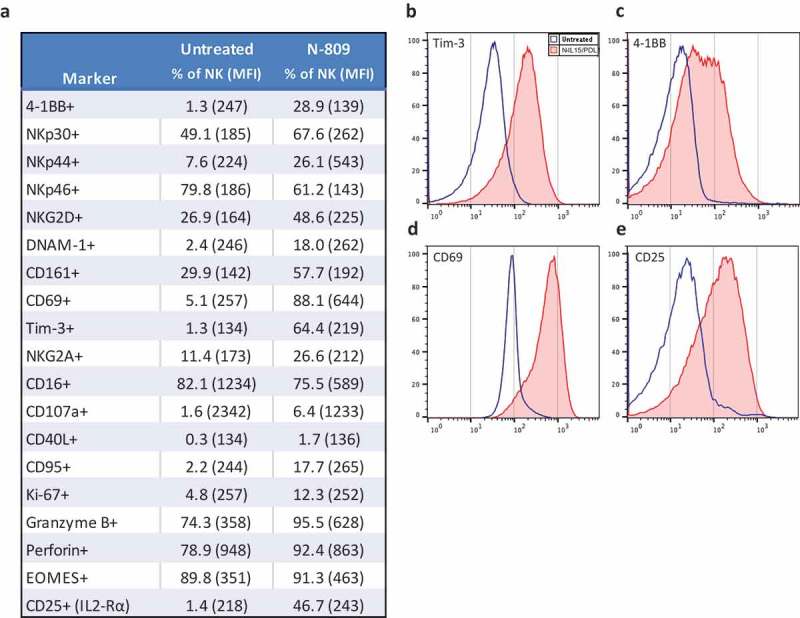
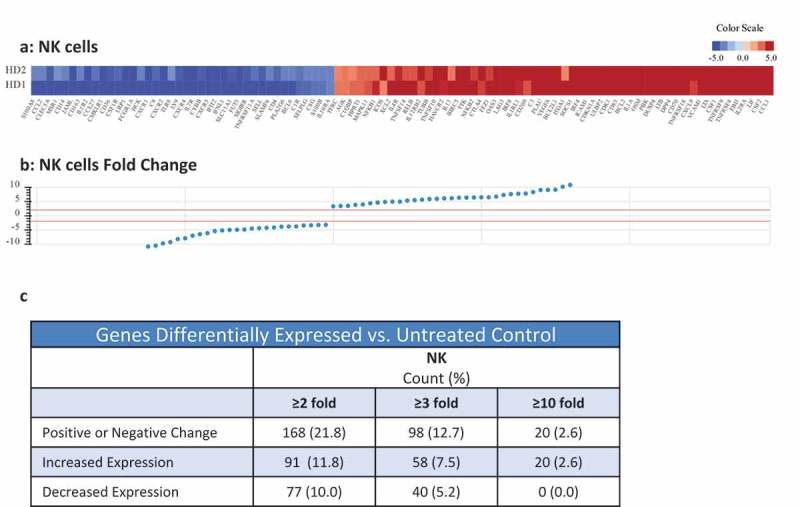
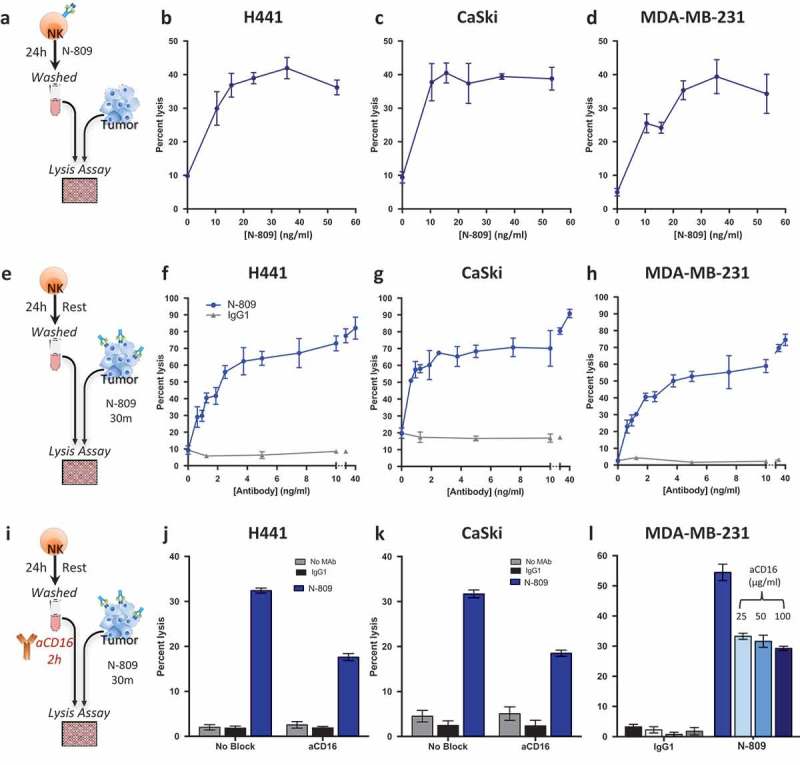
Here we describe a novel bifunctional fusion protein, designated N-809. This molecule comprises the IL-15/IL15Rα superagonist complex containing the Fc-domain of IgG1 (N-803, formerly designated as ALT-803) fused to two single chain anti-PD-L1 domains. The fully human IgG1 portion of the N-809 molecule was designed to potentially mediate antibody dependent cellular cytotoxicity (ADCC). The studies reported here show that N-809 has the same ability to bind PD-L1 as an anti-PD-L1 monoclonal antibody. RNAseq studies show the ability of N-809 to alter the expression of an array of genes of both CD4 and CD8 human T cells, and to enhance their proliferation; CD8 T cells exposed to N-809 also have enhanced ability to lyse human tumor cells. An array of genes was differentially expressed in human natural killer (NK) cells following N-809 treatment, and there was increased expression of several surface activating receptors; there was, however, no increase in the expression of inhibitory receptors known to be upregulated in exhausted NK cells. N-809 also increased the cytotoxic potential of NK cells, as shown by increased expression of granzyme B and perforin. The lysis of several tumor cell types was increased when either NK cells or tumor cells were exposed to N-809. Similarly, the highest level of ADCC was seen when both NK cells (from donors or cancer patients) and tumor cells were exposed to N-809. These studies thus demonstrate the multi-functionality of this novel agent.
在此,我们描述了一种新型双功能融合蛋白,命名为N - 809。该分子包含IL - 15/IL15Rα超级激动剂复合物,其中含有IgG1的Fc结构域(N - 803,原命名为ALT - 803),并与两个单链抗PD - L1结构域融合。N - 809分子的全人源IgG1部分旨在潜在地介导抗体依赖性细胞毒性(ADCC)。本文报道的研究表明,N - 809与抗PD - L1单克隆抗体具有相同的结合PD - L1的能力。RNA测序研究表明,N - 809能够改变人类CD4和CD8 T细胞一系列基因的表达,并增强它们的增殖;暴露于N - 809的CD8 T细胞裂解人类肿瘤细胞的能力也有所增强。N - 809处理后,人类自然杀伤(NK)细胞中一系列基因差异表达,几种表面激活受体的表达增加;然而,已知在耗竭的NK细胞中上调的抑制性受体的表达没有增加。N - 809还增加了NK细胞的细胞毒性潜力,如颗粒酶B和穿孔素表达增加所示。当NK细胞或肿瘤细胞暴露于N - 809时,几种肿瘤细胞类型的裂解增加。同样,当NK细胞(来自供体或癌症患者)和肿瘤细胞都暴露于N - 809时,观察到最高水平的ADCC。因此,这些研究证明了这种新型药物的多功能性。