State Key Laboratory of Molecular Biology, Shanghai Key Laboratory of Molecular Andrology, CAS Center for Excellence in Molecular Cell Science, Institute of Biochemistry and Cell Biology, Chinese Academy of Sciences; University of Chinese Academy of Sciences, Shanghai, China.
Institute of Translational Medicine, School of Medicine, Yangzhou University, Yangzhou, China.
Nucleic Acids Res. 2019 Apr 8;47(6):e33. doi: 10.1093/nar/gkz049.
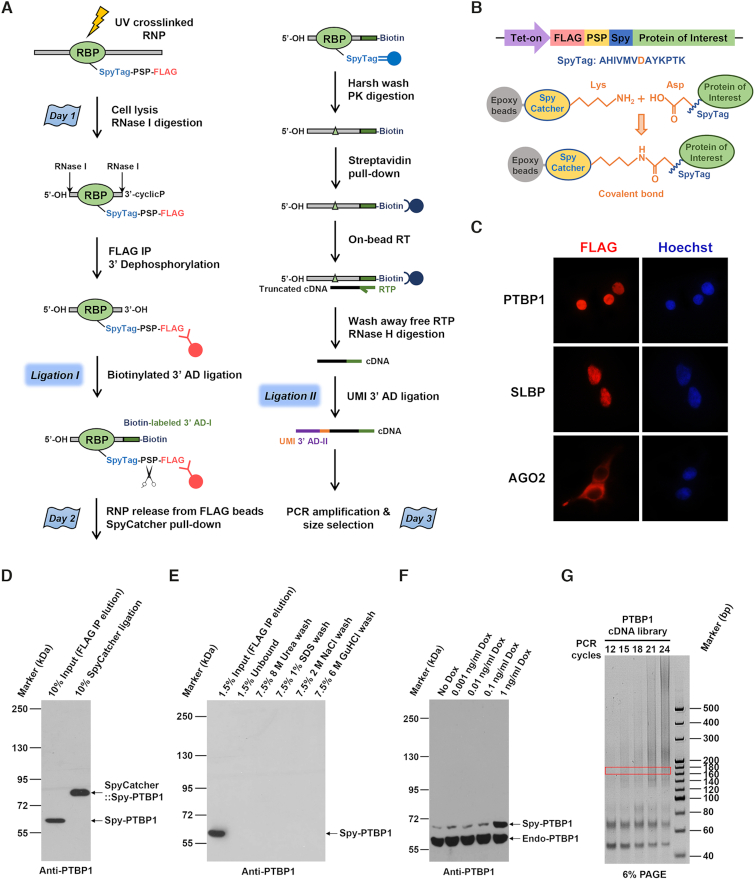
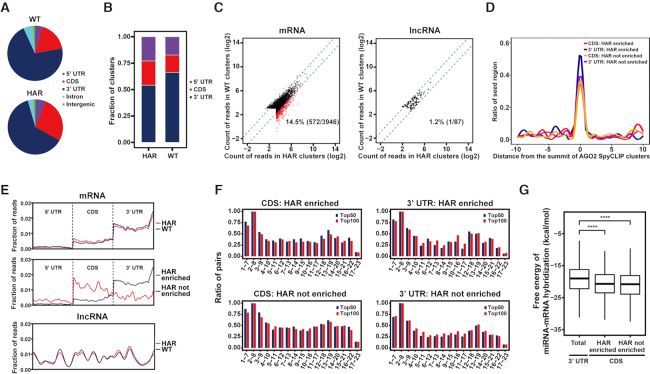
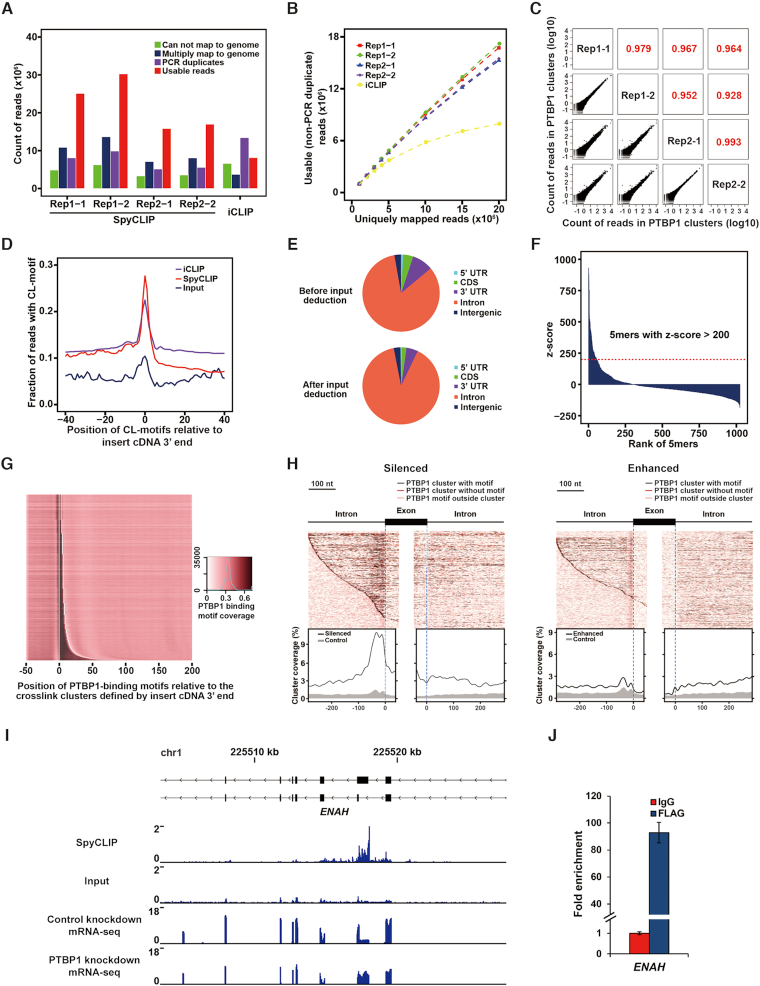
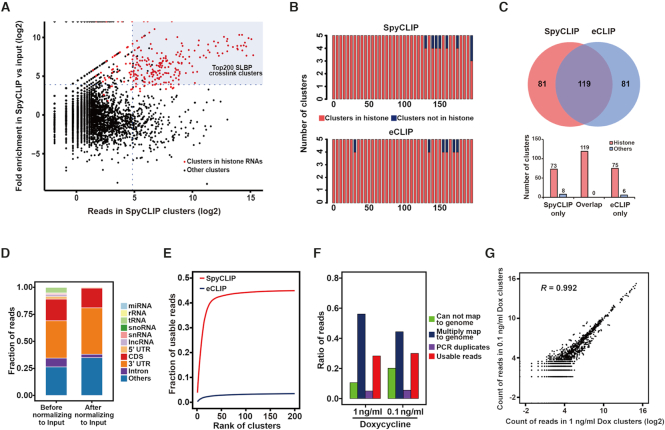
UV crosslinking and immunoprecipitation (CLIP) coupled with high-throughput sequencing is the most state-of-the-art technology to characterize protein-RNA interactions, yet only a small portion of RNA-binding proteins (RBPs) have been studied by CLIP due to its complex procedures and high level of false-positive signals. Herein, we report a SpyCLIP method that employs a covalent linkage formed between the RBP-fused SpyTag and SpyCatcher, which can withstand the harshest washing conditions for removing nonspecific interactions. Moreover, SpyCLIP circumvents the radioactive labeling and PAGE-membrane purification steps, and the whole procedure can be performed on beads and is readily amenable to automation. We investigated multiple RBPs by SpyCLIP and generated high-quality RNA binding maps with significantly improved reproductivity and accuracy. Therefore, the small tag size and convenient protocol of SpyCLIP provides a robust method for both routine characterization and high-throughput studies of protein-RNA interactions.
UV 交联和免疫沉淀(CLIP)与高通量测序相结合是最先进的技术,用于描述蛋白质-RNA 相互作用,但由于其复杂的程序和高水平的假阳性信号,只有一小部分 RNA 结合蛋白(RBPs)通过 CLIP 进行了研究。在这里,我们报告了一种 SpyCLIP 方法,该方法利用融合了 SpyTag 和 SpyCatcher 的 RBP 之间形成的共价键,该键可以承受最苛刻的洗涤条件,以去除非特异性相互作用。此外,SpyCLIP 避免了放射性标记和 PAGE 膜纯化步骤,整个过程可以在珠子上进行,并且易于自动化。我们通过 SpyCLIP 研究了多种 RBPs,并生成了具有显著提高的可重复性和准确性的高质量 RNA 结合图谱。因此,SpyCLIP 的小标签尺寸和方便的方案为蛋白质-RNA 相互作用的常规表征和高通量研究提供了一种强大的方法。