Haberman Nejc, Huppertz Ina, Attig Jan, König Julian, Wang Zhen, Hauer Christian, Hentze Matthias W, Kulozik Andreas E, Le Hir Hervé, Curk Tomaž, Sibley Christopher R, Zarnack Kathi, Ule Jernej
Department of Molecular Neuroscience, UCL Institute of Neurology, Queen Square, London, WC1N 3BG, UK.
The Crick Institute, 1 Midland Road, London, NW1 1AT, UK.
Genome Biol. 2017 Jan 16;18(1):7. doi: 10.1186/s13059-016-1130-x.
Ultraviolet (UV) crosslinking and immunoprecipitation (CLIP) identifies the sites on RNAs that are in direct contact with RNA-binding proteins (RBPs). Several variants of CLIP exist, which require different computational approaches for analysis. This variety of approaches can create challenges for a novice user and can hamper insights from multi-study comparisons. Here, we produce data with multiple variants of CLIP and evaluate the data with various computational methods to better understand their suitability.
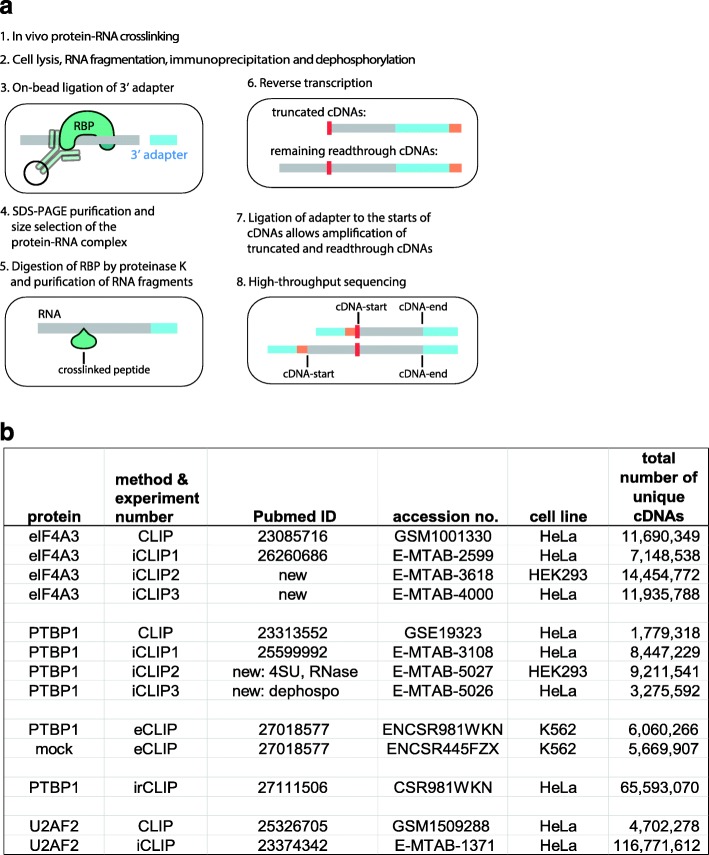
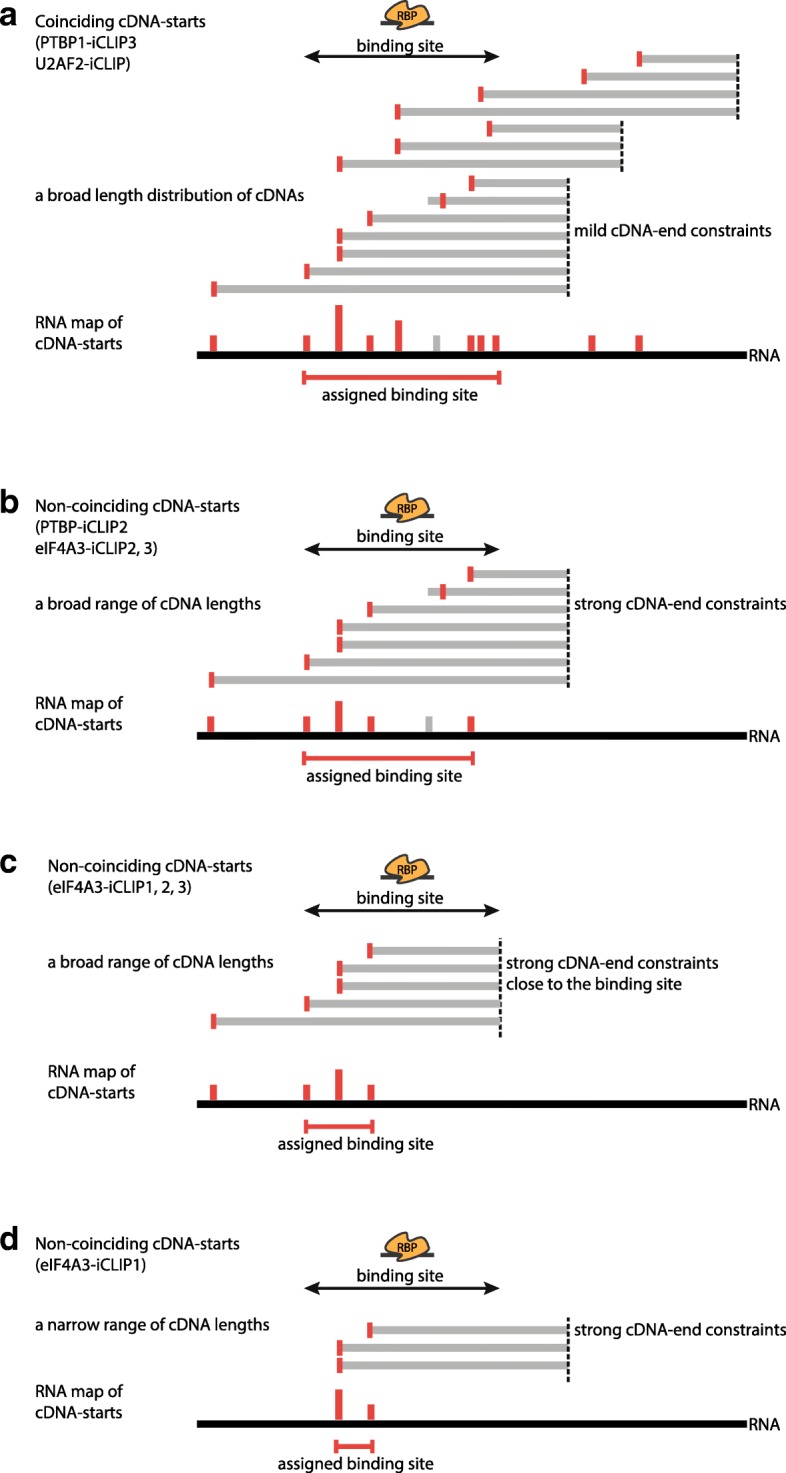
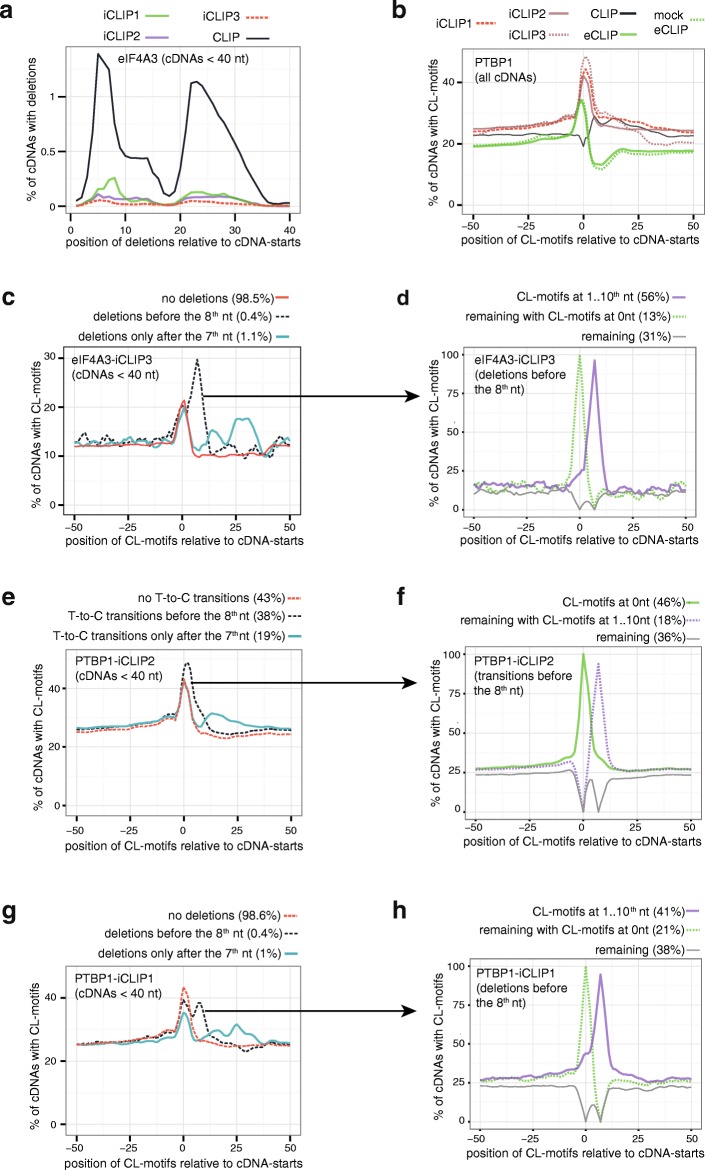
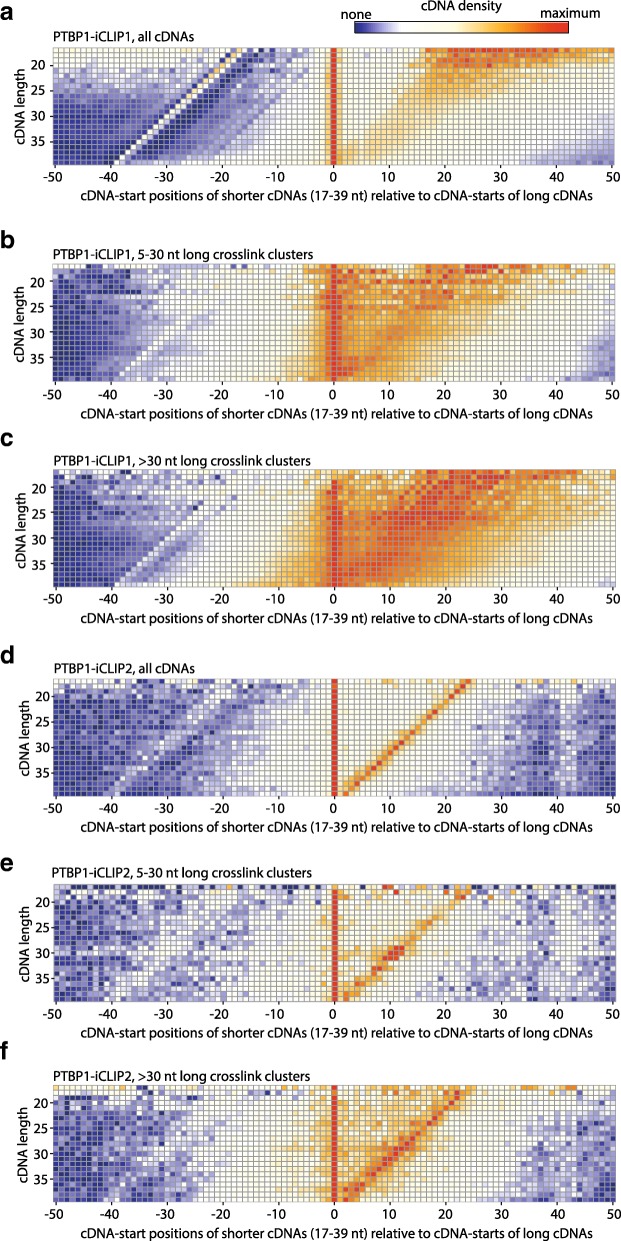
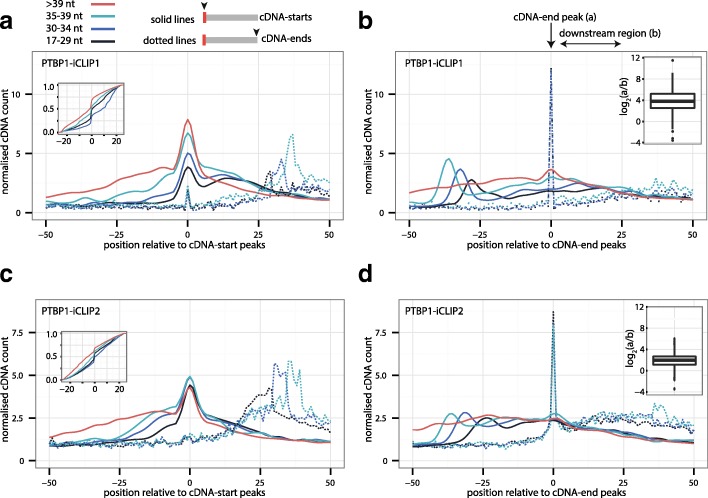
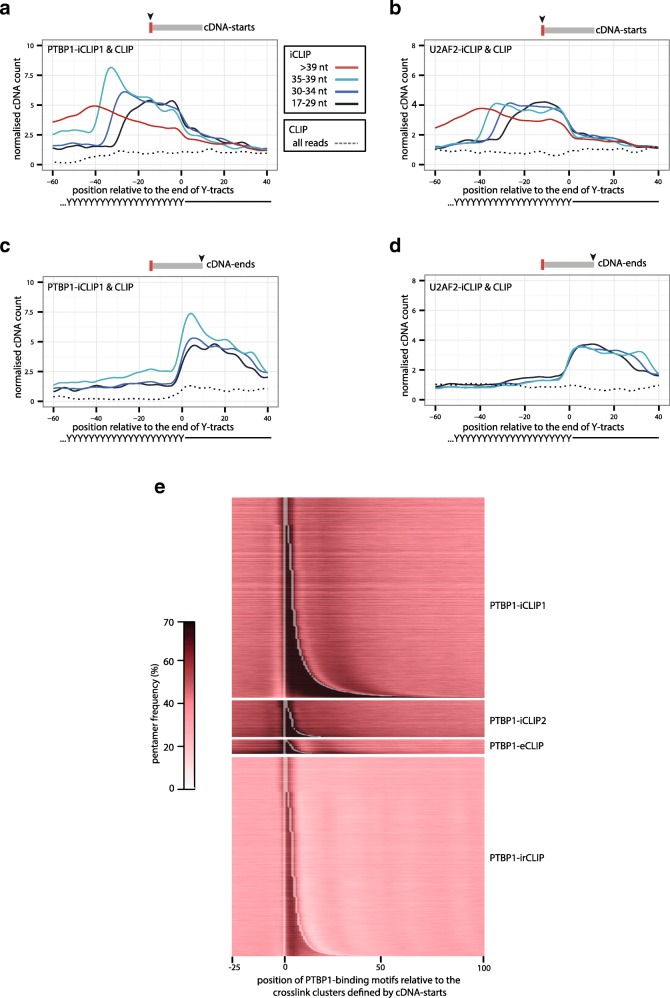
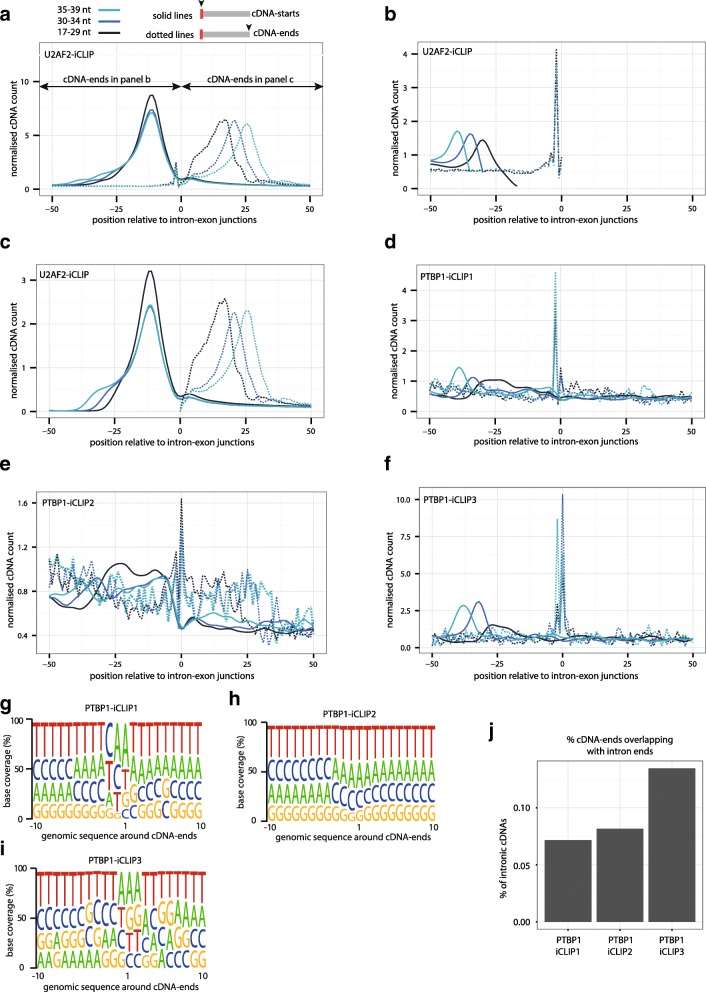
We perform experiments for PTBP1 and eIF4A3 using individual-nucleotide resolution CLIP (iCLIP), employing either UV-C or photoactivatable 4-thiouridine (4SU) combined with UV-A crosslinking and compare the results with published data. As previously noted, the positions of complementary DNA (cDNA)-starts depend on cDNA length in several iCLIP experiments and we now find that this is caused by constrained cDNA-ends, which can result from the sequence and structure constraints of RNA fragmentation. These constraints are overcome when fragmentation by RNase I is efficient and when a broad cDNA size range is obtained. Our study also shows that if RNase does not efficiently cut within the binding sites, the original CLIP method is less capable of identifying the longer binding sites of RBPs. In contrast, we show that a broad size range of cDNAs in iCLIP allows the cDNA-starts to efficiently delineate the complete RNA-binding sites.
We demonstrate the advantage of iCLIP and related methods that can amplify cDNAs that truncate at crosslink sites and we show that computational analyses based on cDNAs-starts are appropriate for such methods.
紫外线(UV)交联免疫沉淀法(CLIP)可识别与RNA结合蛋白(RBP)直接接触的RNA上的位点。CLIP存在多种变体,需要不同的计算方法进行分析。这种多样的方法可能给新手用户带来挑战,并阻碍多研究比较得出的见解。在此,我们使用CLIP的多种变体生成数据,并使用各种计算方法评估数据,以更好地了解它们的适用性。
我们使用单核苷酸分辨率CLIP(iCLIP)对PTBP1和eIF4A3进行实验,采用UV-C或光可激活的4-硫尿苷(4SU)结合UV-A交联,并将结果与已发表的数据进行比较。如前所述,在多个iCLIP实验中,互补DNA(cDNA)起始位置取决于cDNA长度,我们现在发现这是由受限的cDNA末端导致的,这可能是RNA片段化的序列和结构限制造成的。当核糖核酸酶I的片段化效率高且获得较宽的cDNA大小范围时,这些限制可以被克服。我们的研究还表明,如果核糖核酸酶在结合位点内切割效率不高,原始的CLIP方法识别RBP较长结合位点的能力就会较弱。相比之下,我们表明iCLIP中较宽大小范围的cDNA能使cDNA起始位置有效地描绘出完整的RNA结合位点。
我们证明了iCLIP及相关方法的优势,这些方法可以扩增在交联位点截断的cDNA,并且我们表明基于cDNA起始位置的计算分析适用于此类方法。