Department of Biomedical Engineering, University of California Irvine, 3120 Natural Sciences II, Irvine, CA 92697-2715, USA.
Department of Molecular Microbiology and Immunology, Oregon Health & Science University, 3181 SW Sam Jackson Park Road L220, Portland, OR 97239, USA.
Acta Biomater. 2019 Mar 15;87:235-244. doi: 10.1016/j.actbio.2019.01.073. Epub 2019 Feb 1.
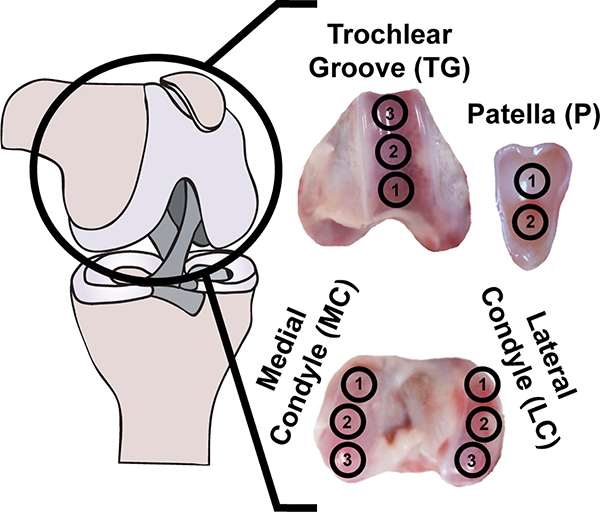
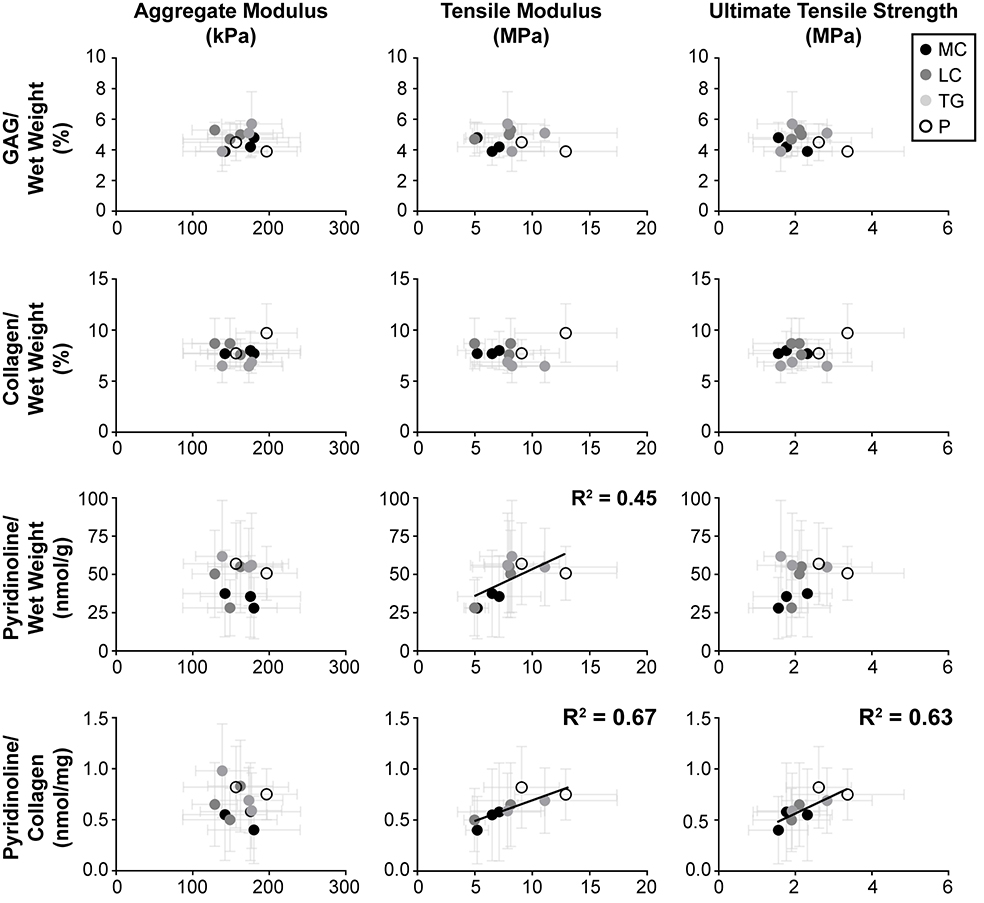
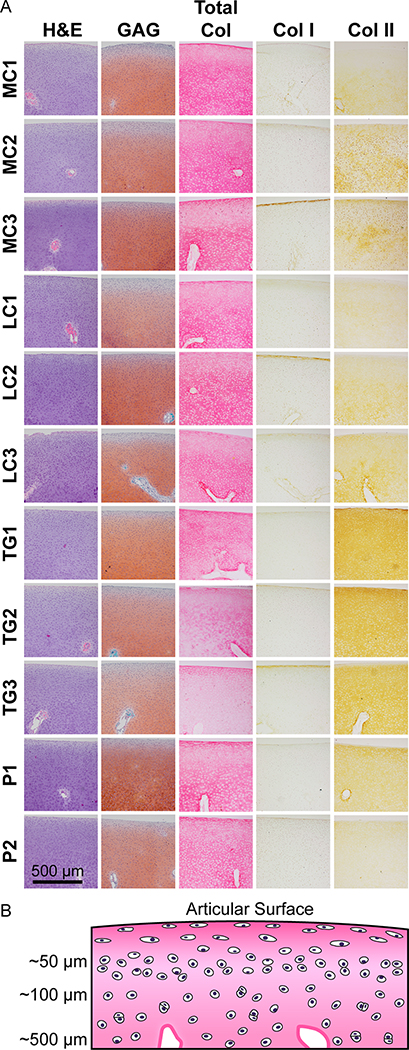
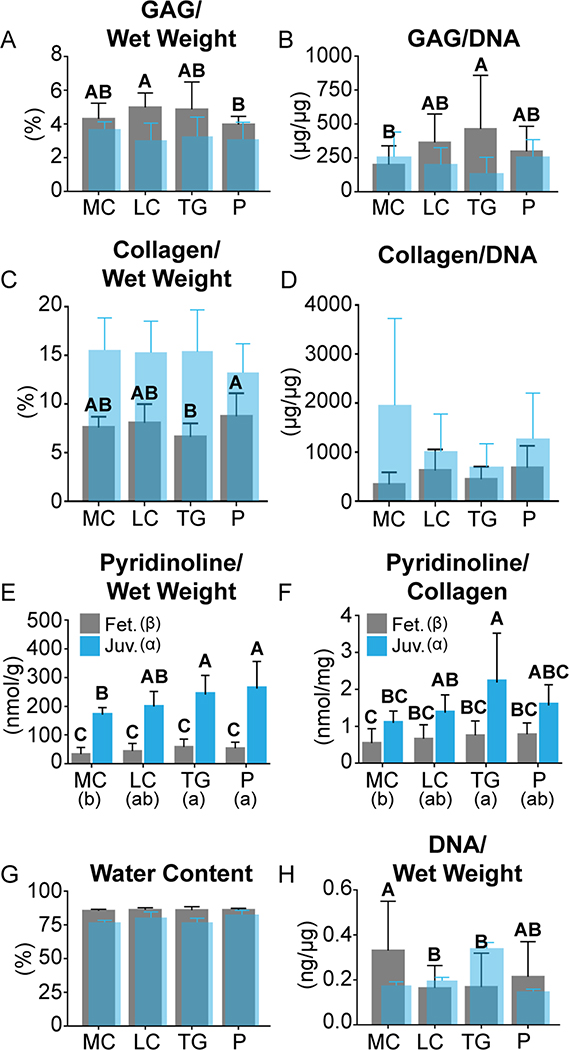
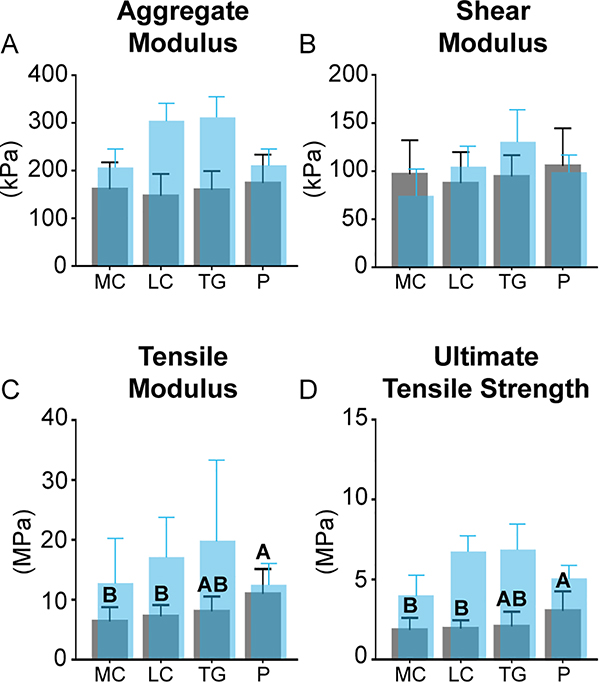
It is crucial that the properties of engineered neocartilage match healthy native cartilage to promote the functional restoration of damaged cartilage. To accurately assess the quality of neocartilage and the degree of biomimicry achieved, its properties must be evaluated against native cartilage and tissue from which the cells for neocartilage formation were sourced. Fetal ovine cartilage is a promising and translationally relevant cell source with which to engineer neocartilage, yet, it is largely non-characterized. The influence of biomechanics during cartilage development, as well as their potential impact on structure-function relationships in utero motivates additional study of fetal cartilage. Toward providing tissue engineering design criteria and elucidating structure-function relationships, 11 locations across four regions of the fetal ovine stifle were characterized. Locational and regional differences were found to exist. Although differences in GAG content were observed, compressive stiffness did not vary or correlate with any biochemical component. Patellar cartilage tensile stiffness and strength were significantly greater than those of the medial condyle. Tensile modulus and UTS significantly correlated with pyridinoline content. More advanced zonal organization, more intense collagen II staining, and greater collagen and pyridinoline contents in the trochlear groove and patella suggest these regions exhibit a more advanced maturational state than others. Regional differences in functional properties and their correlations suggest that structure-function relationships emerge in utero. These data address the dearth of information of the fetal ovine stifle, may serve as a repository of information for cartilage engineering strategies, and may help elucidate functional adaptation in fetal articular cartilage. STATEMENT OF SIGNIFICANCE: Engineered neocartilage must be evaluated against healthy native cartilage and cell source tissue to determine its quality and degree of biomimicry. While fetal ovine cartilage has emerged as a promising and translationally relevant cell source with which to engineer neocartilage, it is largely non-characterized. Therefore, 11 locations across four regions (medial condyle, lateral condyle, trochlear groove, and patella) of the fetal ovine stifle were characterized. Importantly, locational and regional differences in functional properties were observed, and significant correlations of tensile properties to collagen and crosslink contents were detected, suggesting that functional adaptation begins in utero. This study provides a repository of quantitative information, clarifies the developmental order of cartilage functional properties, and informs future cartilage engineering efforts.
为了促进受损软骨的功能恢复,工程化新生软骨的特性必须与健康的天然软骨相匹配。为了准确评估新生软骨的质量和仿生程度,必须将其特性与天然软骨和用于形成新生软骨的细胞来源组织进行比较。胎羊软骨是一种很有前途且具有转化相关性的细胞来源,可以用来构建新生软骨,但对其的研究还很不充分。软骨发育过程中的生物力学的影响,以及它们对子宫内结构-功能关系的潜在影响,促使人们对胎儿软骨进行更多的研究。为了提供组织工程设计标准并阐明结构-功能关系,对来自四个胎儿羊膝关节区域的 11 个位置进行了特征描述。发现存在位置和区域差异。尽管观察到 GAG 含量存在差异,但压缩弹性并不随任何生化成分而变化或相关。髌骨软骨的拉伸弹性和强度明显大于内侧髁。拉伸模量和 UTS 与吡啶啉含量显著相关。滑车沟和髌骨中的带区组织更先进的分区组织、更强的 II 型胶原染色以及更高的胶原和吡啶啉含量表明,这些区域比其他区域表现出更成熟的发育状态。功能特性的区域差异及其相关性表明,结构-功能关系在子宫内出现。这些数据解决了胎儿羊膝关节缺乏信息的问题,可为软骨工程策略提供信息库,并有助于阐明胎儿关节软骨的功能适应。
必须将工程化的新生软骨与健康的天然软骨和细胞来源组织进行比较,以确定其质量和仿生程度。虽然胎羊软骨已成为一种很有前途且具有转化相关性的细胞来源,可以用来构建新生软骨,但对其的研究还很不充分。因此,对胎儿羊膝关节的四个区域(内侧髁、外侧髁、滑车沟和髌骨)的 11 个位置进行了特征描述。重要的是,观察到功能特性的位置和区域差异,并且检测到拉伸特性与胶原和交联含量之间存在显著相关性,这表明功能适应在子宫内就已经开始。本研究提供了一个定量信息库,阐明了软骨功能特性的发育顺序,并为未来的软骨工程研究提供了信息。