Kocovski Pece, Jiang Xiangrui, D'Souza Claretta S, Li Zhenjiang, Dang Phuc T, Wang Xiaowei, Chen Weisan, Peter Karlheinz, Hale Matthew W, Orian Jacqueline M
Department of Psychology and Counselling, School of Psychology and Public Health, La Trobe University, Bundoora, VIC 3086, Australia.
Department of Biochemistry and Genetics, La Trobe Institute for Molecular Science (LIMS), La Trobe University, Bundoora, VIC 3086, Australia.
J Clin Med. 2019 Feb 1;8(2):162. doi: 10.3390/jcm8020162.
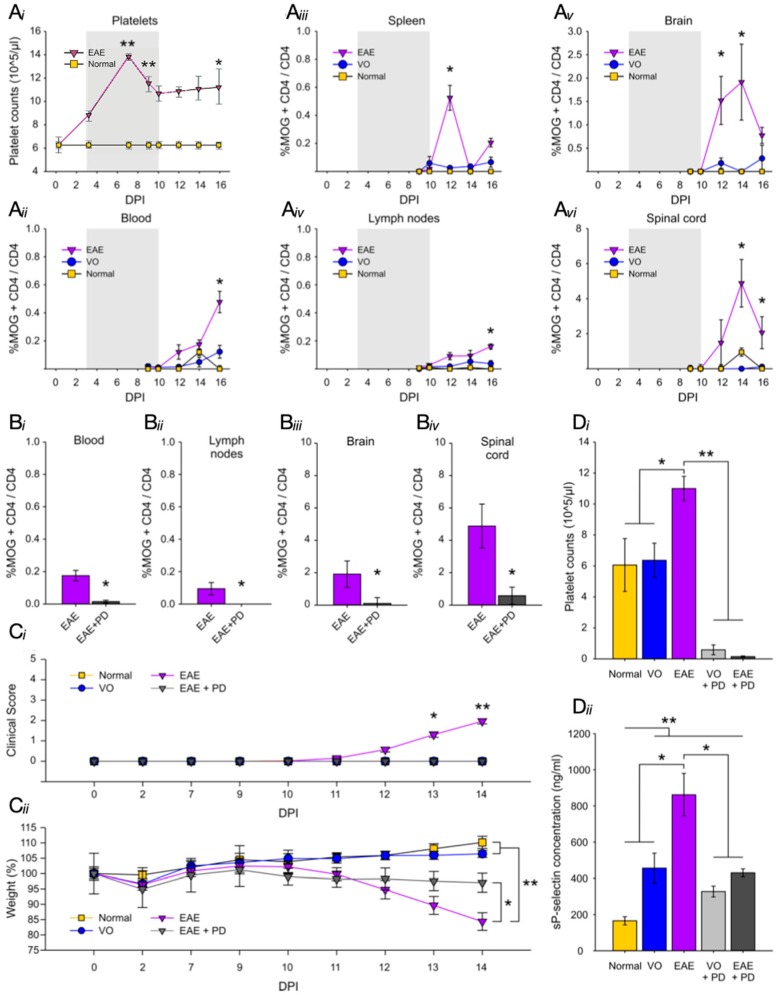
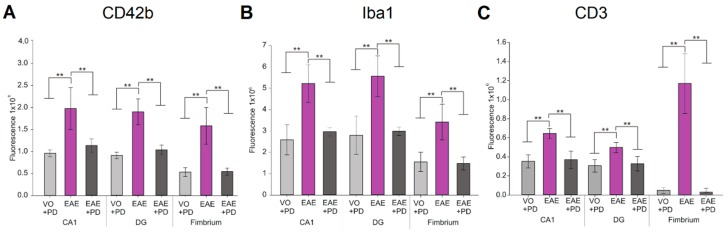
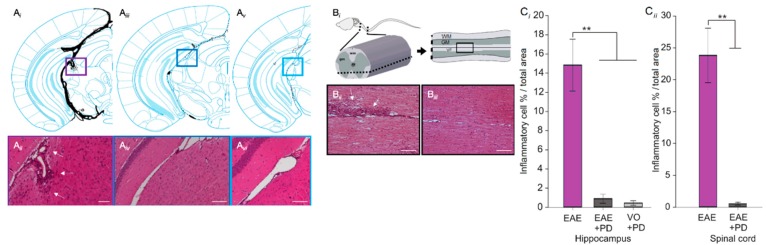
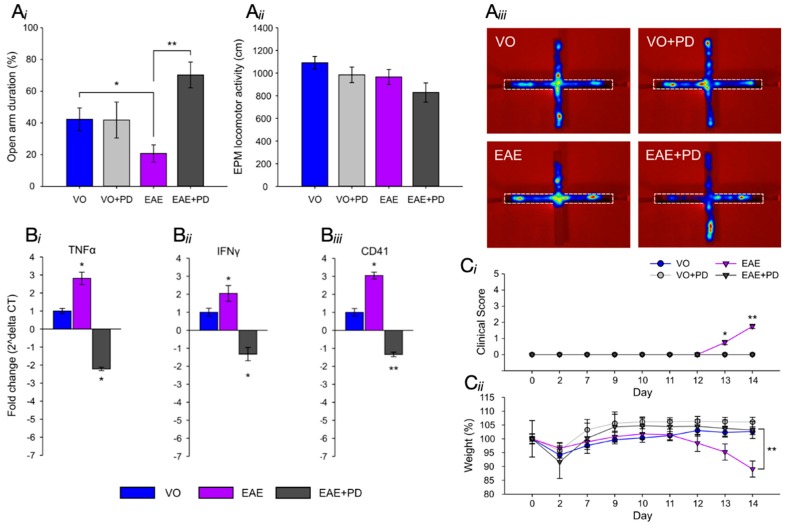
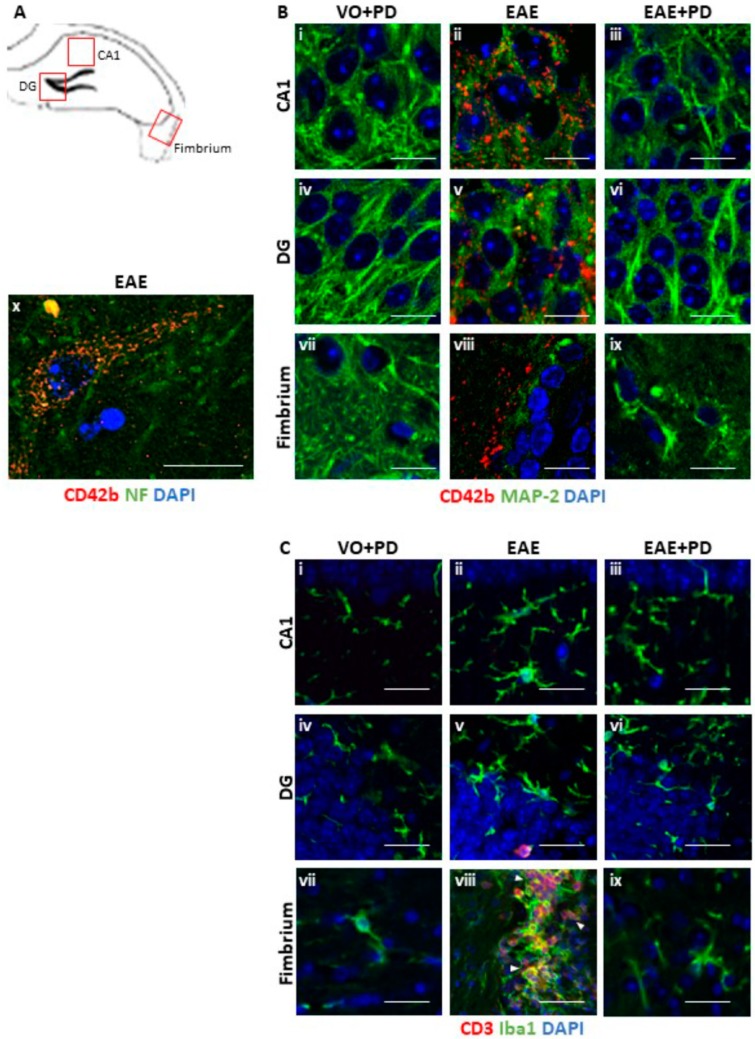
The neuropsychiatric symptoms of multiple sclerosis (MS), such as anxiety and depression, can result from disease activity itself as well as psychological reaction to an unfavorable diagnosis. Accordingly, the literature reports evidence of increased anxiety-like behavior in experimental autoimmune encephalomyelitis (EAE), an accepted MS model. Due to the recently described critical role of platelets in inflammation and autoimmune disease, we examined the relationship between platelets, inflammation, and anxiety-like behavior in EAE. In the elevated plus maze, EAE-induced C57BL/6J mice showed decreased time spent in the open arms relative to vehicle-only controls, demonstrating an increase in anxiety-like behavior. This effect occurred in the presence of platelet⁻neuron association, but absence of lymphocytic infiltration, in the hippocampal parenchyma. Platelet depletion at the pre-clinical disease stage, using antibody-mediated lysis prevented the EAE-induced increase in anxiety-like behavior, while no significant difference in distance moved was recorded. Furthermore, platelet depletion was also associated with reduction of the pro-inflammatory environment to control levels in the hippocampus and prevention of EAE disease symptomology. These studies demonstrate the high efficacy of a platelet-targeting approach in preventing anxiety-like symptoms and clinical manifestations of EAE and have implications for the treatment of neuropsychiatric symptoms in MS.
多发性硬化症(MS)的神经精神症状,如焦虑和抑郁,可能源于疾病活动本身以及对不良诊断的心理反应。因此,文献报道在实验性自身免疫性脑脊髓炎(EAE,一种公认的MS模型)中存在焦虑样行为增加的证据。由于最近发现血小板在炎症和自身免疫性疾病中起关键作用,我们研究了EAE中血小板、炎症与焦虑样行为之间的关系。在高架十字迷宫实验中,与仅注射赋形剂的对照组相比,EAE诱导的C57BL/6J小鼠在开放臂停留的时间减少,表明焦虑样行为增加。这种效应发生在海马实质存在血小板-神经元关联但无淋巴细胞浸润的情况下。在临床前疾病阶段使用抗体介导的裂解方法消耗血小板,可防止EAE诱导的焦虑样行为增加,同时记录到移动距离无显著差异。此外,血小板消耗还与海马中促炎环境降至对照水平以及预防EAE疾病症状相关。这些研究证明了靶向血小板的方法在预防EAE的焦虑样症状和临床表现方面具有高效性,并对MS神经精神症状的治疗具有启示意义。