Zhang Xueli, Sun Xiao-Feng, Shen Bairong, Zhang Hong
School of Medicine, Institute of Medical Sciences, Örebro University, SE-70182 Örebro, Sweden.
Centre for Systems Biology, Soochow University, Suzhou 215006, China.
Cancers (Basel). 2019 Feb 1;11(2):172. doi: 10.3390/cancers11020172.
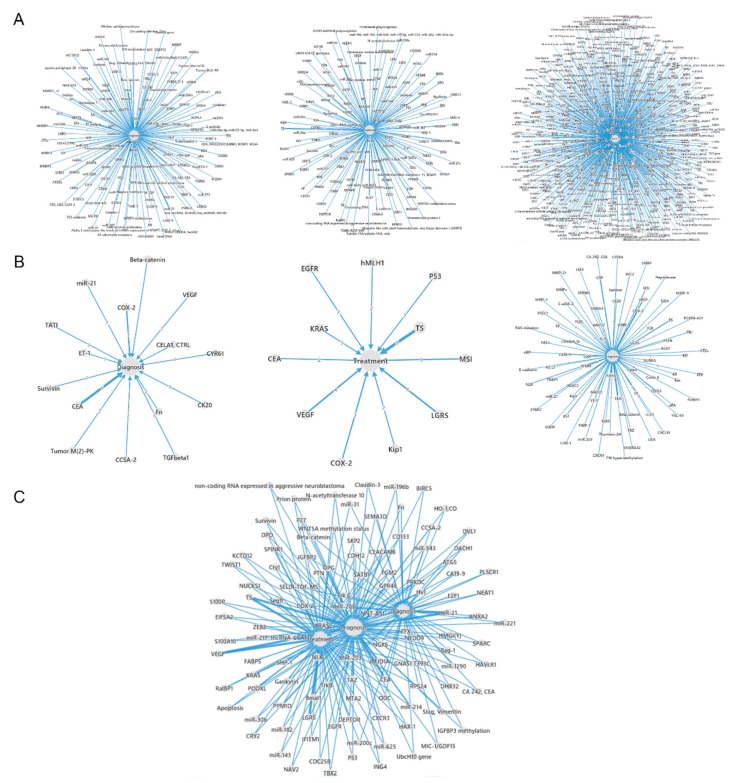
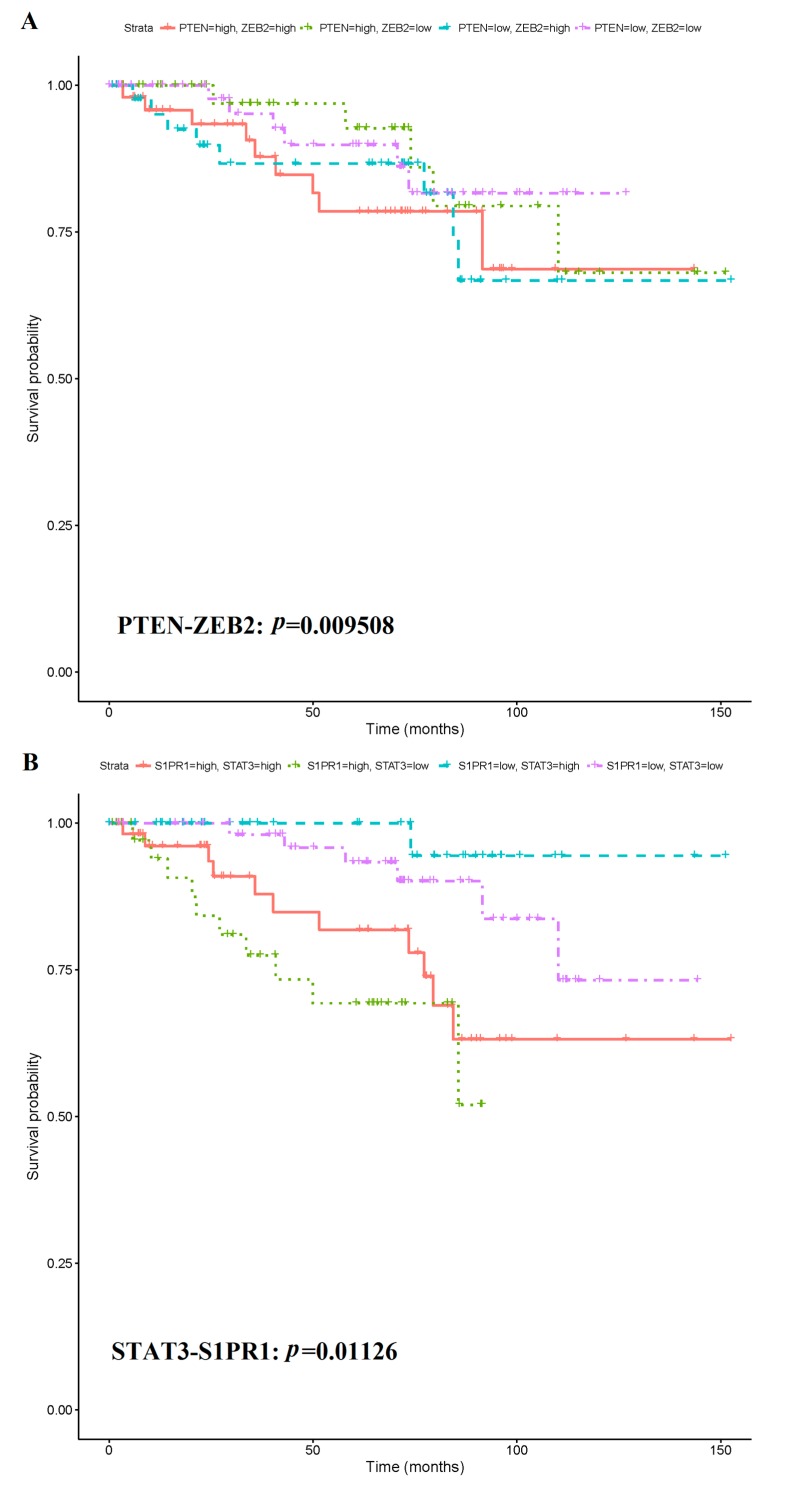
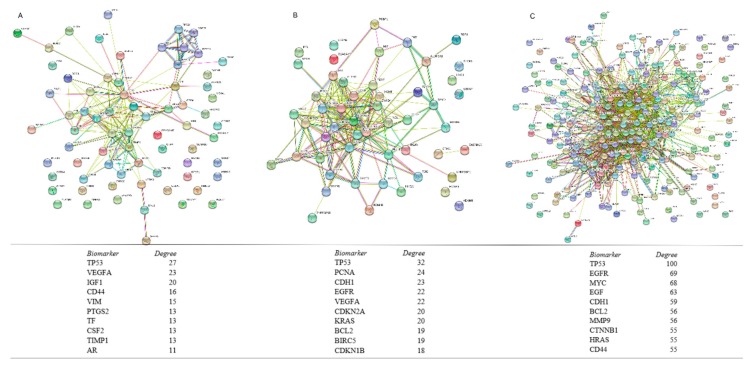
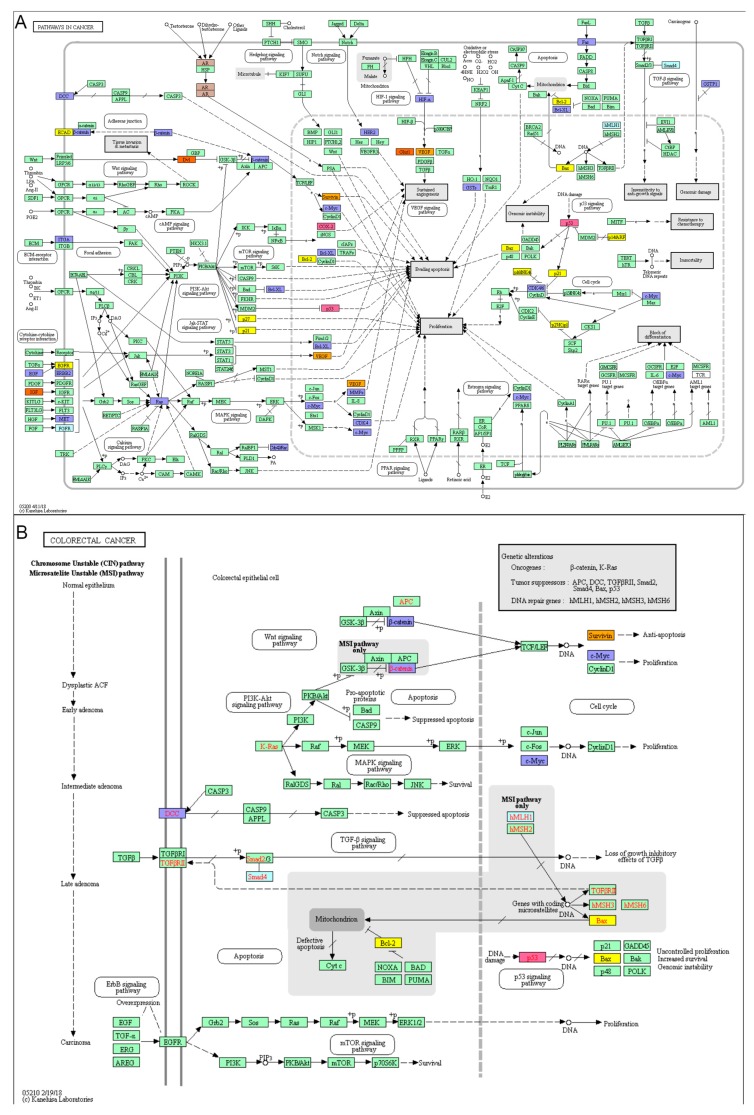
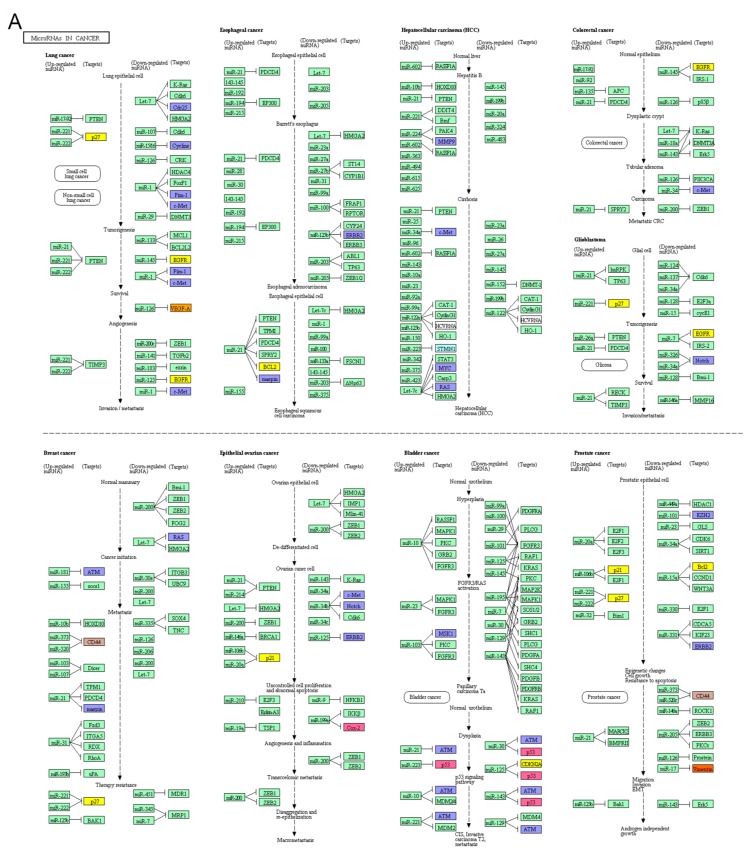
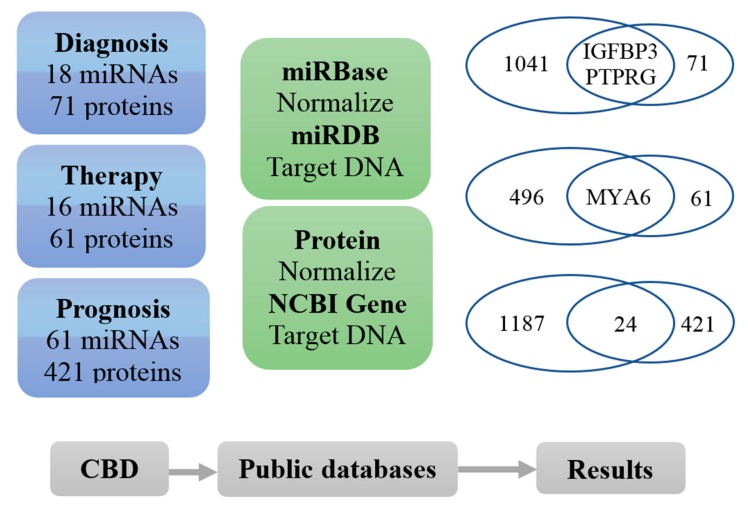
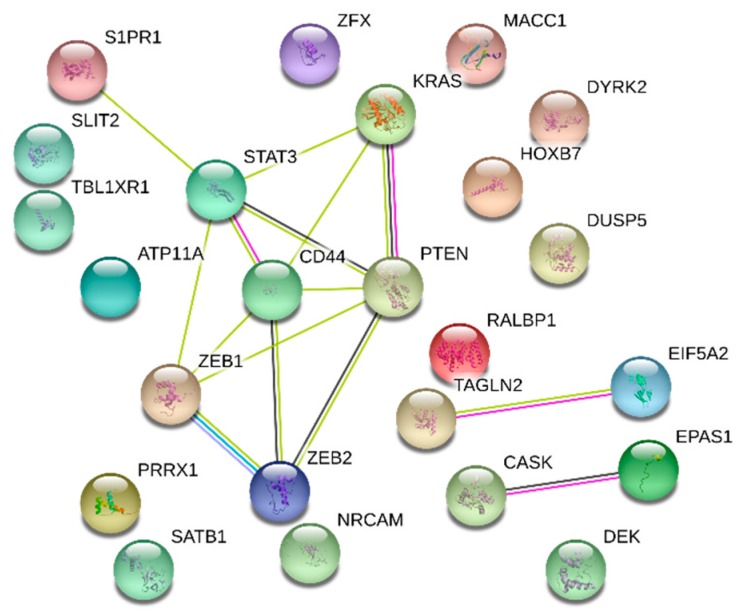
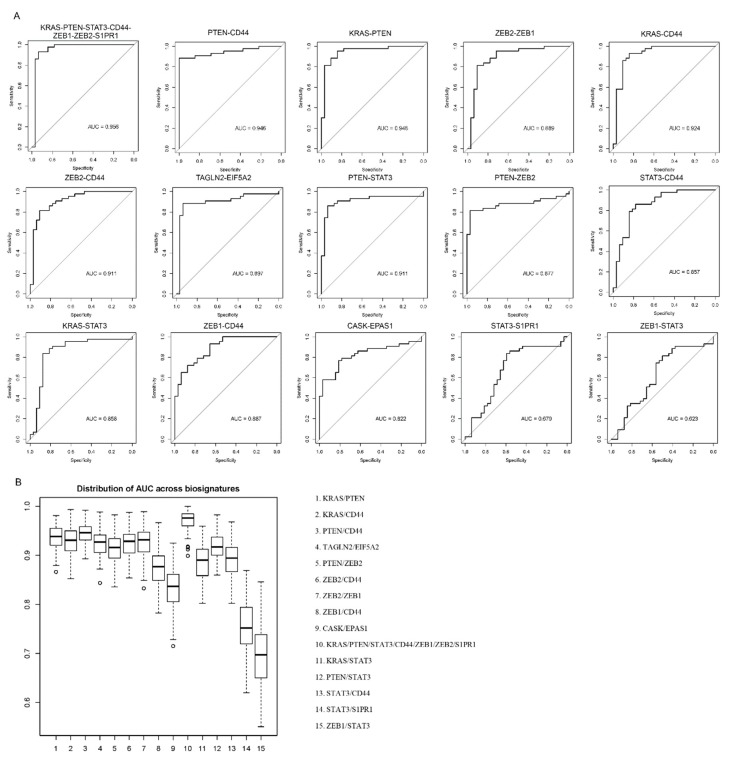
In order to find out the most valuable biomarkers and pathways for diagnosis, therapy and prognosis in colorectal cancer (CRC) we have collected the published CRC biomarkers and established a CRC biomarker database (CBD: http://sysbio.suda.edu.cn/CBD/index.html). In this study, we analysed the single and multiple DNA, RNA and protein biomarkers as well as their positions in cancer related pathways and protein-protein interaction (PPI) networks to describe their potential applications in diagnosis, therapy and prognosis. CRC biomarkers were collected from the CBD. The RNA and protein biomarkers were matched to their corresponding DNAs by the miRDB database and the PubMed Gene database, respectively. The PPI networks were used to investigate the relationships between protein biomarkers and further detect the multiple biomarkers. The Kyoto Encyclopaedia of Genes and Genomes (KEGG) pathway enrichment analysis and Gene Ontology (GO) annotation were used to analyse biological functions of the biomarkers. AI classification techniques were utilized to further verify the significances of the multiple biomarkers in diagnosis and prognosis for CRC. We showed that a large number of the DNA, RNA and protein biomarkers were associated with the diagnosis, therapy and prognosis in various degrees in the CRC biomarker networks. The CRC biomarkers were closely related to the CRC initiation and progression. Moreover, the biomarkers played critical roles in cellular proliferation, apoptosis and angiogenesis and they were involved in Ras, p53 and PI3K pathways. There were overlaps among the DNA, RNA and protein biomarkers. AI classification verifications showed that the combined multiple protein biomarkers played important roles to accurate early diagnosis and predict outcome for CRC. There were several single and multiple CRC protein biomarkers which were associated with diagnosis, therapy and prognosis in CRC. Further, AI-assisted analysis revealed that multiple biomarkers had potential applications for diagnosis and prognosis in CRC.
为了找出结直肠癌(CRC)诊断、治疗和预后中最有价值的生物标志物和信号通路,我们收集了已发表的CRC生物标志物并建立了一个CRC生物标志物数据库(CBD:http://sysbio.suda.edu.cn/CBD/index.html)。在本研究中,我们分析了单个和多个DNA、RNA和蛋白质生物标志物,以及它们在癌症相关信号通路和蛋白质-蛋白质相互作用(PPI)网络中的位置,以描述它们在诊断、治疗和预后中的潜在应用。CRC生物标志物从CBD中收集。RNA和蛋白质生物标志物分别通过miRDB数据库和PubMed基因数据库与它们相应的DNA进行匹配。PPI网络用于研究蛋白质生物标志物之间的关系,并进一步检测多个生物标志物。使用京都基因与基因组百科全书(KEGG)通路富集分析和基因本体(GO)注释来分析生物标志物的生物学功能。利用人工智能分类技术进一步验证多个生物标志物在CRC诊断和预后中的意义。我们发现,在CRC生物标志物网络中,大量的DNA、RNA和蛋白质生物标志物在不同程度上与诊断、治疗和预后相关。CRC生物标志物与CRC的发生和进展密切相关。此外,这些生物标志物在细胞增殖、凋亡和血管生成中起关键作用,并且它们参与Ras、p53和PI3K信号通路。DNA、RNA和蛋白质生物标志物之间存在重叠。人工智能分类验证表明,多个蛋白质生物标志物的组合在CRC的准确早期诊断和预后预测中发挥重要作用。有几个单个和多个CRC蛋白质生物标志物与CRC的诊断、治疗和预后相关。此外,人工智能辅助分析表明,多个生物标志物在CRC的诊断和预后中具有潜在应用。