Department of Public Health, Faculty of Health Sciences, Collegium Medicum, University of Warmia and Mazury in Olsztyn, 10-082 Olsztyn, Poland.
Department of Food Immunology and Microbiology, Institute of Animal Reproduction and Food Research, Polish Academy of Sciences in Olsztyn, 10-748 Olsztyn, Poland.
Toxins (Basel). 2019 Feb 2;11(2):91. doi: 10.3390/toxins11020091.
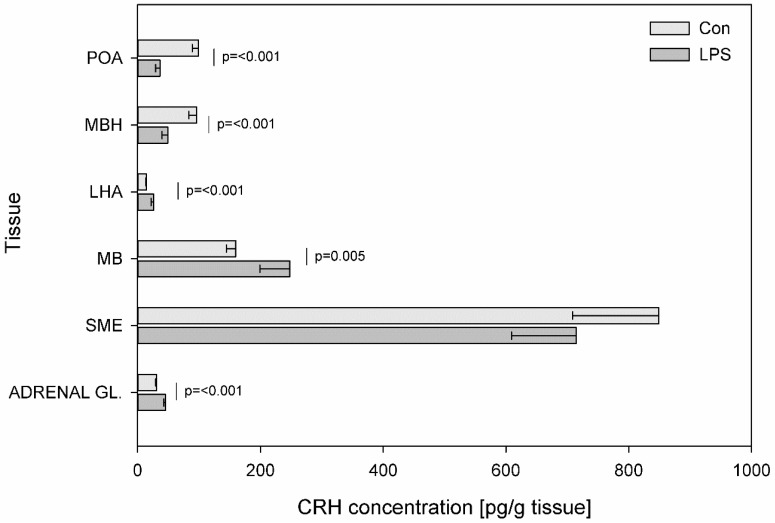
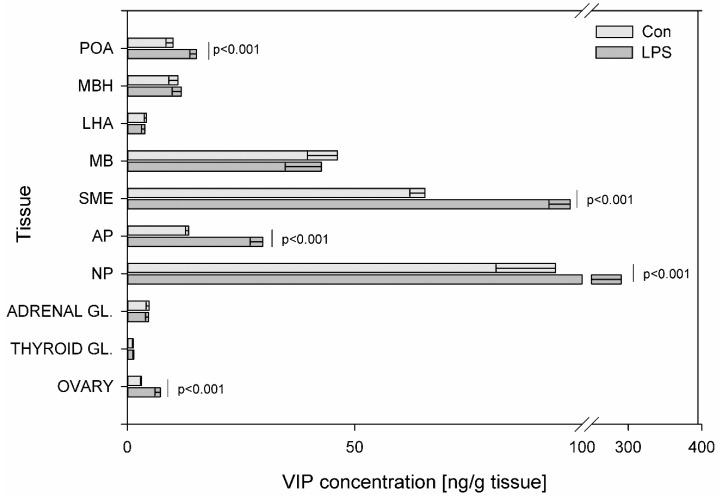
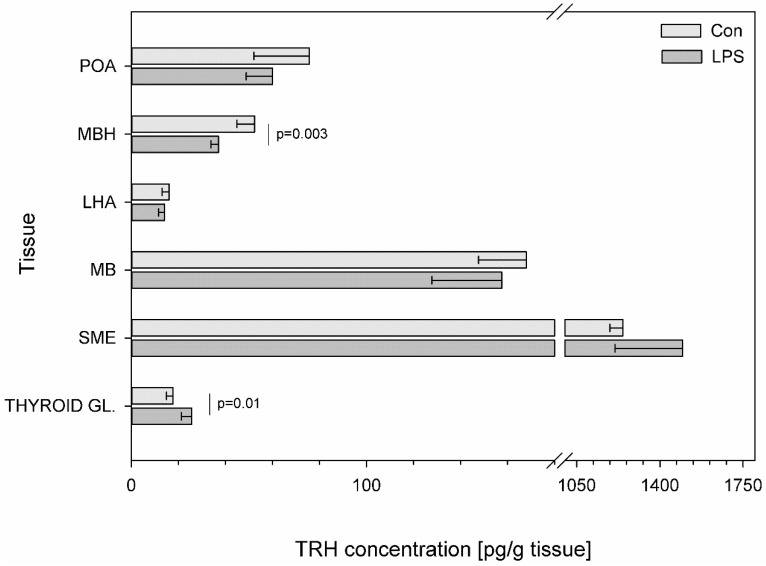
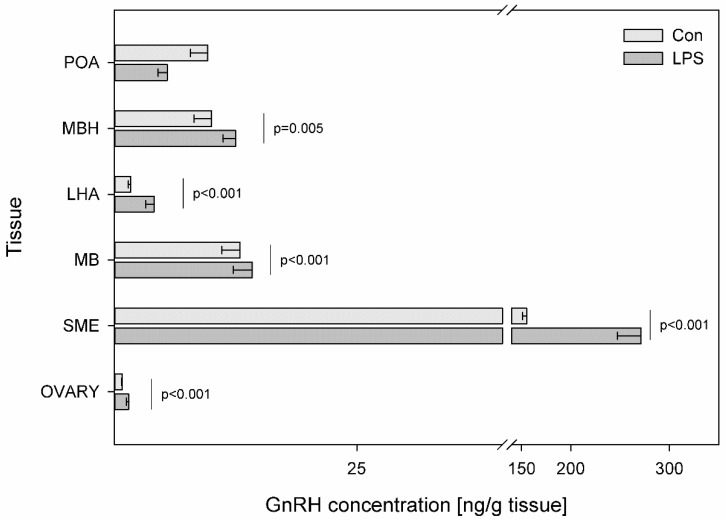
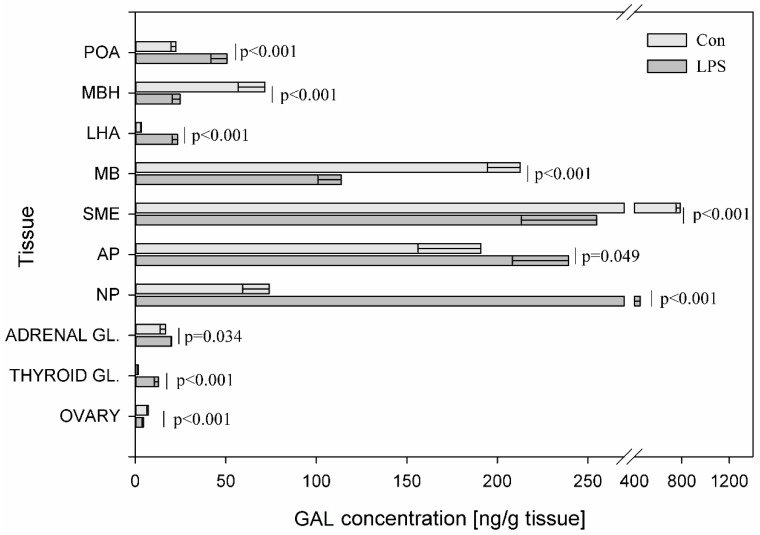
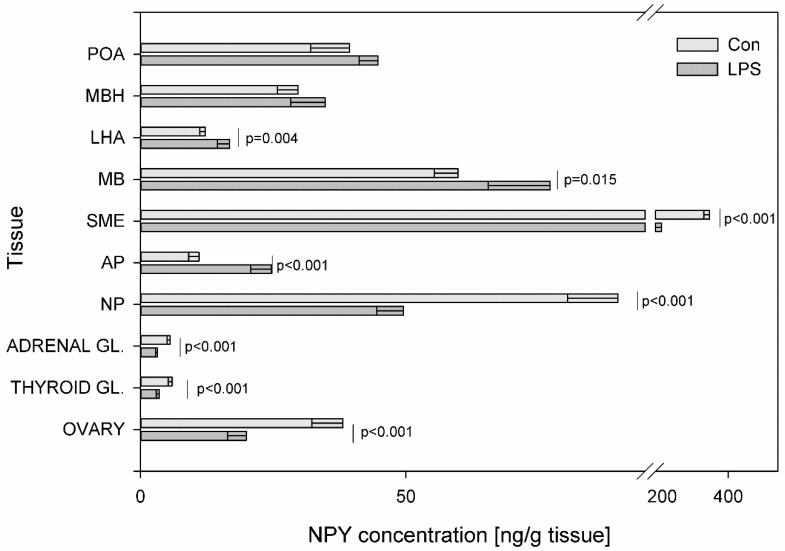
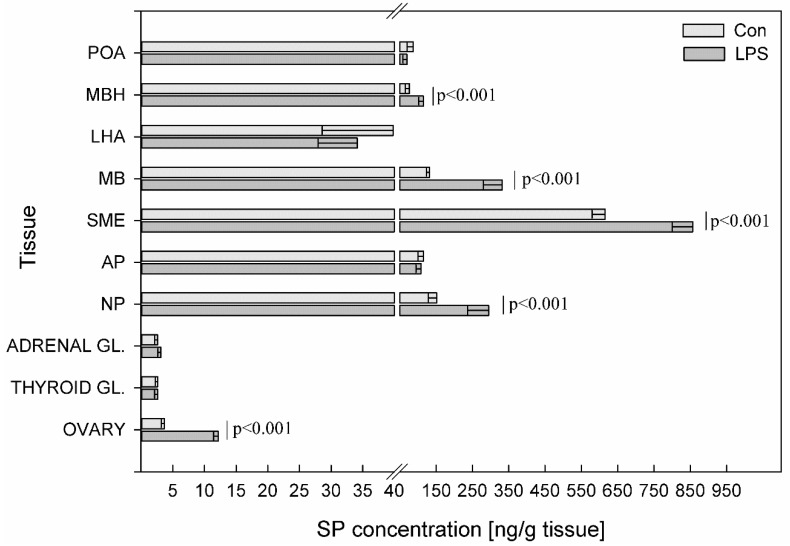
Bacterial lipopolysaccharide (LPS) can contribute to the pathogenesis and the clinical symptoms of many diseases such as cancer, mental disorders, neurodegenerative as well as metabolic diseases. The asymptomatic carrier state of spp. is a very important public health problem. A subclinical single dose of LPS obtained from Enteritidis (5 μg/kg, i.v.) was administered to discern the consequences of changes of various brain peptides such as corticotropin-releasing hormone (CRH), gonadotropin-releasing hormone (GnRH), thyrotropin-releasing hormone (TRH), galanin (GAL), neuropeptide Y (NPY), somatostatin (SOM), substance P (SP), and vasoactive intestinal polypeptide (VIP) in selected clinically important brain sections and endocrine glands of the hypothalamic-pituitary-adrenal (HPA), -thyroid (HPT), -ovarian (HPO) axes. The study was conducted on ten immature crossbred female pigs. The brain peptides were extracted from the hypothalamus (medial basal hypothalamus, preoptic area, lateral hypothalamic area, mammillary bodies, and the stalk median eminence), and pituitary gland (adenohypophysis and neurohypophysis) sections and from the ovaries and adrenal and thyroid glands. There was no difference in health status between LPS and the control groups during the period of the experiment. Nevertheless, even a low single dose of LPS from Enteritidis that did not result in any clinical symptoms of disease induced dysregulation of various brain peptides, such as CRH, GnRH, TRH, GAL, NPY, SOM, SP, and VIP in selected brain sections of hypothalamus, pituitary gland and in the endocrine glands of the HPA, HPO, and HPT axes. In conclusion, the obtained results clearly show that subclinical LPS from Enteritidis can affect the brain chemistry structure and dysregulate bioactive substance from selected brain sections and glands of the neuroendocrine axes. The exact mechanisms by which LPS can influence major neuroendocrine axes are not fully understood and require further studies.
细菌脂多糖 (LPS) 可导致多种疾病的发病机制和临床症状,如癌症、精神障碍、神经退行性疾病以及代谢性疾病。 spp. 的无症状携带者状态是一个非常重要的公共卫生问题。 从小肠结肠炎耶尔森氏菌中获得的亚临床单次剂量 LPS(5μg/kg,静脉注射)被给予,以辨别各种脑肽(如促肾上腺皮质激素释放激素 (CRH)、促性腺激素释放激素 (GnRH)、促甲状腺激素释放激素 (TRH)、甘丙肽 (GAL)、神经肽 Y (NPY)、生长抑素 (SOM)、P 物质 (SP) 和血管活性肠肽 (VIP))在选定的具有临床重要意义的下丘脑-垂体-肾上腺 (HPA)、-甲状腺 (HPT)、-卵巢 (HPO) 轴的脑区和内分泌腺中的变化后果。 该研究在 10 头未成熟杂交母猪上进行。 从下丘脑(内侧基底下丘脑、视前区、外侧下丘脑区域、乳头体和柄状中脑)和垂体(腺垂体和神经垂体)切片以及卵巢、肾上腺和甲状腺中提取脑肽。 在实验期间,LPS 组和对照组的健康状况没有差异。 然而,即使是来自肠炎沙门氏菌的低剂量 LPS 也不会导致任何疾病的临床症状,但它会导致各种脑肽(如 CRH、GnRH、TRH、GAL、NPY、SOM、SP 和 VIP)在选定的下丘脑、垂体脑区和 HPA、HPO 和 HPT 轴的内分泌腺中出现失调。 总之,研究结果清楚地表明,来自肠炎沙门氏菌的亚临床 LPS 可影响脑化学结构并扰乱所选脑区和神经内分泌轴腺体的生物活性物质。 LPS 影响主要神经内分泌轴的确切机制尚未完全了解,需要进一步研究。