Department of Public Health, Faculty of Health Sciences, Collegium Medicum, University of Warmia and Mazury in Olsztyn, 10-082 Olsztyn, Poland.
Department of Food Immunology and Microbiology, Institute of Animal Reproduction and Food Research, Polish Academy of Sciences in Olsztyn, 10-748 Olsztyn, Poland.
Int J Mol Sci. 2018 Oct 22;19(10):3274. doi: 10.3390/ijms19103274.
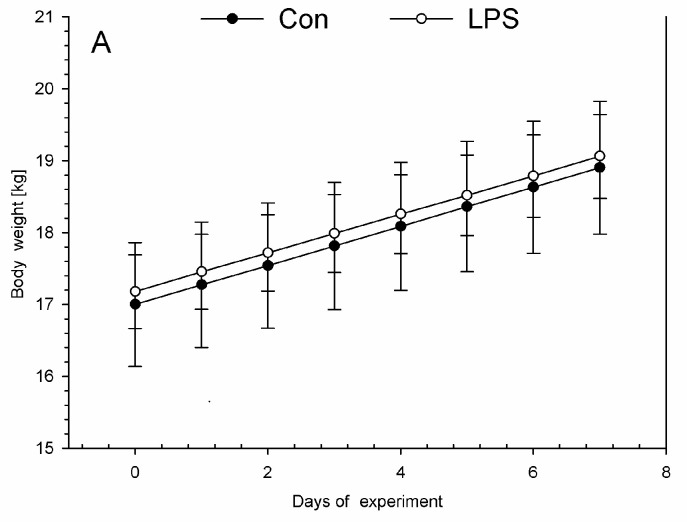
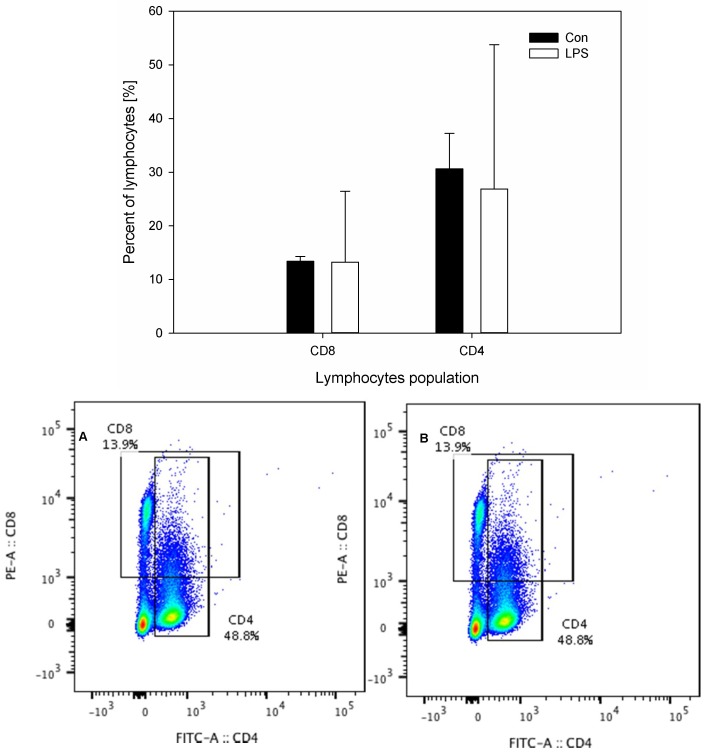
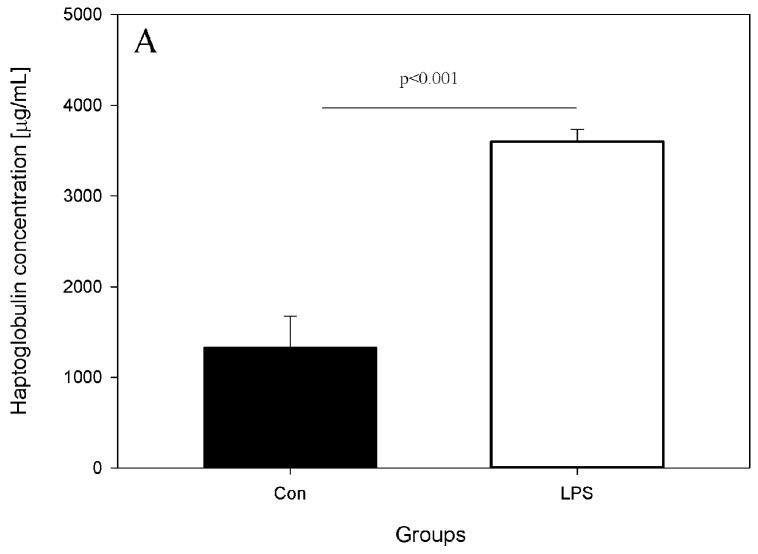
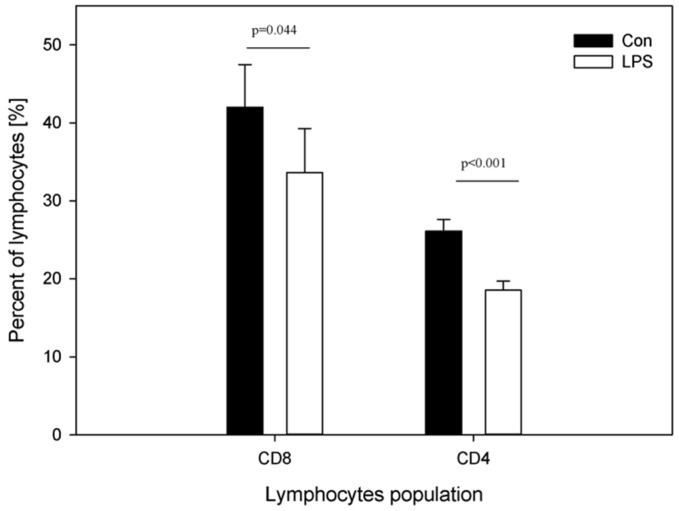
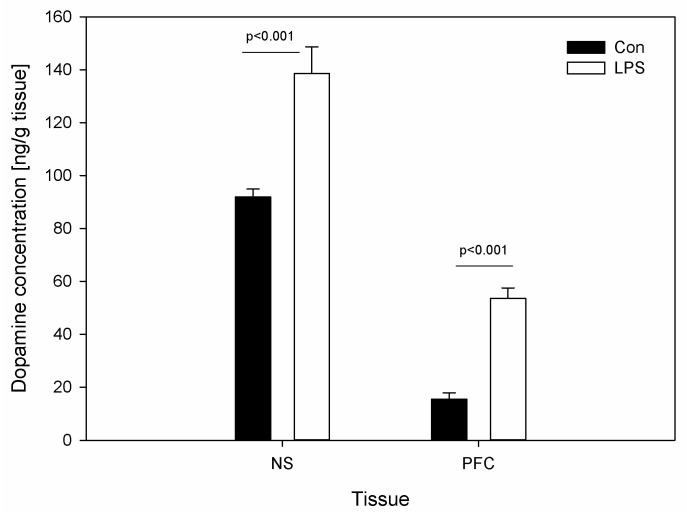
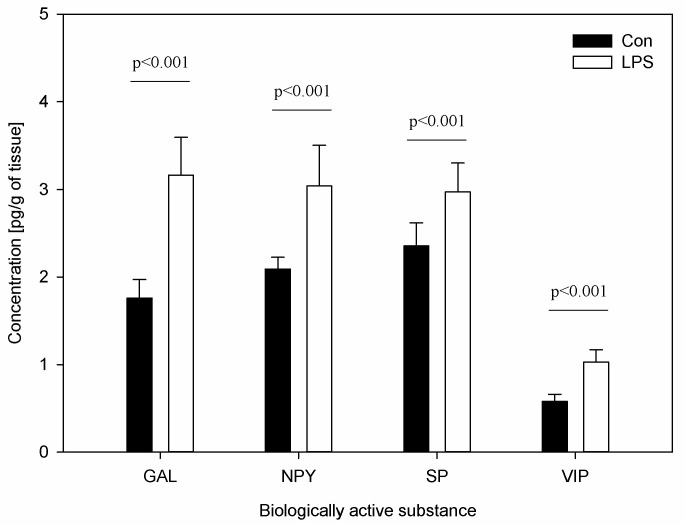
Mounting evidence has indicated that lipopolysaccharide (LPS) is implicated in neuroimmunological responses, but the body's response to subclinical doses of bacterial endotoxin remains poorly understood. The influence of a low single dose of LPS from Enteritidis, which does not result in any clinical symptoms of intoxication (subclinical lipopolysaccharide), on selected cells and signal molecules of the neuroimmune system was tested. Five juvenile crossbred female pigs were intravenously injected with LPS from Enteritidis (5 μg/kg body weight (b.w.)), while five pigs from the control group received sodium chloride in the same way. Our data demonstrated that subclinical LPS from Enteritidis increased levels of dopamine in the brain and neuropeptides such as substance P (SP), galanin (GAL), neuropeptide Y (NPY), and active intestinal peptide (VIP) in the cervical lymph nodes with serum hyperhaptoglobinaemia and reduction of plasma CD4 and CD8 T-lymphocytes seven days after lipopolysaccharide administration. CD4 and CD8 T-lymphocytes from the cervical lymph node and serum interleukin-6 and tumour necrosis factor α showed no significant differences between the control and lipopolysaccharide groups. Subclinical lipopolysaccharide from Enteritidis can affect cells and signal molecules of the neuroimmune system. The presence of subclinical lipopolysaccharide from S. Enteritidis is associated with unknown prolonged consequences and may require eradication and a deeper search into the asymptomatic carrier state of spp.
越来越多的证据表明,脂多糖(LPS)与神经免疫反应有关,但机体对亚临床剂量细菌内毒素的反应仍知之甚少。本研究测试了低剂量单剂量肠炎沙门氏菌 LPS(不会引起任何中毒临床症状的亚临床 LPS)对神经免疫系统中选定细胞和信号分子的影响。5 头杂交雌性仔猪静脉内注射肠炎沙门氏菌 LPS(5μg/kg 体重(b.w.)),而对照组的 5 头猪以同样的方式接受氯化钠注射。我们的数据表明,肠炎沙门氏菌亚临床 LPS 可增加大脑中的多巴胺水平,并增加颈淋巴结中的神经肽,如 P 物质(SP)、甘丙肽(GAL)、神经肽 Y(NPY)和活性肠肽(VIP),同时伴有血清高触珠蛋白血症和血浆 CD4 和 CD8 T 淋巴细胞减少,这一变化发生在 LPS 给药 7 天后。颈淋巴结和血清中的 CD4 和 CD8 T 淋巴细胞以及白细胞介素-6 和肿瘤坏死因子-α在对照组和 LPS 组之间没有显著差异。肠炎沙门氏菌的亚临床 LPS 可影响神经免疫系统的细胞和信号分子。肠炎沙门氏菌亚临床 LPS 的存在与未知的长期后果有关,可能需要根除,并深入研究 spp 的无症状携带者状态。