Department of Anatomy and Cell Biology and Mitochondria Hub Regulation Center, Dong-A University College of Medicine, Busan 49201, Korea.
Department of Anesthesiology and Pain Medicine, Gyeongsang National University Changwon Hospital, Changwon 51472, Korea.
Int J Environ Res Public Health. 2019 Feb 3;16(3):448. doi: 10.3390/ijerph16030448.
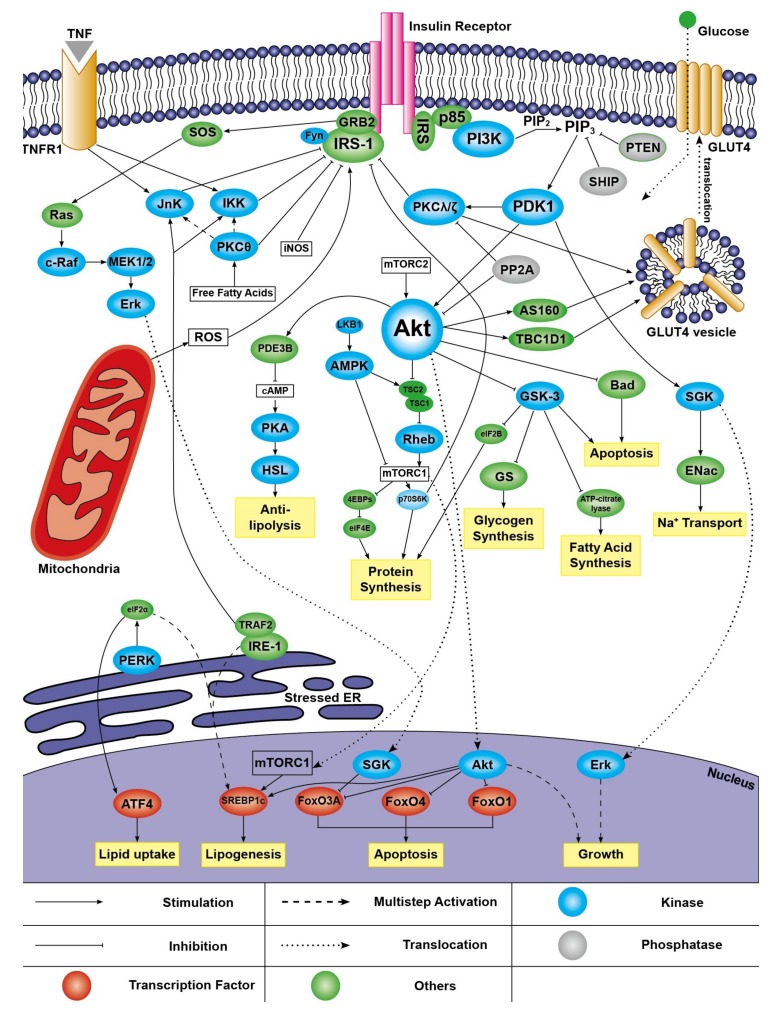
Persistent organic pollutants (POPs) such as organochlorine (OC) pesticides, polychlorinated biphenyls (PCBs), polychlorinated dibenzo-p-dioxins (PCDDs), and polychlorinated dibenzofurans (PCDFs) have become wide-spread environmental contaminants as a consequence of their extensive use, long-range transport, and persistence. Because POPs are highly resistant to metabolic degradation, humans bioaccumulate these lipophilic and hydrophobic pollutants in fatty tissues for many years. Previous studies have demonstrated that POPs including PCBs are involved in the development of diabetes mellitus (DM) type 2 and insulin resistance. Numerous epidemiological studies suggest an association between POP burden and DM type 2/metabolic syndrome. In addition, several experimental studies have provided additional evidence supporting the association between POP exposure and DM type 2 or insulin resistance. Epidemiological and experimental studies have provided compelling evidence indicating that exposure to POPs increases the risk of developing insulin resistance and metabolic disorders. However, the detailed molecular mechanism underlying POP-induced insulin resistance is yet to be elucidated. In this article, we review literature that has reported on the association between POP burden and insulin resistance and the mechanism underlying POP-induced insulin resistance, and discuss implications for public health.
持久性有机污染物(POPs),如有机氯农药(OCs)、多氯联苯(PCBs)、多氯代二苯并对二恶英(PCDDs)和多氯代二苯并呋喃(PCDFs),由于其广泛的使用、长距离传输和持久性,已成为广泛存在的环境污染物。由于 POPs 对代谢降解具有很强的抵抗力,人类会在脂肪组织中积累这些亲脂性和疏水性污染物多年。先前的研究表明,包括 PCB 在内的 POPs 参与了 2 型糖尿病(DM)和胰岛素抵抗的发生。许多流行病学研究表明,POP 负荷与 2 型糖尿病/代谢综合征之间存在关联。此外,一些实验研究提供了更多证据支持 POP 暴露与 2 型糖尿病或胰岛素抵抗之间的关联。流行病学和实验研究提供了令人信服的证据,表明接触 POPs 会增加发生胰岛素抵抗和代谢紊乱的风险。然而,POP 诱导胰岛素抵抗的详细分子机制仍有待阐明。在本文中,我们综述了有关 POP 负荷与胰岛素抵抗之间的关联以及 POP 诱导胰岛素抵抗的机制的文献,并讨论了其对公共卫生的影响。