Department of Molecular Sciences, Macquarie University, Sydney, NSW, 2109, Australia.
Department of Chemistry, Universitas Padjadjaran, Jatinangor, West Java, 45363, Indonesia.
BMC Bioinformatics. 2019 Feb 4;19(Suppl 13):342. doi: 10.1186/s12859-018-2373-1.
(-)-Balanol is an ATP-mimicking inhibitor that non-selectively targets protein kinase C (PKC) isozymes and cAMP-dependent protein kinase (PKA). While PKA constantly shows tumor promoting activities, PKC isozymes can ambiguously be tumor promoters or suppressors. In particular, PKCε is frequently implicated in tumorigenesis and a potential target for anticancer drugs. We recently reported that the C5(S)-fluorinated balanol analogue (balanoid 1c) had improved binding affinity and selectivity for PKCε but not to the other novel PKC isozymes, which share a highly similar ATP site. The underlying basis for this fluorine-based selectivity is not entirely comprehended and needs to be investigated further for the development of ATP mimic inhibitors specific for PKCε.
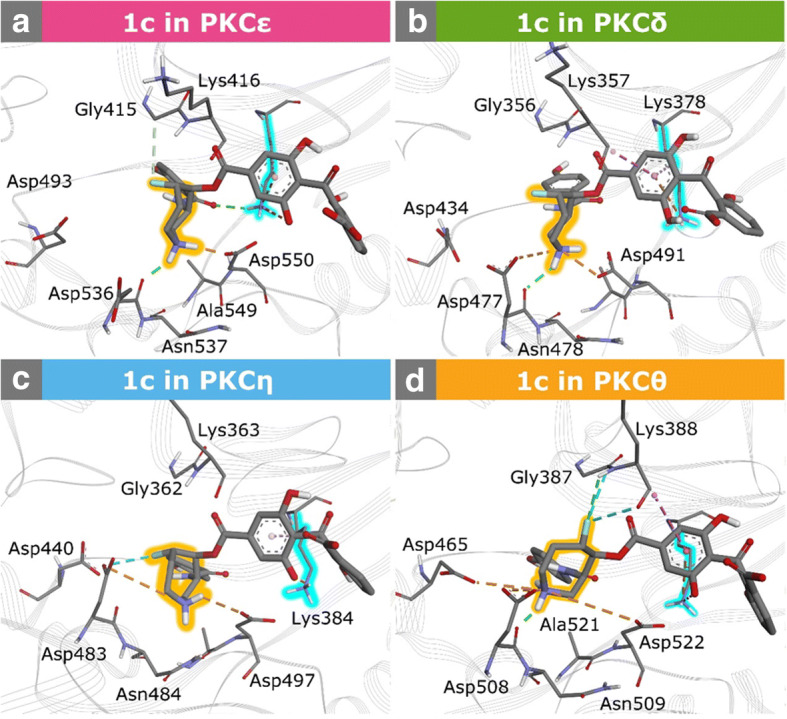
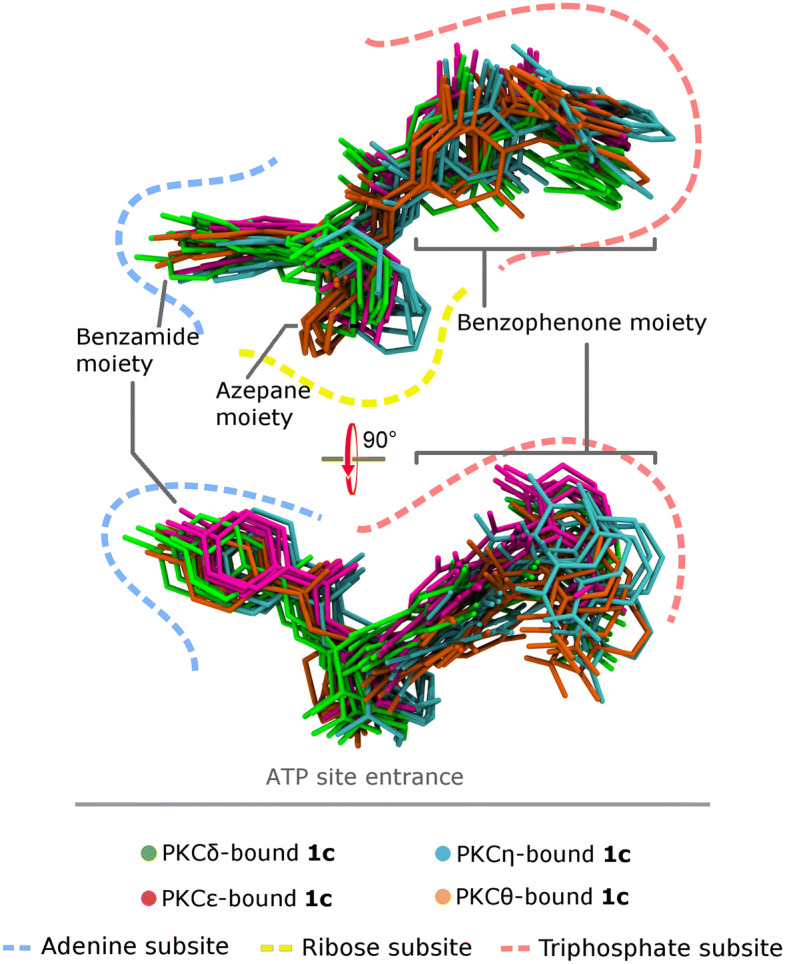
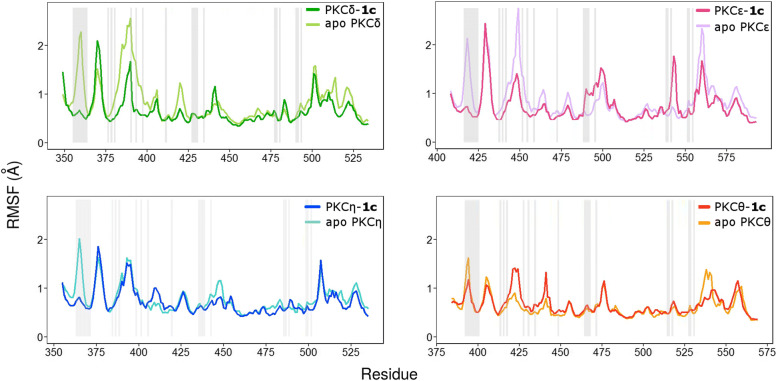
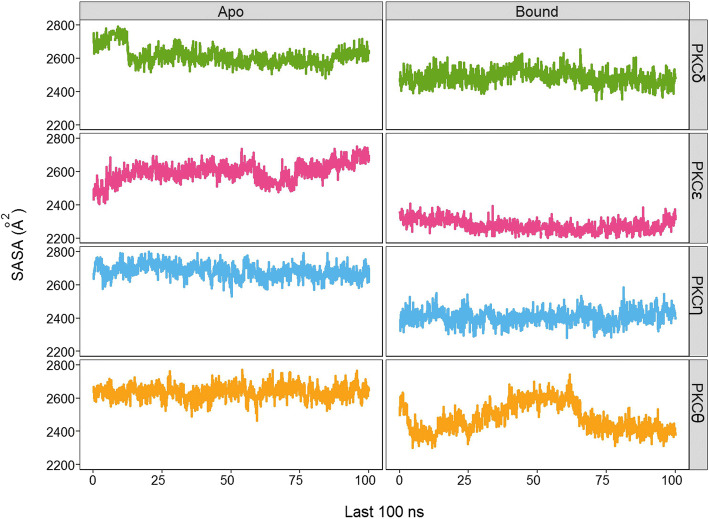
Using molecular dynamics (MD) simulations assisted by homology modelling and sequence analysis, we have studied the fluorine-based selectivity in the highly similar ATP sites of novel PKC (nPKC) isozymes. The study suggests that every nPKC isozyme has different dynamics behaviour in both apo and 1c-bound forms. Interestingly, the apo form of PKCε, where 1c binds strongly, shows the highest degree of flexibility which dramatically decreases after binding 1c.
For the first time to the best of our knowledge, we found that the origin of 1c selectivity for PKCε comes from the unique dynamics feature of each PKC isozyme. Fluorine conformational control in 1c can synergize with and lock down the dynamics of PKCε, which optimize binding interactions with the ATP site residues of the enzyme, particularly the invariant Lys437. This finding has implications for further rational design of balanol-based PKCε inhibitors for cancer drug development.
(-)-Balanol 是一种 ATP 模拟抑制剂,可非选择性地靶向蛋白激酶 C(PKC)同工酶和 cAMP 依赖性蛋白激酶(PKA)。虽然 PKA 始终表现出促进肿瘤的活性,但 PKC 同工酶可以含糊地促进肿瘤或抑制肿瘤。特别是,PKCε 经常与肿瘤发生有关,是抗癌药物的潜在靶标。我们最近报道,C5(S)-氟化的 balanol 类似物(balaenoid 1c)对 PKCε 的结合亲和力和选择性得到了改善,但对其他新型 PKC 同工酶没有作用,这些同工酶具有高度相似的 ATP 结合位点。这种基于氟的选择性的基础尚未完全理解,需要进一步研究,以开发针对 PKCε 的 ATP 模拟抑制剂。
使用同源建模和序列分析辅助的分子动力学(MD)模拟,我们研究了新型 PKC(nPKC)同工酶中高度相似的 ATP 结合位点的氟基选择性。研究表明,每种 nPKC 同工酶在apo 和 1c 结合形式中都具有不同的动力学行为。有趣的是,1c 强烈结合的 PKCε 的 apo 形式显示出最高的柔韧性,在结合 1c 后急剧降低。
据我们所知,这是首次发现 1c 对 PKCε 的选择性源于每个 PKC 同工酶独特的动力学特征。1c 中的氟构象控制可以协同作用并锁定 PKCε 的动力学,从而优化与酶的 ATP 结合位点残基的结合相互作用,特别是不变的 Lys437。这一发现对进一步合理设计基于 balanol 的 PKCε 抑制剂用于癌症药物开发具有重要意义。