Department of Hepatology, Ningbo No.2 Hospital, Ningbo, Zhejiang Province, China.
Department of Infectious Diseases, Zhejiang Provincial Center for Disease Control and Prevention, 3399 Binsheng Road, Binjiang District, Hangzhou, (310051), Zhejiang Province, China.
Virol J. 2019 Feb 4;16(1):16. doi: 10.1186/s12985-019-1119-7.
To examine the epidemiological trends and changes of hepatitis E virus (HEV) infection and the potential risk factors for severe infection in the Zhejiang eastern coastal area of China.
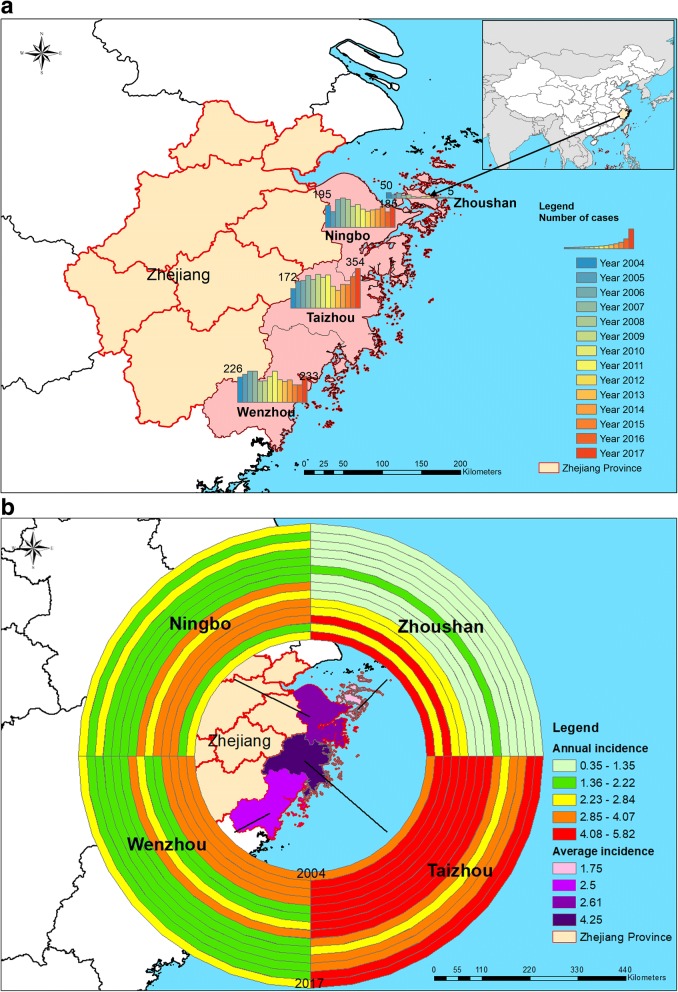
We analyzed statutory hepatitis E cases notifications and inpatient data held by the national surveillance and hospital information systems in Wenzhou, Taizhou, Ningbo, and Zhoushan cities of the Zhejiang eastern coastal area of China.
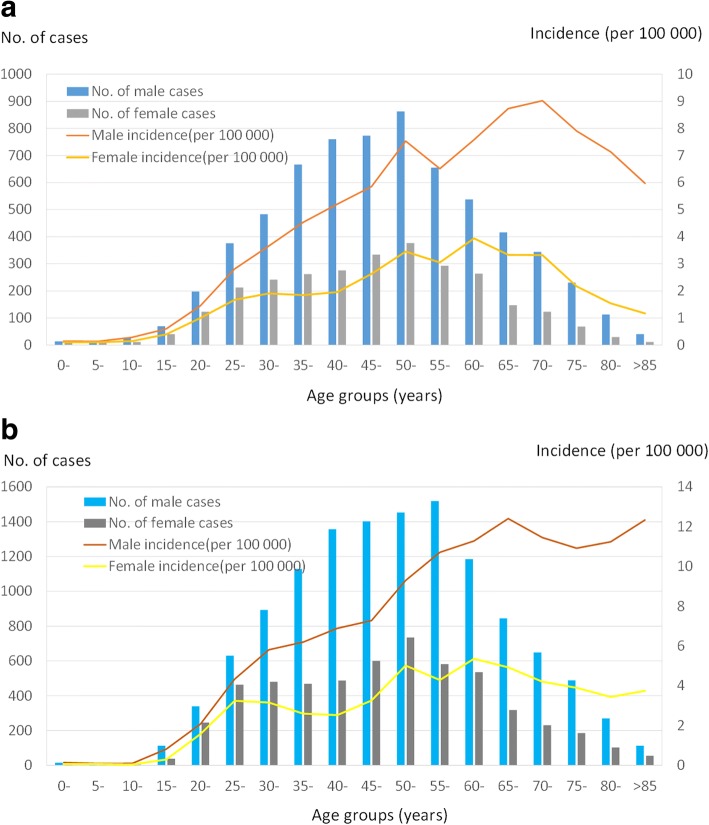
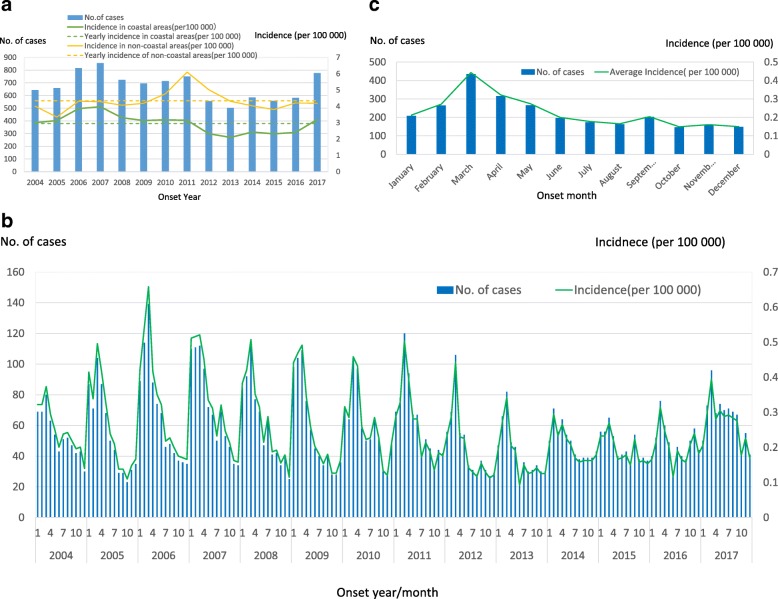
Nine thousand four hundred sixteen hepatitis E cases were reported from 2004 to 2017, with an average incidence of 2.94 per 100,000. The overall death rate was 0.06% (6/9416). A gradual decline of hepatitis E cases was found in the coastal areas since 2007, while a rise was identified in the non-coastal areas. Annual incidence in non-coastal cities was much higher than that in coastal cities (4.345 vs. 2.945 per 100,000, relative risk = 1.5, P value < 0.001). The mean age was 52 years old and 50.55 years with a male-to-female ratio of 2.32:1 and 2.21:1 in coastal and noncoastal areas respectively (all P > 0.05). Hepatitis E cases prevalence increased with age, highest among men in their 70s (9.02 vs. 11.33 per 100,000) and women in their 60s (3.94 vs. 4.66 per 100,000) groups for both coastal and noncoastal areas respectively. A clear seasonal pattern was observed, with a peak in March (0.4429 per 100,000) in coastal areas. 202 inpatients were documented, of which 50.50% (102/202) were severe cases. Male individuals with alcohol consumption, alcohol hepatic diseases, and superinfection were the three independent highest risks for severe infections (all with P value < 0.05).
This is to our knowledge the largest epidemiological study of hepatitis E cases in the eastern coastal area of Zhejiang province of China. The patterns of infection across the coastal areas were similar to those of the non-coastal areas, but the incidence was substantially lower and decreased gradually since 2007.
本研究旨在探讨中国浙江东部沿海地区戊型肝炎病毒(HEV)感染的流行病学趋势和变化,以及重症感染的潜在危险因素。
我们分析了中国浙江东部沿海的温州市、台州市、宁波市和舟山市国家监测和医院信息系统中法定戊型肝炎病例报告和住院数据。
2004 年至 2017 年共报告了 9416 例戊型肝炎病例,发病率平均为每 10 万人 2.94 例。总死亡率为 0.06%(6/9416)。自 2007 年以来,沿海地区的戊型肝炎病例逐渐减少,而非沿海地区则有所增加。非沿海城市的年发病率明显高于沿海城市(每 10 万人 4.345 例 vs. 2.945 例,相对风险=1.5,P 值<0.001)。平均年龄为 52 岁,沿海地区为 50.55 岁,男女比例分别为 2.32:1 和 2.21:1(均 P>0.05)。戊型肝炎病例的患病率随年龄增长而增加,沿海地区 70 多岁男性(每 10 万人 9.02 例)和非沿海地区 60 多岁女性(每 10 万人 3.94 例)的患病率最高。沿海和非沿海地区均观察到明显的季节性模式,3 月为高峰期(每 10 万人 0.4429 例)。共记录了 202 例住院患者,其中 50.50%(102/202)为重症病例。有酒精摄入、酒精性肝病和重叠感染的男性个体是重症感染的三个独立的最高风险因素(均 P 值<0.05)。
这是我们所知的中国浙江东部沿海地区最大规模的戊型肝炎病例流行病学研究。沿海地区的感染模式与非沿海地区相似,但发病率明显较低,并自 2007 年以来逐渐下降。