Khuroo Mohammad S, Khuroo Mehnaaz S, Khuroo Naira S
Sher-I-Kashmir Institute of Medical Sciences, Srinagar, Kashmir 190001, India.
Digestive Diseases Centre, Dr. Khuroo's Medical Clinic, Srinagar, Kashmir 190010, India.
Viruses. 2016 Sep 20;8(9):253. doi: 10.3390/v8090253.
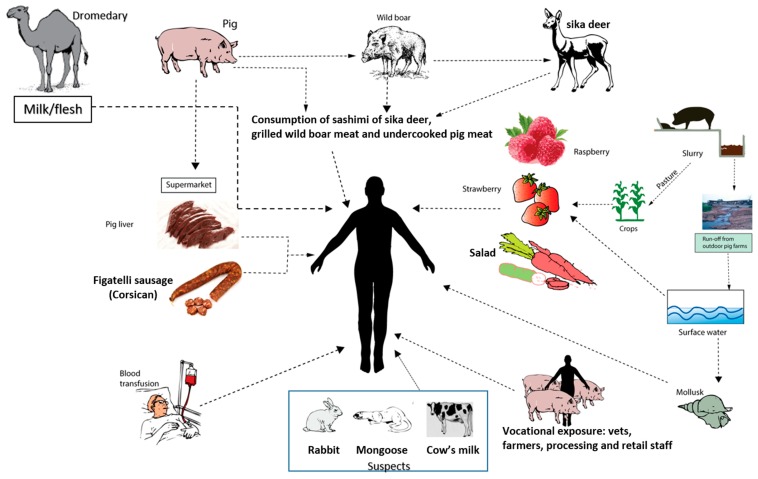
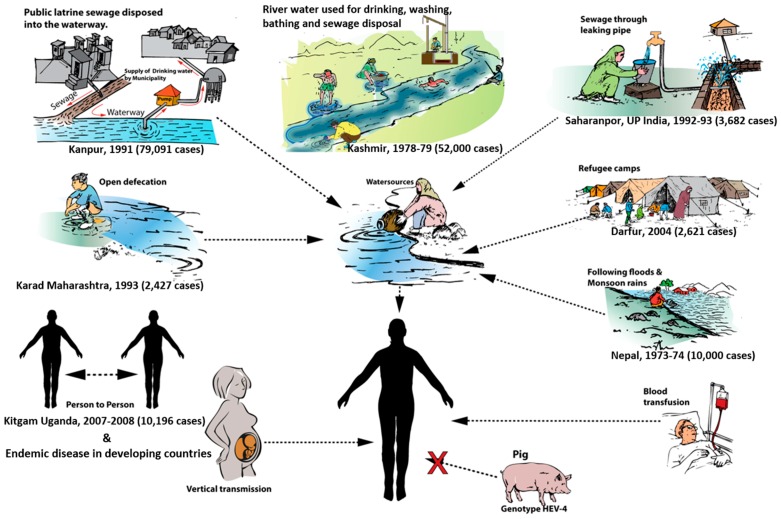
Hepatitis E virus (HEV), an RNA virus of the family, has marked heterogeneity. While all five HEV genotypes can cause human infections, genotypes HEV-1 and -2 infect humans alone, genotypes HEV-3 and -4 primarily infect pigs, boars and deer, and genotype HEV-7 primarily infects dromedaries. The global distribution of HEV has distinct epidemiological patterns based on ecology and socioeconomic factors. In resource-poor countries, disease presents as large-scale waterborne epidemics, and few epidemics have spread through person-to-person contact; however, endemic diseases within these countries can potentially spread through person-to-person contact or fecally contaminated water and foods. Vertical transmission of HEV from infected mother to fetus causes high fetal and perinatal mortality. Other means of transmission, such as zoonotic transmission, can fluctuate depending upon the region and strain of the virus. For instance, zoonotic transmission can sometimes play an insignificant role in human infections, such as in India, where human and pig HEV infections are unrelated. However, recently China and Southeast Asia have experienced a zoonotic spread of HEV-4 from pigs to humans and this has become the dominant mode of transmission of hepatitis E in eastern China. Zoonotic HEV infections in humans occur by eating undercooked pig flesh, raw liver, and sausages; through vocational contact; or via pig slurry, which leads to environmental contamination of agricultural products and seafood. Lastly, blood transfusion-associated HEV infections occur in many countries and screening of donors for HEV RNA is currently under serious consideration. To summarize, HEV genotypes 1 and 2 cause epidemic and endemic diseases in resource poor countries, primarily spreading through contaminated drinking water. HEV genotypes 3 and 4 on the other hand, cause autochthonous infections in developed, and many developing countries, by means of a unique zoonotic food-borne transmission.
戊型肝炎病毒(HEV)是一种属于该科的RNA病毒,具有显著的异质性。虽然所有五种HEV基因型都可导致人类感染,但HEV-1和-2基因型仅感染人类,HEV-3和-4基因型主要感染猪、野猪和鹿,而HEV-7基因型主要感染单峰骆驼。基于生态和社会经济因素,HEV在全球的分布呈现出不同的流行病学模式。在资源匮乏的国家,疾病表现为大规模的水源性流行,且很少有疫情通过人际接触传播;然而,这些国家的地方性疾病有可能通过人际接触或受粪便污染的水和食物传播。HEV从感染母亲垂直传播给胎儿会导致高胎儿和围产期死亡率。其他传播途径,如人畜共患病传播,可能因病毒的地区和毒株不同而有所波动。例如,人畜共患病传播在人类感染中有时作用不大,如在印度,人类和猪的HEV感染并无关联。然而,最近中国和东南亚经历了HEV-4从猪到人畜共患病传播,这已成为中国东部戊型肝炎的主要传播方式。人类通过食用未煮熟的猪肉、生肝脏和香肠;职业接触;或通过猪粪浆,导致农产品和海鲜的环境污染而感染人畜共患病HEV。最后,许多国家都发生了与输血相关的HEV感染,目前正在认真考虑对献血者进行HEV RNA筛查。总之,HEV-1和-2基因型在资源匮乏的国家引起流行和地方性疾病,主要通过受污染的饮用水传播。另一方面,HEV-3和-4基因型通过独特的人畜共患病食源性传播途径,在发达国家和许多发展中国家引起本土感染。