Department of Medical Chemistry, Faculty of Medicine, University of Debrecen, Debrecen, 4032, Hungary.
MTA-DE Lendület Laboratory of Cellular Metabolism, Debrecen, 4032, Hungary.
Sci Rep. 2019 Feb 4;9(1):1300. doi: 10.1038/s41598-018-37664-7.
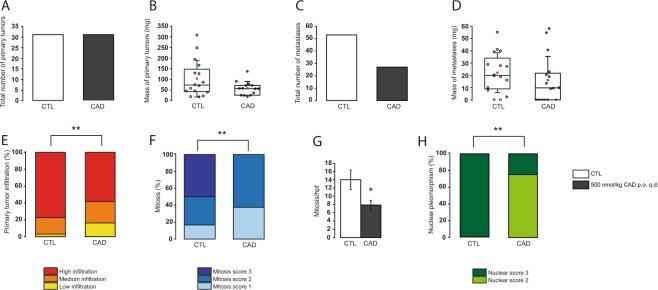
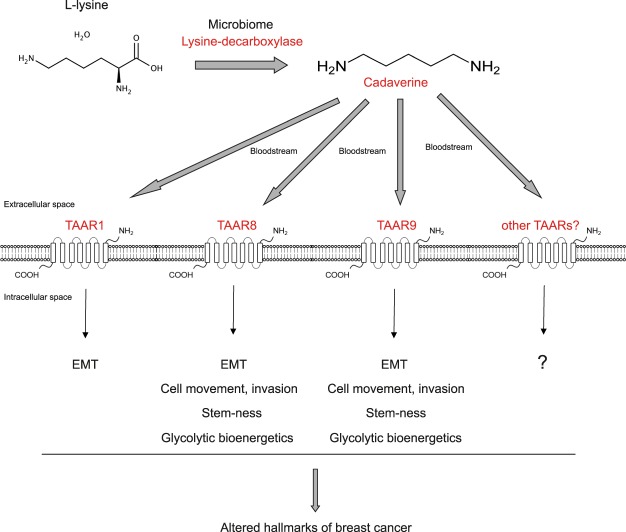
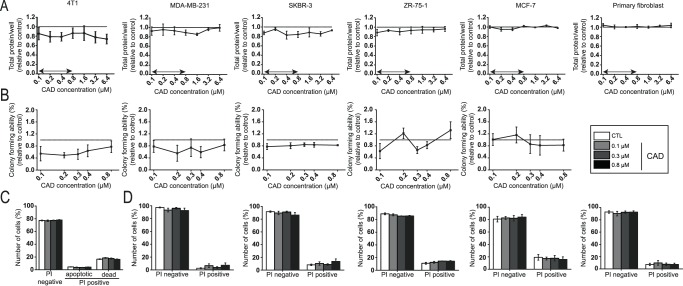
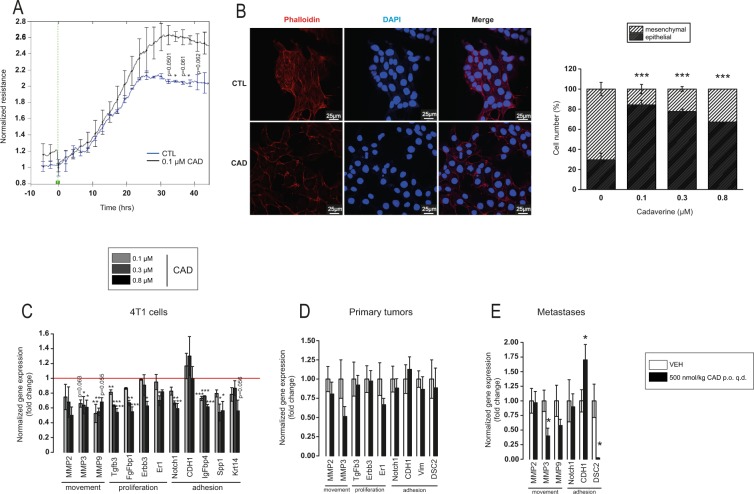
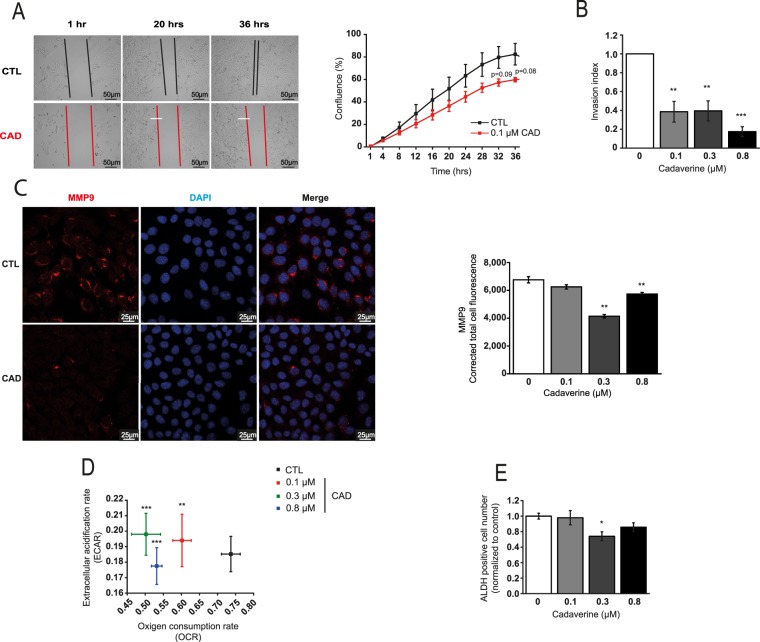
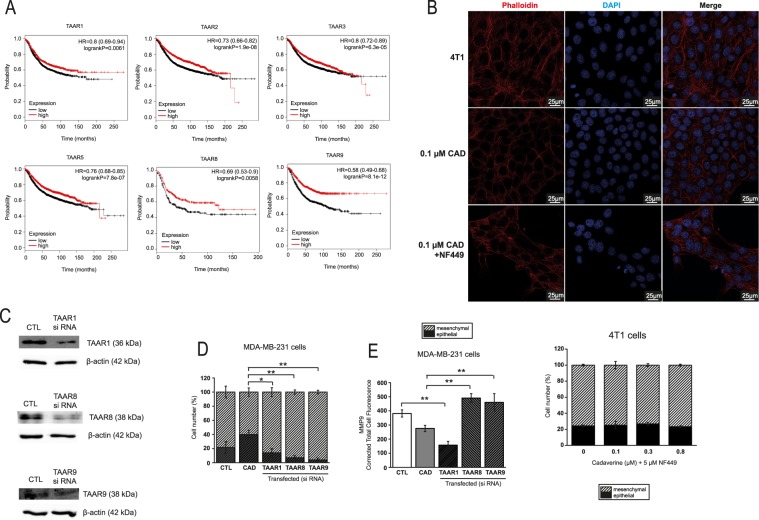
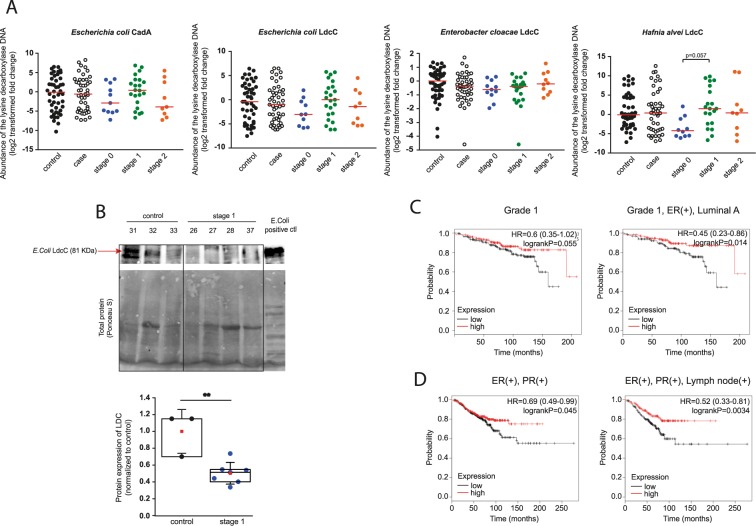
Recent studies showed that changes to the gut microbiome alters the microbiome-derived metabolome, potentially promoting carcinogenesis in organs that are distal to the gut. In this study, we assessed the relationship between breast cancer and cadaverine biosynthesis. Cadaverine treatment of Balb/c female mice (500 nmol/kg p.o. q.d.) grafted with 4T1 breast cancer cells ameliorated the disease (lower mass and infiltration of the primary tumor, fewer metastases, and lower grade tumors). Cadaverine treatment of breast cancer cell lines corresponding to its serum reference range (100-800 nM) reverted endothelial-to-mesenchymal transition, inhibited cellular movement and invasion, moreover, rendered cells less stem cell-like through reducing mitochondrial oxidation. Trace amino acid receptors (TAARs), namely, TAAR1, TAAR8 and TAAR9 were instrumental in provoking the cadaverine-evoked effects. Early stage breast cancer patients, versus control women, had reduced abundance of the CadA and LdcC genes in fecal DNA, both responsible for bacterial cadaverine production. Moreover, we found low protein expression of E. coli LdcC in the feces of stage 1 breast cancer patients. In addition, higher expression of lysine decarboxylase resulted in a prolonged survival among early-stage breast cancer patients. Taken together, cadaverine production seems to be a regulator of early breast cancer.
最近的研究表明,肠道微生物组的变化改变了微生物组衍生的代谢组,可能促进了远离肠道的器官发生癌变。在这项研究中,我们评估了乳腺癌与腐胺生物合成之间的关系。腐胺处理携带 4T1 乳腺癌细胞的 Balb/c 雌性小鼠(500 nmol/kg p.o. q.d.)可改善疾病(降低原发性肿瘤的质量和浸润,减少转移和肿瘤分级较低)。腐胺处理对应其血清参考范围(100-800 nM)的乳腺癌细胞系可逆转内皮到间充质转化,抑制细胞运动和侵袭,此外,通过减少线粒体氧化使细胞更不具有干细胞样。痕量氨基酸受体(TAARs),即 TAAR1、TAAR8 和 TAAR9,在引起腐胺诱发的效应中起重要作用。与对照女性相比,早期乳腺癌患者的粪便 DNA 中 CadA 和 LdcC 基因的丰度降低,这两种基因都负责细菌腐胺的产生。此外,我们发现 1 期乳腺癌患者粪便中的大肠杆菌 LdcC 蛋白表达水平较低。此外,赖氨酸脱羧酶的高表达可延长早期乳腺癌患者的生存时间。总之,腐胺的产生似乎是早期乳腺癌的一个调节剂。