Chemical Biology Laboratory, Center for Cancer Research, National Cancer Institute, National Institutes of Health, Frederick, MA, USA.
Department of Chemistry, Boston College, Chestnut Hill, MA, USA.
Nat Chem Biol. 2019 Apr;15(4):391-400. doi: 10.1038/s41589-018-0217-y. Epub 2019 Feb 4.
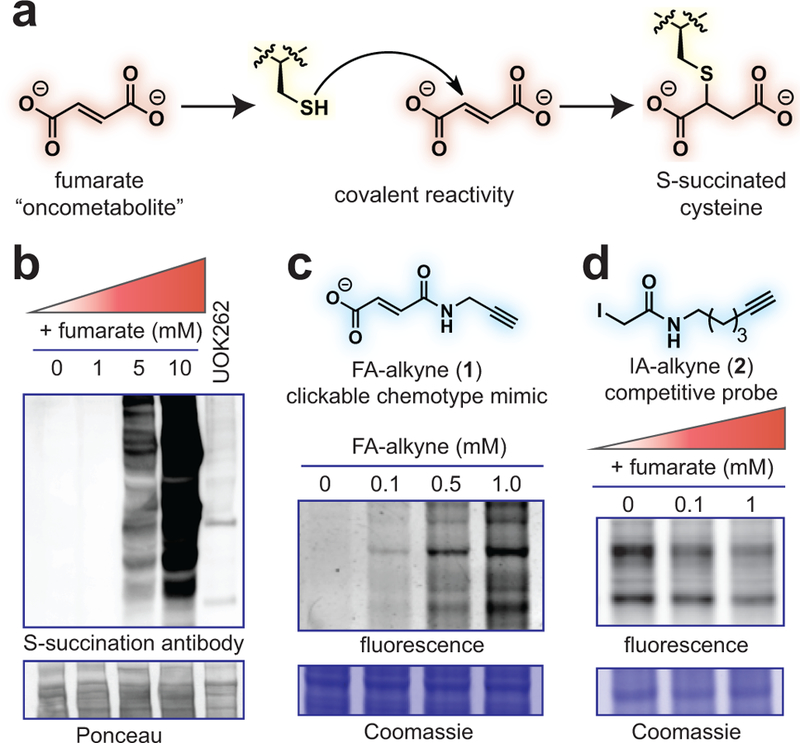
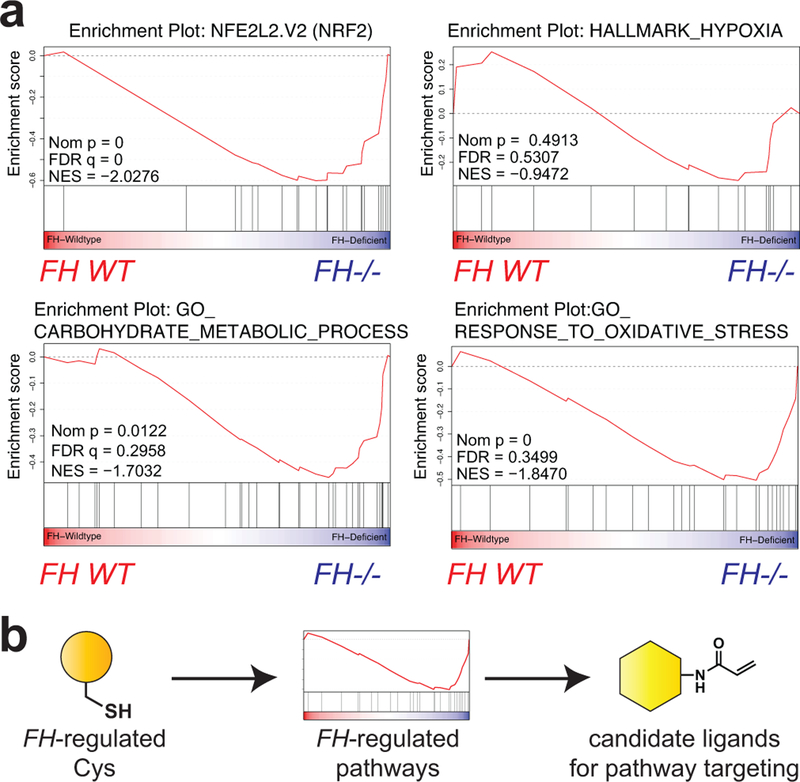
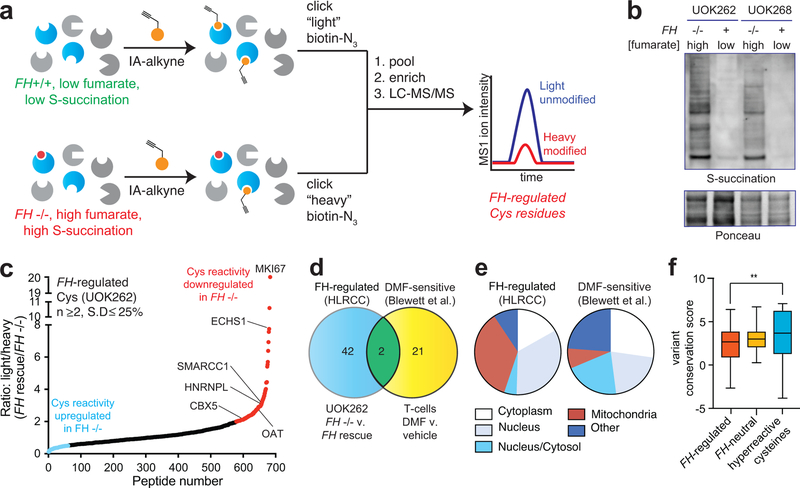
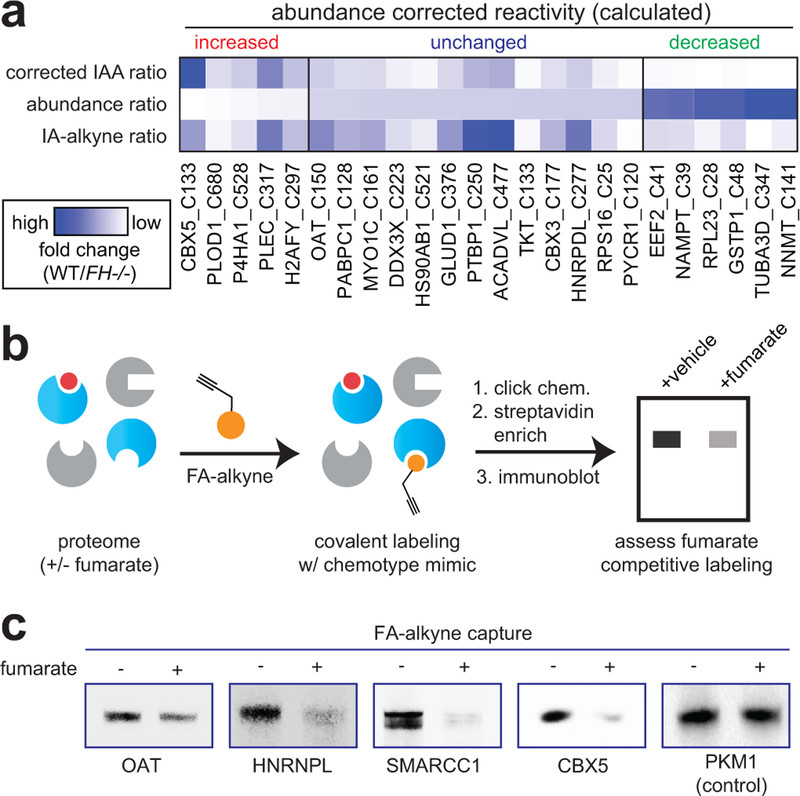
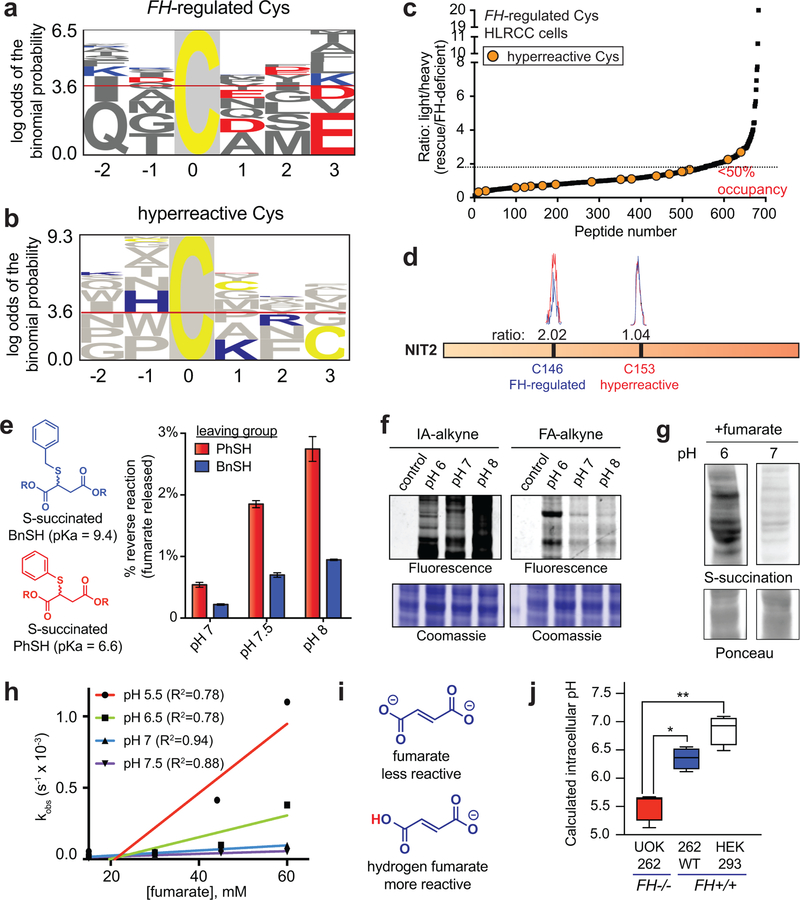
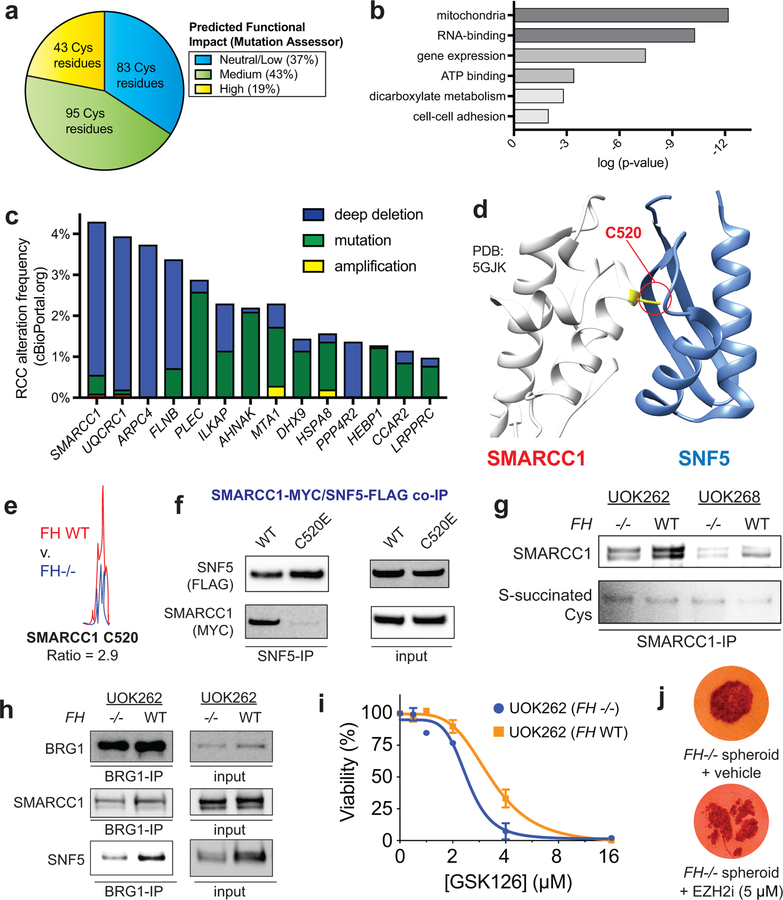
Hereditary cancer disorders often provide an important window into novel mechanisms supporting tumor growth. Understanding these mechanisms thus represents a vital goal. Toward this goal, here we report a chemoproteomic map of fumarate, a covalent oncometabolite whose accumulation marks the genetic cancer syndrome hereditary leiomyomatosis and renal cell carcinoma (HLRCC). We applied a fumarate-competitive chemoproteomic probe in concert with LC-MS/MS to discover new cysteines sensitive to fumarate hydratase (FH) mutation in HLRCC cell models. Analysis of this dataset revealed an unexpected influence of local environment and pH on fumarate reactivity, and enabled the characterization of a novel FH-regulated cysteine residue that lies at a key protein-protein interface in the SWI-SNF tumor-suppressor complex. Our studies provide a powerful resource for understanding the covalent imprint of fumarate on the proteome and lay the foundation for future efforts to exploit this distinct aspect of oncometabolism for cancer diagnosis and therapy.
遗传性癌症疾病通常为支持肿瘤生长的新机制提供了重要窗口。因此,了解这些机制是一个至关重要的目标。针对这一目标,我们在此报告了富马酸的化学蛋白质组图谱,富马酸是一种共价致癌代谢物,其积累标志着遗传性平滑肌瘤病和肾细胞癌(HLRCC)的遗传癌症综合征。我们应用富马酸竞争性化学蛋白质组学探针与 LC-MS/MS 联合使用,在 HLRCC 细胞模型中发现了对富马酸水合酶(FH)突变敏感的新半胱氨酸。对该数据集的分析揭示了局部环境和 pH 值对富马酸反应性的意外影响,并能够描述 FH 调节的位于 SWI-SNF 肿瘤抑制复合物关键蛋白-蛋白界面的新型半胱氨酸残基。我们的研究为理解富马酸对蛋白质组的共价印记提供了有力的资源,并为未来利用这种独特的致癌代谢物方面进行癌症诊断和治疗的努力奠定了基础。