Cerquetella Matteo, Rossi Giacomo, Spaterna Andrea, Tesei Beniamino, Gavazza Alessandra, Pengo Graziano, Pucciarelli Stefania, Scortichini Luca, Sagratini Gianni, Ricciutelli Massimo, Marchegiani Andrea, Vincenzetti Silvia
School of Biosciences and Veterinary Medicine, University of Camerino, Via Circonvallazione 93/95, 62024 Matelica (MC), Italy.
S. Antonio Clinic, Madignano, S.S 415 Paullese 6, 26020 Madignano (CR), Italy.
ScientificWorldJournal. 2019 Jan 3;2019:2742401. doi: 10.1155/2019/2742401. eCollection 2019.
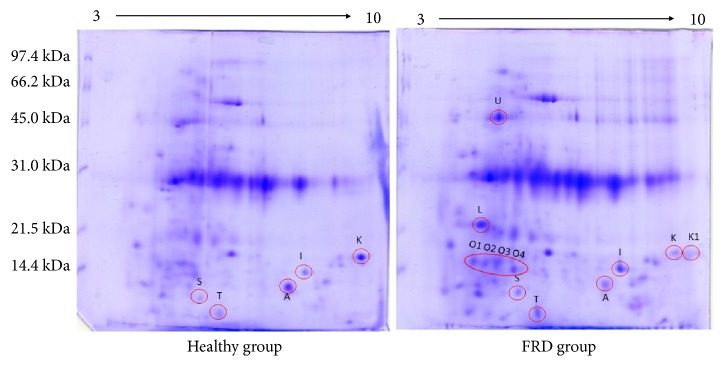
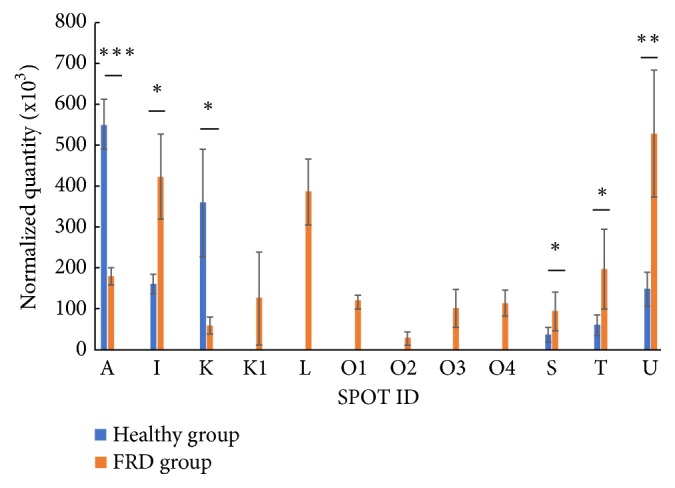
Different laboratory markers are routinely used in the diagnosis and management of gastrointestinal (GI) disease in dogs. In the present study, starting from feces from both healthy dogs and dogs suffering from food responsive diarrhea (FRD), we tried to find proteins differently expressed in the two groups of dogs, by using a proteomic approach. Interestingly, we found that the immunoglobulin J-chain isoform 1 (species: ) was identified only in diseased dogs (not in healthy). J-chain combines especially IgA monomers to IgA dimers and plays a crucial role for their secretions into mucosal interface. Being the first study of that kind in the dog, it is only possible to hypothesize that their presence could be likely due to an increased activation of the immune system or to a mucosal damage or both in FRD patients. Similarly, it is still impossible to assess whether this protein could be used as diagnostic/prognostic marker of GI disease; however, this study represents a promising first step toward fecal proteomics in canine GI disorders.
不同的实验室标志物通常用于犬类胃肠道(GI)疾病的诊断和管理。在本研究中,我们从健康犬和患有食物反应性腹泻(FRD)的犬的粪便开始,试图通过蛋白质组学方法找出两组犬中差异表达的蛋白质。有趣的是,我们发现免疫球蛋白J链异构体1(物种: )仅在患病犬中被鉴定出来(健康犬中未发现)。J链尤其能将IgA单体结合成IgA二聚体,并对它们分泌到黏膜界面起着关键作用。作为犬类的此类首次研究,只能推测它们的存在可能是由于FRD患者免疫系统激活增加或黏膜损伤或两者皆有。同样,目前仍无法评估该蛋白质是否可作为GI疾病的诊断/预后标志物;然而,这项研究是犬类GI疾病粪便蛋白质组学有前景的第一步。