Hong Bangxing, Muili Kamaldeen, Bolyard Chelsea, Russell Luke, Lee Tae Jin, Banasavadi-Siddegowda Yeshavanth, Yoo Ji Young, Yan Yuanqing, Ballester Leomar Y, Bockhorst Kurt H, Kaur Balveen
Department of Neurosurgery, McGovern Medical School, University of Texas Health Science Center, Houston, TX, USA.
The James Comprehensive Cancer Center, The Ohio State University, Columbus, OH, USA.
Mol Ther Oncolytics. 2018 Dec 6;12:93-102. doi: 10.1016/j.omto.2018.11.005. eCollection 2019 Mar 29.
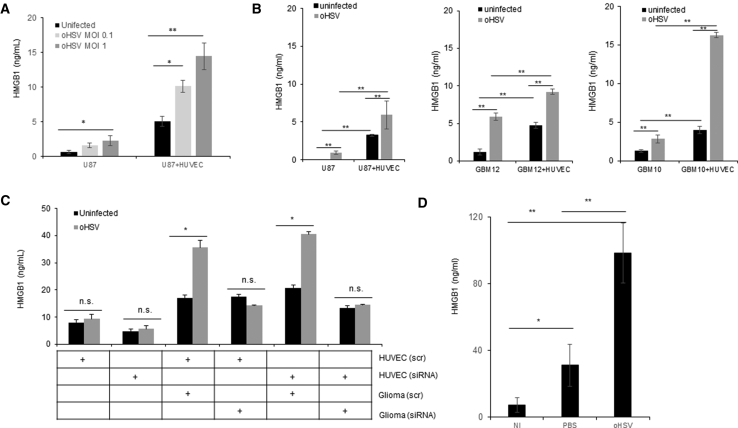
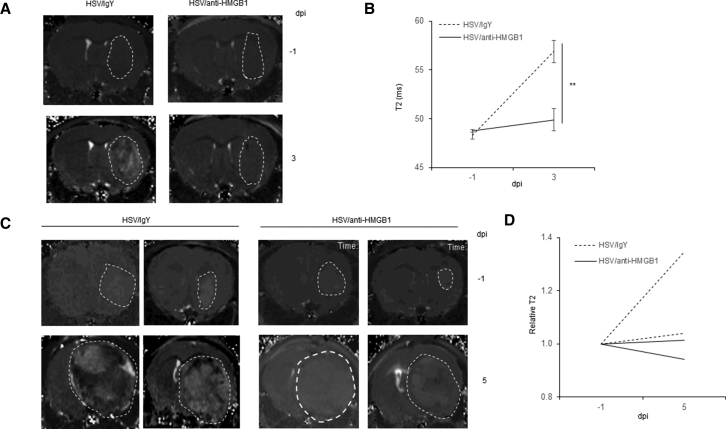
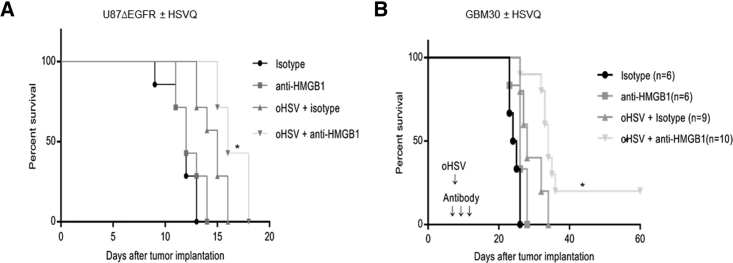
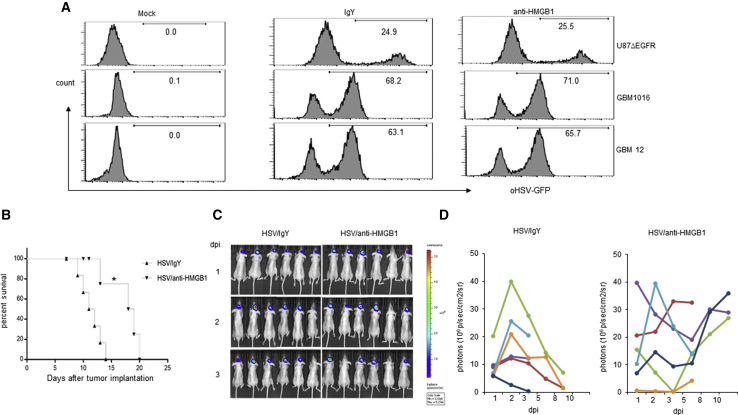
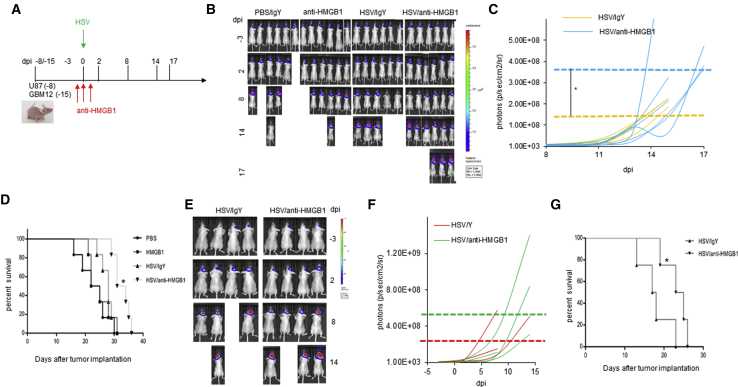
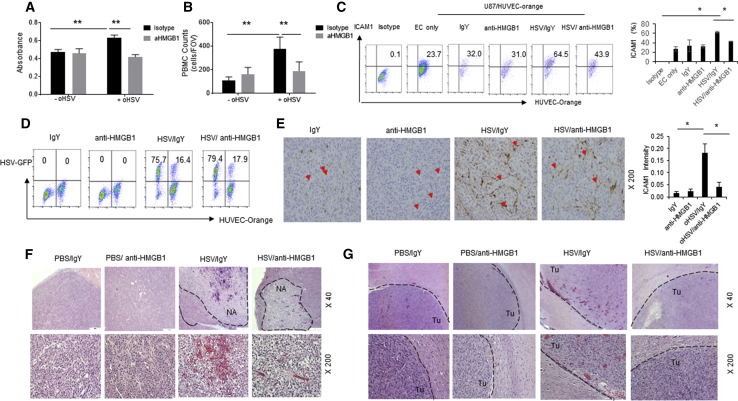
HMGB1 is a ubiquitously expressed intracellular protein that binds DNA and transcription factors and regulates chromosomal structure and function. Under conditions of cell death or stress, it is actively or passively released by cells into the extracellular environment, where it functions as damage-associated molecular pattern (DAMP) that orchestrates pro-inflammatory cytokine release and inflammation. Our results demonstrate that HMGB1 is secreted in the tumor microenvironment after oncolytic HSV (oHSV) infection and . The impact of secreted HMGB1 on tumor growth and response to oncolytic viral therapy was evaluated by using HMGB1-blocking antibodies and in mice bearing intracranial tumors. IVIS and MRI imaging was utilized to visualize in real time virus spread, tumor growth, and changes in edema in mice. Our data showed that HMGB1 released in tumor microenvironment orchestrated increased vascular leakiness and edema. Further HMGB1 blocking antibodies rescued vascular leakiness and enhanced survival of intracranial glioma-bearing mice treated with oHSV.
高迁移率族蛋白B1(HMGB1)是一种在细胞内广泛表达的蛋白质,它与DNA和转录因子结合,调节染色体结构和功能。在细胞死亡或应激条件下,它被细胞主动或被动释放到细胞外环境中,在那里它作为损伤相关分子模式(DAMP)发挥作用,协调促炎细胞因子的释放和炎症反应。我们的结果表明,溶瘤性单纯疱疹病毒(oHSV)感染后,HMGB1在肿瘤微环境中分泌。通过使用HMGB1阻断抗体,并在患有颅内肿瘤的小鼠中,评估分泌的HMGB1对肿瘤生长和溶瘤病毒治疗反应的影响。利用IVIS和MRI成像实时观察小鼠体内病毒传播、肿瘤生长和水肿变化。我们的数据表明,肿瘤微环境中释放的HMGB1会导致血管渗漏和水肿增加。进一步的研究表明,HMGB1阻断抗体可挽救血管渗漏,并提高接受oHSV治疗的颅内胶质瘤小鼠的生存率。