Departamento de Genética y Microbiología, Universidad de Murcia, Murcia, Spain.
Department of Molecular Genetics and Microbiology, Duke University Medical Center, Durham, North Carolina, USA.
mBio. 2019 Feb 5;10(1):e02765-18. doi: 10.1128/mBio.02765-18.
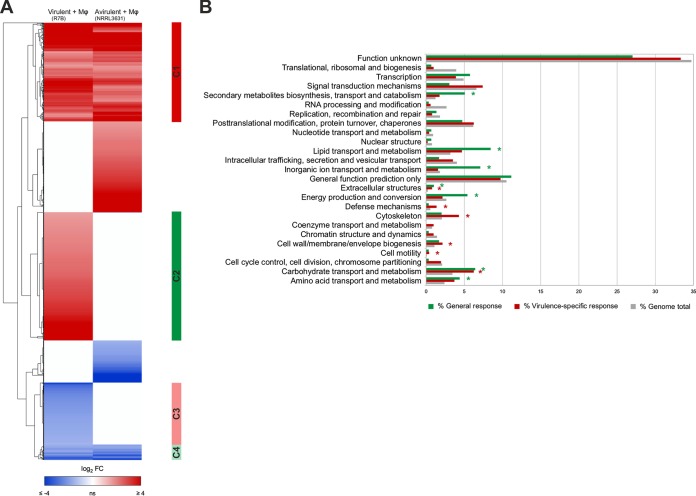
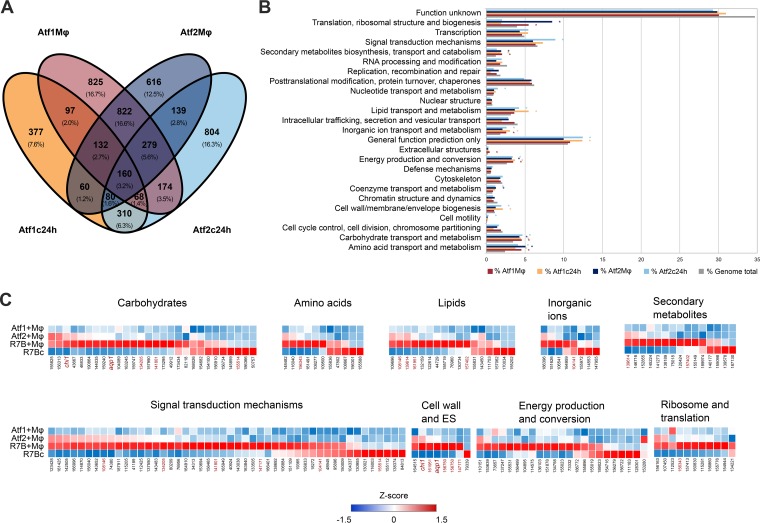
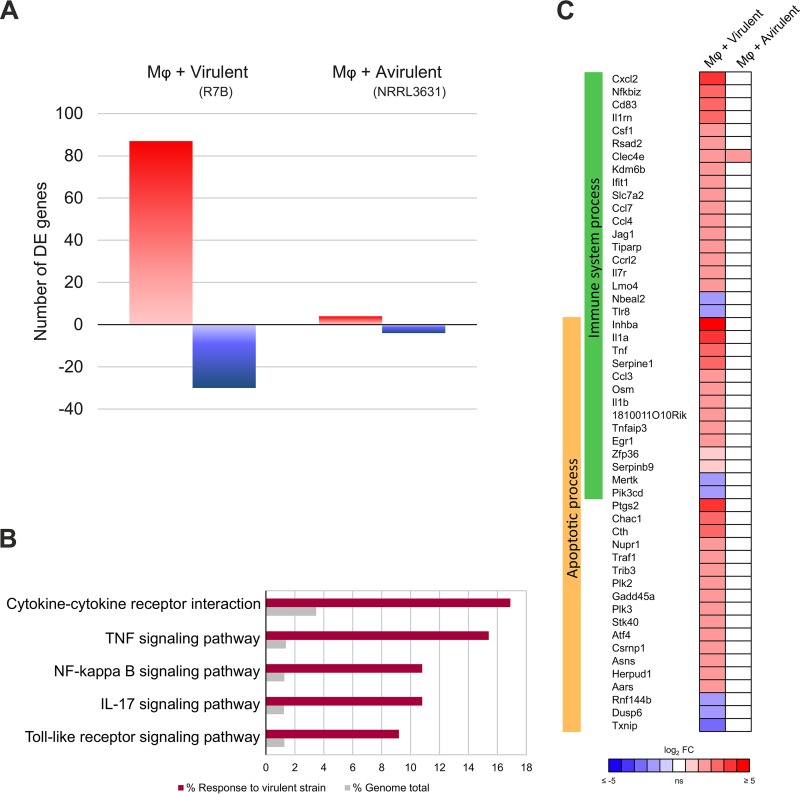
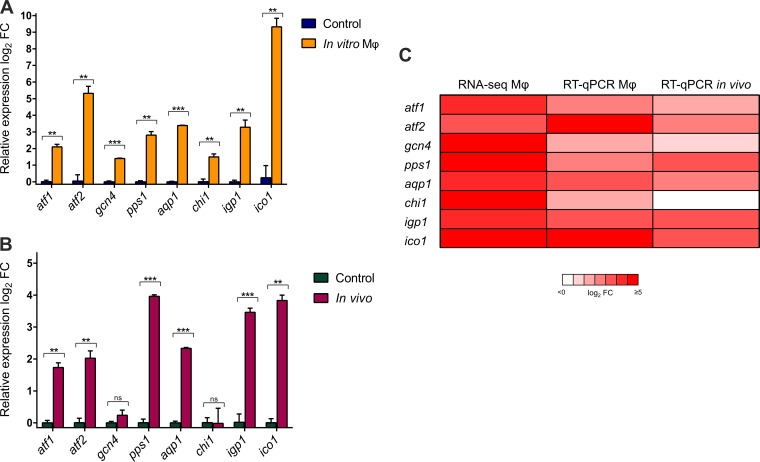
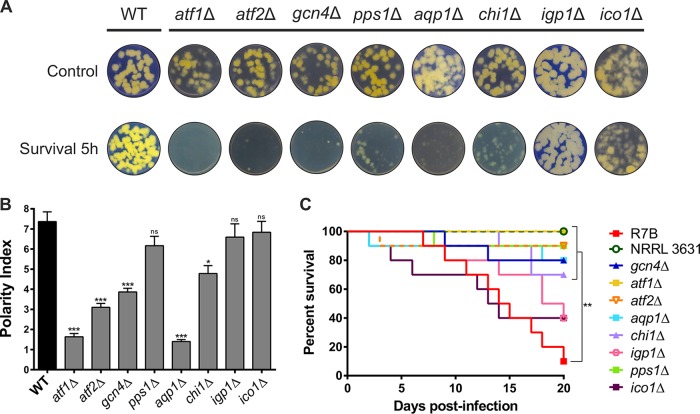
Mucormycosis is an emerging fungal infection that is often lethal due to the ineffectiveness of current therapies. Here, we have studied the first stage of this infection-the germination of spores inside phagocytic cells-from an integrated transcriptomic and functional perspective. A relevant fungal gene network is remodeled in response to phagocytosis, being enriched in crucial functions to survive and germinate inside the phagosome, such as nutritional adaptation and response to oxidative stress. Correspondingly, the phagocytic cells induced a specific proinflammatory and apoptotic response to the pathogenic strain. Deletion of fungal genes encoding putative transcription factors (, , and ), extracellular proteins ( and ), and an aquaporin () revealed that these genes perform important roles in survival following phagocytosis, germination inside the phagosome, and virulence in mice. and play a major role in these pathogenic processes, since their mutants showed the strongest phenotypes and both genes control a complex gene network of secondarily regulated genes, including and These new insights into the initial phase of mucormycosis define genetic regulators and molecular processes that could serve as pharmacological targets. Mucorales are a group of ancient saprophytic fungi that cause neglected infectious diseases collectively known as mucormycoses. The molecular processes underlying the establishment and progression of this disease are largely unknown. Our work presents a transcriptomic study to unveil the genetic network triggered in fungal spores in response to phagocytosis by macrophages and the transcriptional response of the host cells. Functional characterization of differentially expressed fungal genes revealed three transcription factors and three extracellular proteins essential for the fungus to survive and germinate inside the phagosome and to cause disease in mice. Two of the transcription factors, highly similar to activating transcription factors (ATFs), coordinate a complex secondary gene response involved in pathogenesis. The significance of our research is in characterizing the initial stages that lead to evasion of the host innate immune response and, in consequence, the dissemination of the infection. This genetic study offers possible targets for novel antifungal drugs against these opportunistic human pathogens.
毛霉病是一种新兴的真菌感染,由于目前治疗方法的效果不佳,通常是致命的。在这里,我们从综合转录组学和功能的角度研究了这种感染的第一阶段——吞噬细胞内孢子的萌发。在吞噬作用的刺激下,相关的真菌基因网络被重塑,富集了在吞噬体中存活和萌发所必需的关键功能,如营养适应和对氧化应激的反应。相应地,吞噬细胞诱导了针对病原菌的特定促炎和凋亡反应。删除真菌基因编码的假定转录因子(、、和)、细胞外蛋白(和)和水通道蛋白()表明,这些基因在吞噬后存活、吞噬体内部萌发和在小鼠中的毒力中发挥重要作用。和在这些致病过程中起主要作用,因为它们的突变体表现出最强的表型,并且这两个基因控制着一个复杂的基因网络,包括和。这些对毛霉病初始阶段的新见解定义了可以作为药物靶点的遗传调节剂和分子过程。毛霉目是一组古老的腐生真菌,它们引起被忽视的传染病,统称为毛霉病。这种疾病建立和进展的分子过程在很大程度上是未知的。我们的工作进行了转录组学研究,以揭示真菌孢子在被巨噬细胞吞噬后,在真菌中触发的基因网络和宿主细胞的转录反应。差异表达真菌基因的功能表征揭示了三个转录因子和三个细胞外蛋白,它们对真菌在吞噬体中存活和萌发以及在小鼠中引起疾病至关重要。这两个转录因子高度类似于激活转录因子(ATFs),协调涉及发病机制的复杂二次基因反应。我们研究的意义在于描述导致宿主先天免疫反应逃避的初始阶段,从而导致感染的传播。这项遗传研究为针对这些机会性人类病原体的新型抗真菌药物提供了可能的靶点。