From the Department of Biochemistry, University of Colorado, Boulder, Colorado 80309 and.
From the Department of Biochemistry, University of Colorado, Boulder, Colorado 80309 and
J Biol Chem. 2019 Apr 19;294(16):6344-6352. doi: 10.1074/jbc.RA118.007138. Epub 2019 Feb 5.
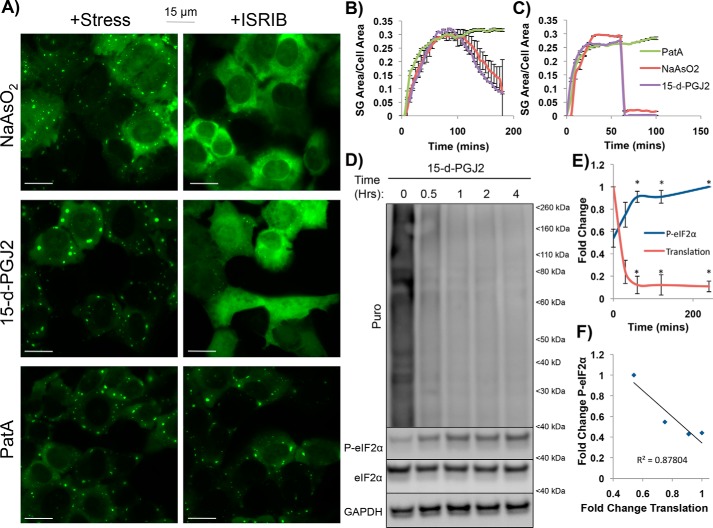
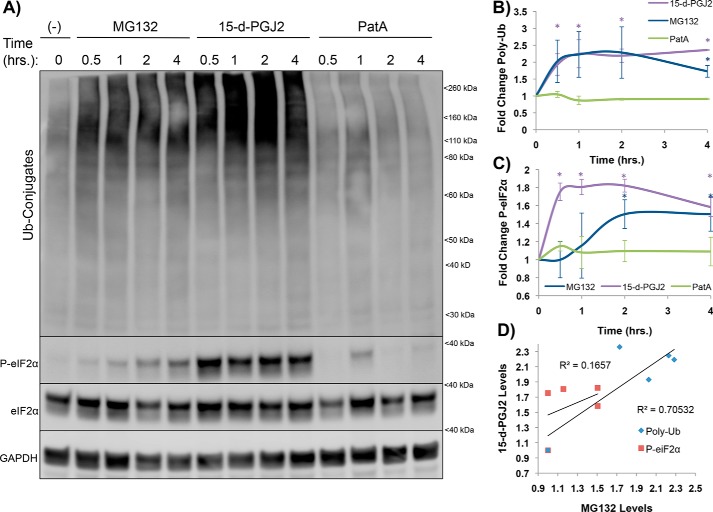
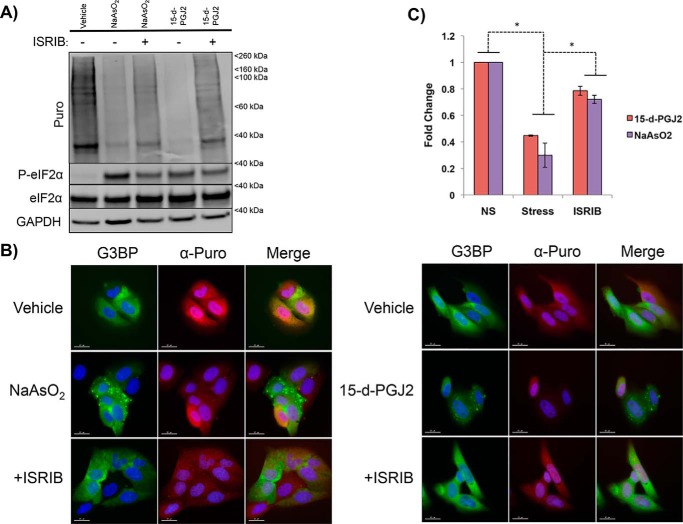
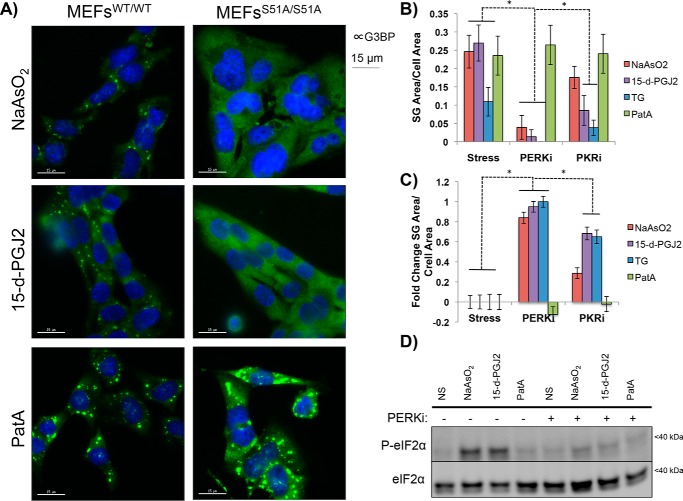
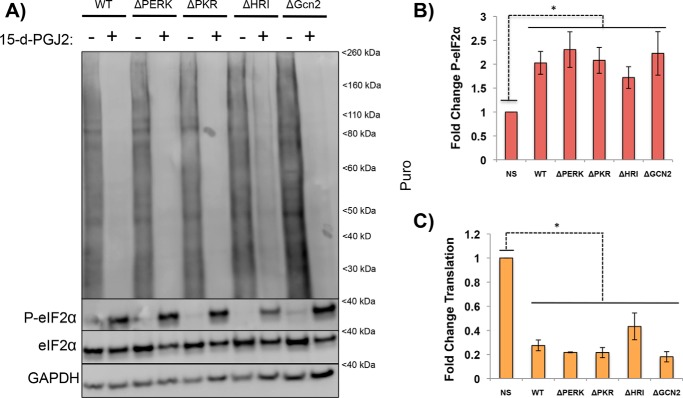
Stress granules (SGs) are cytoplasmic RNA-protein aggregates formed in response to inhibition of translation initiation. SGs contribute to the stress response and are implicated in a variety of diseases, including cancer and some forms of neurodegeneration. Neurodegenerative diseases often involve chronic phosphorylation of eukaryotic initiation factor 2α (eIF2α), with deletions of eIF2α kinases or treatment with eIF2α kinase inhibitors being protective in some animal models of disease. However, how and why the integrated stress response (ISR) is activated in different forms of neurodegeneration remains unclear. Because neuroinflammation is common to many neurodegenerative diseases, we hypothesized that inflammatory factors contribute to ISR activation in a cell-nonautonomous manner. Using fluorescence microscopy and immunoblotting, we show here that the endogenously produced product of inflammation, 15-deoxy-Δ-prostaglandin J2 (15-d-PGJ2), triggers eIF2α phosphorylation, thereby activating the ISR, repressing bulk translation, and triggering SG formation. Our findings define a mechanism by which inflammation activates the ISR in a cell-nonautonomous manner and suggest that inhibition of 15-d-PGJ2 production might be a useful therapeutic strategy in some neuroinflammatory contexts.
应激颗粒(SGs)是在翻译起始抑制时形成的细胞质 RNA-蛋白聚集体。SGs 有助于应激反应,并与多种疾病有关,包括癌症和某些形式的神经退行性疾病。神经退行性疾病通常涉及真核起始因子 2α(eIF2α)的慢性磷酸化,在某些疾病的动物模型中,缺失 eIF2α 激酶或用 eIF2α 激酶抑制剂治疗具有保护作用。然而,在不同形式的神经退行性变中,整合应激反应(ISR)如何以及为何被激活仍不清楚。由于神经炎症是许多神经退行性疾病的共同特征,我们假设炎症因子以细胞非自主性的方式促进 ISR 的激活。在这里,我们通过荧光显微镜和免疫印迹显示,内源性产生的炎症产物 15-脱氧-Δ-前列腺素 J2(15-d-PGJ2)触发 eIF2α 磷酸化,从而激活 ISR,抑制大量翻译,并触发 SG 形成。我们的发现定义了一种炎症以细胞非自主性方式激活 ISR 的机制,并表明抑制 15-d-PGJ2 的产生可能是某些神经炎症情况下的一种有用的治疗策略。