Department of Chinese Integrative Medicine Oncology, The First Affiliated Hospital of Anhui Medical University, Hefei, Anhui 230022, China.
The CAS Key Laboratory of Innate Immunity and Chronic Disease, Innovation Center for Cell Signaling Network, School of Life Sciences and Medical Center, University of Science and Technology of China, Hefei, Anhui 230027, China.
Biomed Res Int. 2019 Jan 6;2019:6543230. doi: 10.1155/2019/6543230. eCollection 2019.
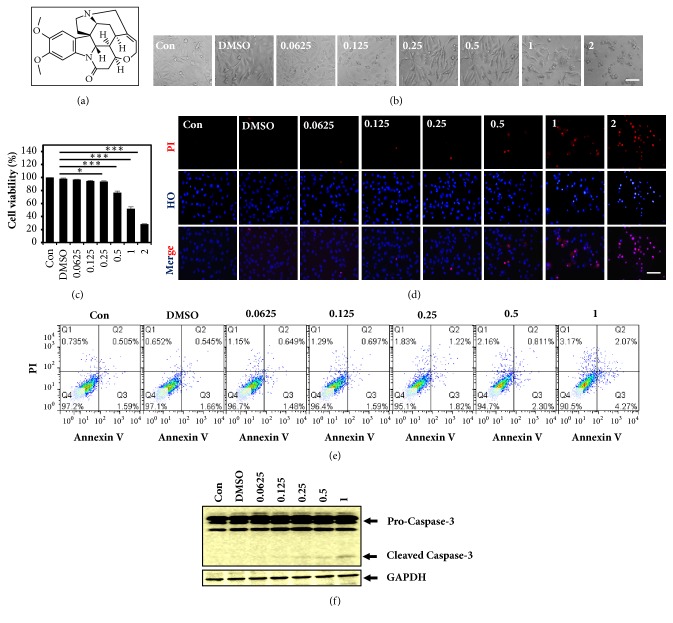
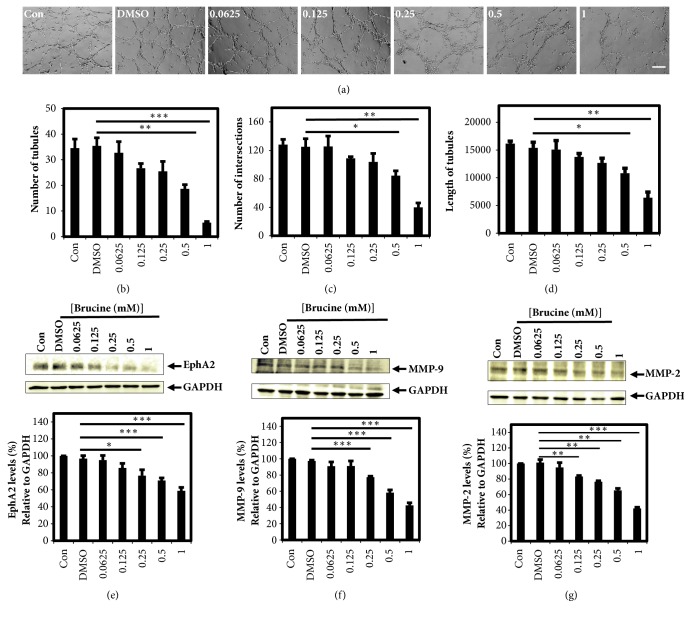
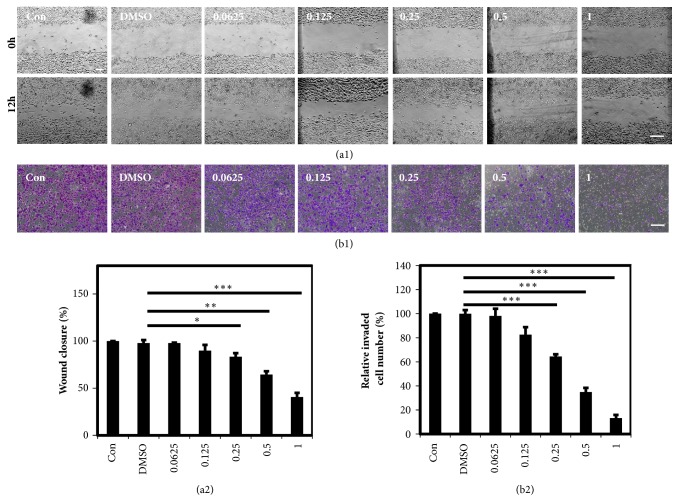
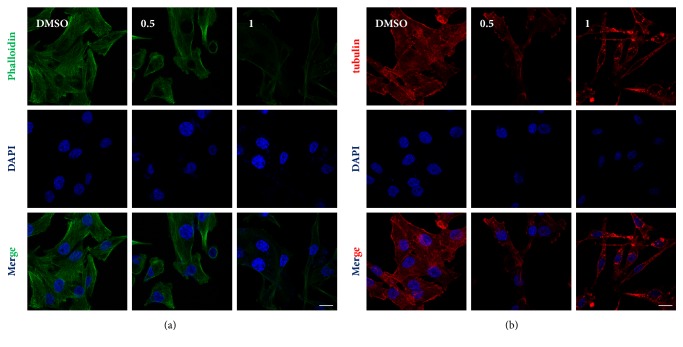
Vasculogenic mimicry (VM) with the pattern of endothelial independent tubular structure formation lined by aggressive tumor cells mimics regular tumor blood vessels to ensure robust blood supply and correlates with the proliferation, invasion, metastasis, and poor prognosis of malignant tumors, which was demonstrated to be a major obstacle for resistance to antiangiogenesis therapy. Therefore, it is urgent to discover methods to abrogate the VM formation of tumors, which possesses important practical significance for improving tumor therapy. Brucine is a traditional medicinal herb extracted from seeds of Strychnos nux-vomica L. (Loganiaceae) exhibiting antitumor activity in a variety of cancer models. In the present study, the effect of brucine on vasculogenic mimicry and the related mechanism are to be investigated. We demonstrated that, in a triple-negative breast cancer cell line MDA-MB-231, brucine induced a dose-dependent inhibitory effect on cell proliferation along with apoptosis induction at higher concentrations. The further study showed that brucine inhibited cell migration and invasion with a dose-dependent manner. Our results for the first time indicated that brucine could disrupt F-actin cytoskeleton and microtubule structure, thereby impairing hallmarks of aggressive tumors, like migration, invasion, and holding a possibility of suppressing vasculogenic mimicry. Hence, the inhibitory effect of brucine on vasculogenic mimicry was further verified. The results illustrated that brucine significantly suppressed vasculogenic mimicry tube formation with a dose-dependent effect indicated by the change of the number of tubules, intersections, and mean length of tubules. The in-depth molecular mechanism of vasculogenic mimicry suppression induced by brucine was finally suggested. It was demonstrated that brucine inhibited vasculogenic mimicry which might be through the downregulation of erythropoietin-producing hepatocellular carcinoma-A2 and matrix metalloproteinase-2 and metalloproteinase-9.
血管生成拟态(VM)具有内皮细胞独立管状结构形成的模式,由侵袭性肿瘤细胞排列,模拟规则的肿瘤血管,以确保充足的血液供应,并与恶性肿瘤的增殖、侵袭、转移和不良预后相关,这被证明是抗血管生成治疗耐药的主要障碍。因此,迫切需要发现方法来消除肿瘤的 VM 形成,这对于改善肿瘤治疗具有重要的实际意义。马钱子碱是从马钱子(Strychnos nux-vomica L.)(马钱科)种子中提取的一种传统草药,在多种癌症模型中表现出抗肿瘤活性。在本研究中,研究了马钱子碱对血管生成拟态的影响及其相关机制。我们证明,在三阴性乳腺癌细胞系 MDA-MB-231 中,马钱子碱以剂量依赖性方式抑制细胞增殖,同时在较高浓度时诱导细胞凋亡。进一步的研究表明,马钱子碱以剂量依赖性方式抑制细胞迁移和侵袭。我们的研究结果首次表明,马钱子碱可以破坏 F-肌动蛋白细胞骨架和微管结构,从而破坏侵袭性肿瘤的标志,如迁移、侵袭,并有可能抑制血管生成拟态。因此,进一步验证了马钱子碱对血管生成拟态的抑制作用。结果表明,马钱子碱以剂量依赖性方式显著抑制血管生成拟态管形成,表现为管数、交点和管平均长度的变化。最后提出了马钱子碱抑制血管生成拟态的深入分子机制。研究表明,马钱子碱通过下调红细胞生成素产生肝细胞癌-A2 和基质金属蛋白酶-2 和基质金属蛋白酶-9 抑制血管生成拟态。