Institute of Science and Technology Austria (IST Austria), Am Campus 1, Klosterneuburg, Austria.
School of Psychology, Cardiff University, 70 Park Place, Cardiff, United Kingdom.
Hippocampus. 2019 Sep;29(9):802-816. doi: 10.1002/hipo.23076. Epub 2019 Feb 5.
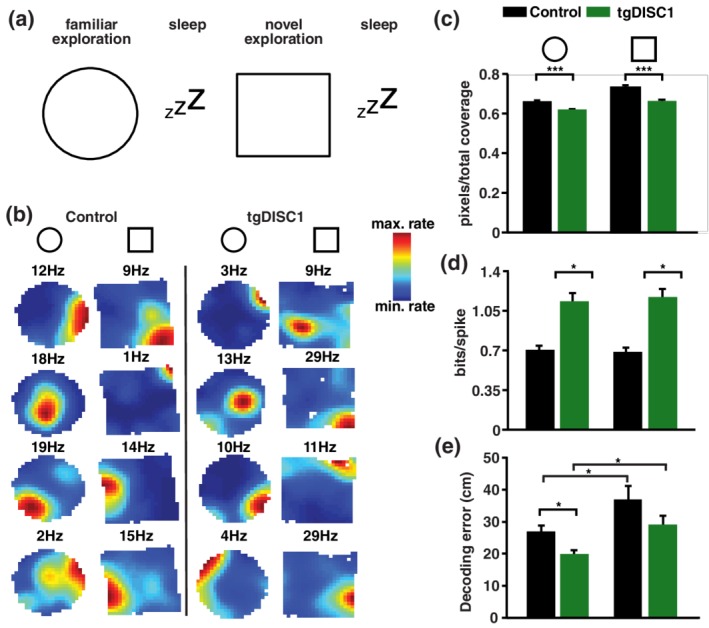
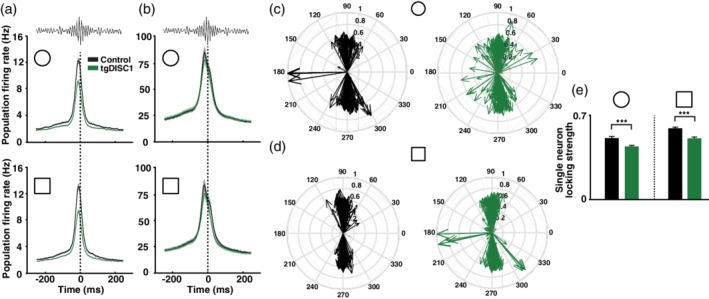
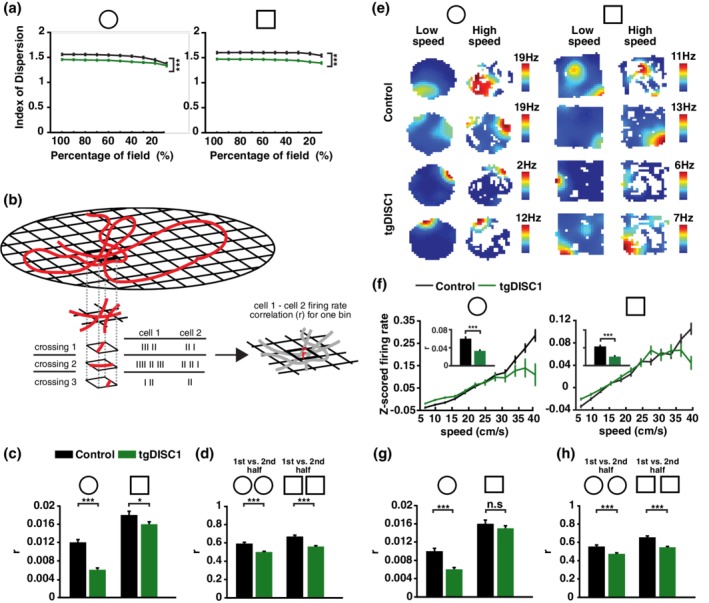
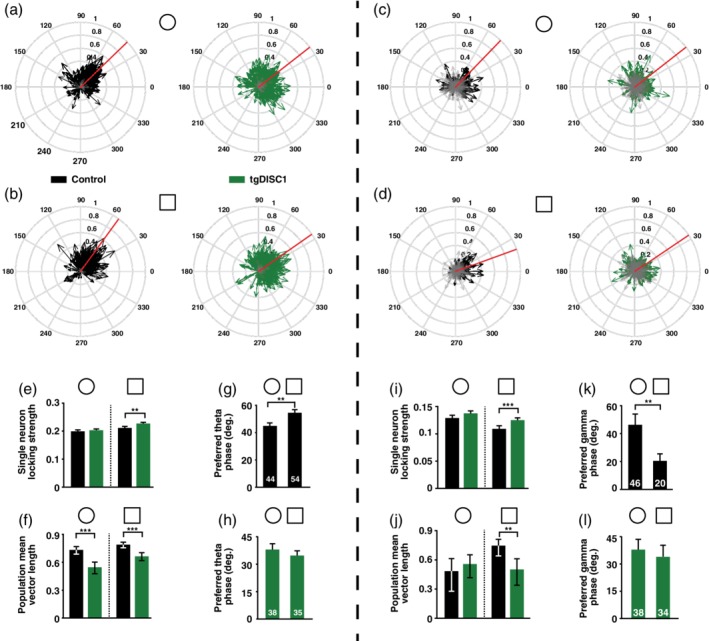
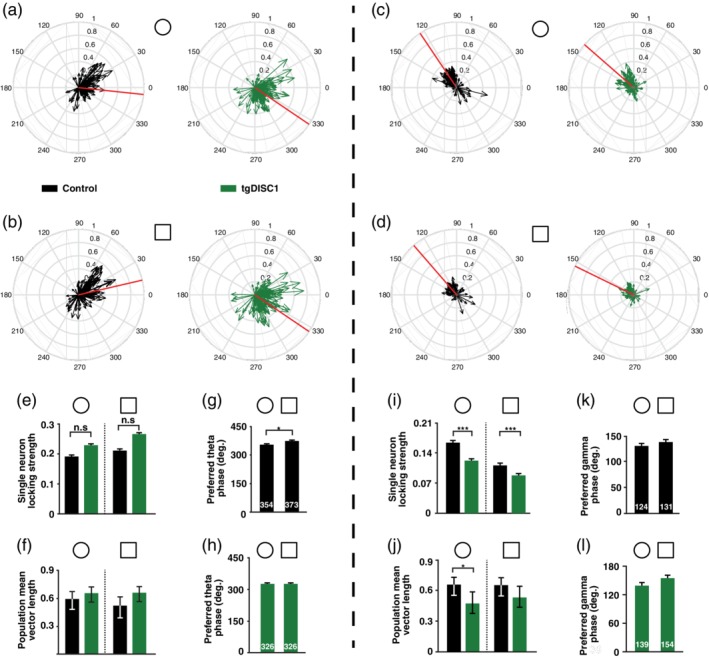
Aberrant proteostasis of protein aggregation may lead to behavior disorders including chronic mental illnesses (CMI). Furthermore, the neuronal activity alterations that underlie CMI are not well understood. We recorded the local field potential and single-unit activity of the hippocampal CA1 region in vivo in rats transgenically overexpressing the Disrupted-in-Schizophrenia 1 (DISC1) gene (tgDISC1), modeling sporadic CMI. These tgDISC1 rats have previously been shown to exhibit DISC1 protein aggregation, disturbances in the dopaminergic system and attention-related deficits. Recordings were performed during exploration of familiar and novel open field environments and during sleep, allowing investigation of neuronal abnormalities in unconstrained behavior. Compared to controls, tgDISC1 place cells exhibited smaller place fields and decreased speed-modulation of their firing rates, demonstrating altered spatial coding and deficits in encoding location-independent sensory inputs. Oscillation analyses showed that tgDISC1 pyramidal neurons had higher theta phase locking strength during novelty, limiting their phase coding ability. However, their mean theta phases were more variable at the population level, reducing oscillatory network synchronization. Finally, tgDISC1 pyramidal neurons showed a lack of novelty-induced shift in their preferred theta and gamma firing phases, indicating deficits in coding of novel environments with oscillatory firing. By combining single cell and neuronal population analyses, we link DISC1 protein pathology with abnormal hippocampal neural coding and network synchrony, and thereby gain a more comprehensive understanding of CMI mechanisms.
蛋白质聚集的异常蛋白质稳定性可能导致包括慢性精神疾病(CMI)在内的行为障碍。此外,CMI 所基于的神经元活动改变还没有得到很好的理解。我们在转基因过表达精神分裂症 1 蛋白(DISC1)基因(tgDISC1)的大鼠体内记录海马 CA1 区的局部场电位和单个神经元的活动,该基因建模散发性 CMI。这些 tgDISC1 大鼠先前已被证明存在 DISC1 蛋白聚集、多巴胺能系统紊乱和与注意力相关的缺陷。记录是在探索熟悉和新颖的开阔场环境以及睡眠期间进行的,允许在不受约束的行为中研究神经元异常。与对照组相比,tgDISC1 位置细胞表现出较小的位置场和其放电率的速度调制减少,表明空间编码改变和位置独立感觉输入的编码缺陷。振荡分析表明,tgDISC1 锥体神经元在新奇时具有更高的θ相位锁定强度,限制了它们的相位编码能力。然而,它们的平均θ相位在群体水平上更加多变,降低了振荡网络同步性。最后,tgDISC1 锥体神经元表现出在其优先θ和γ放电相位上缺乏新奇诱导的变化,表明在以振荡放电编码新环境方面存在缺陷。通过结合单细胞和神经元群体分析,我们将 DISC1 蛋白病理学与异常海马神经编码和网络同步性联系起来,从而更全面地了解 CMI 机制。