Department of Cardiology, Erasme University Hospital, Université Libre de Bruxelles , Brussels , Belgium.
Laboratory of Toxicology and Applied Pharmacology, Institute of Experimental and Clinical Research, Université Catholique de Louvain , Brussels , Belgium.
Am J Physiol Lung Cell Mol Physiol. 2019 May 1;316(5):L705-L719. doi: 10.1152/ajplung.00492.2018. Epub 2019 Feb 6.
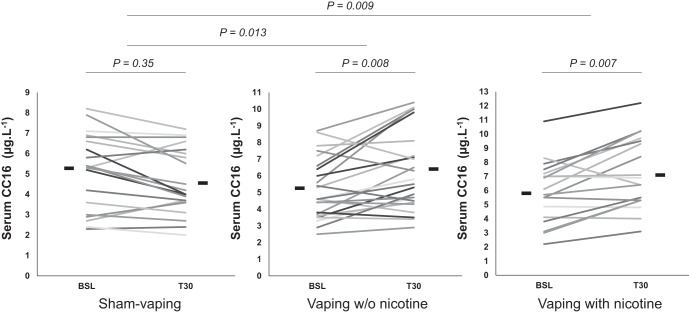
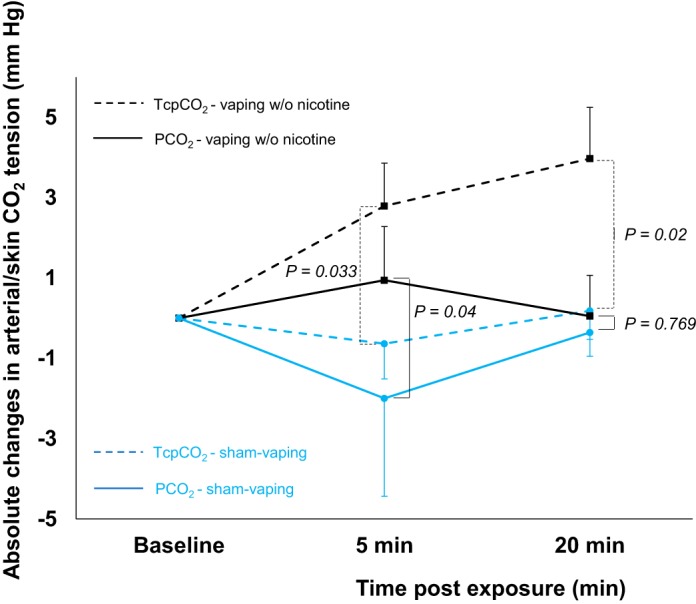
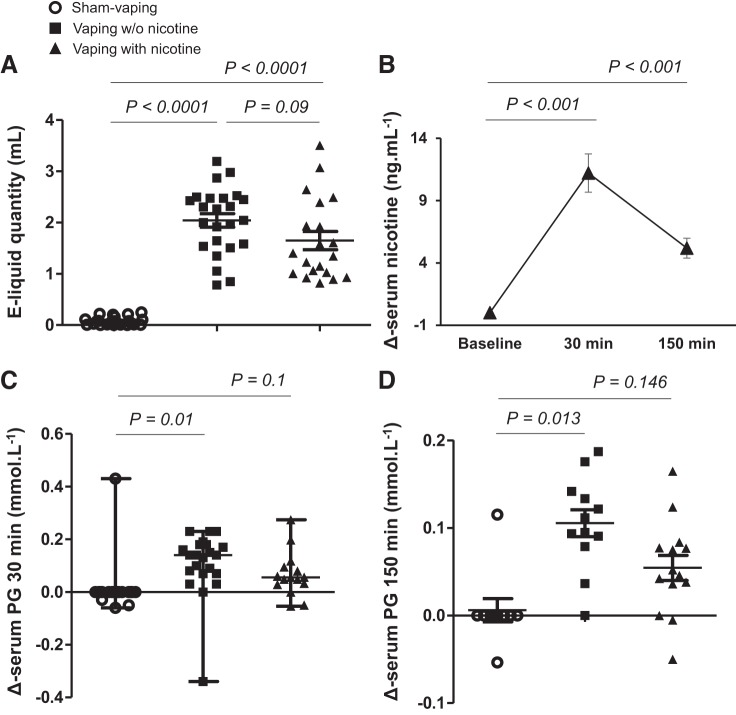
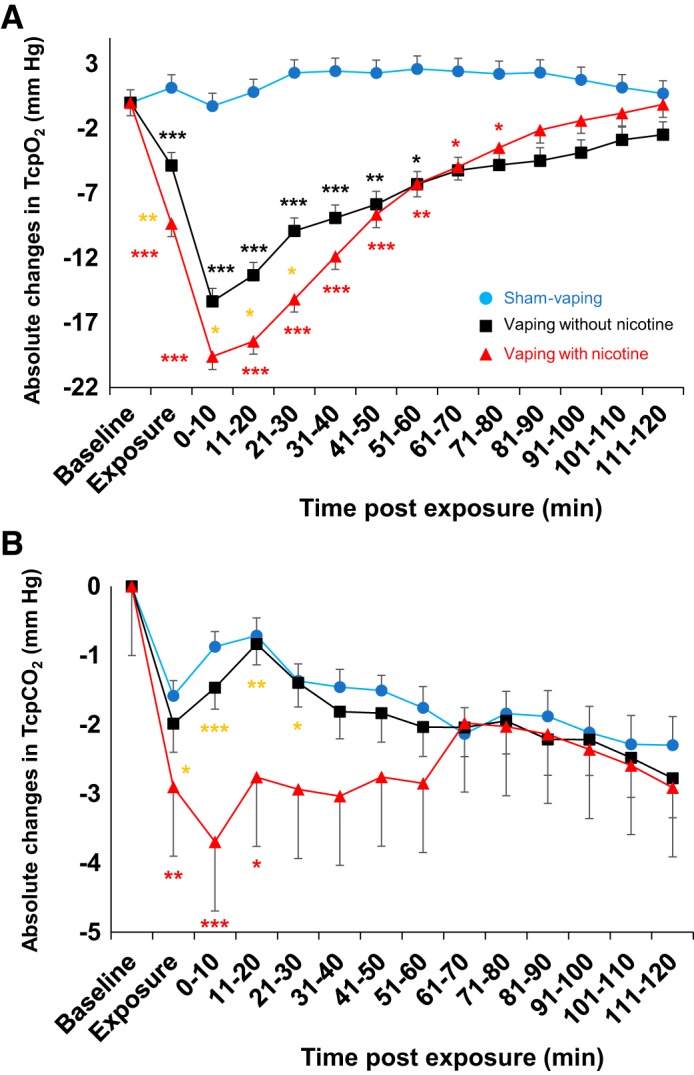
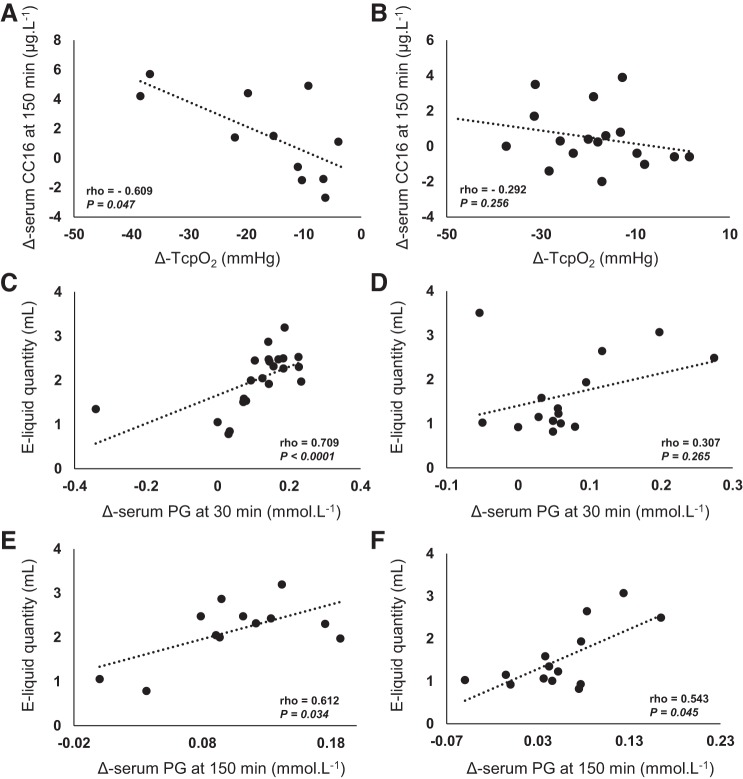
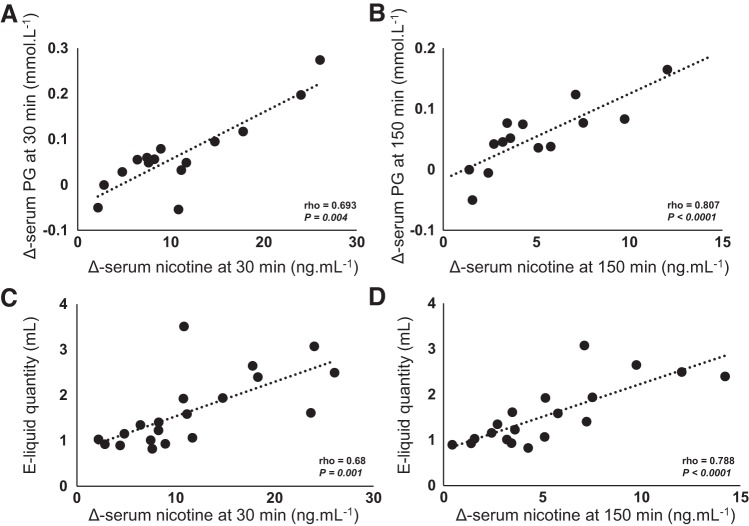
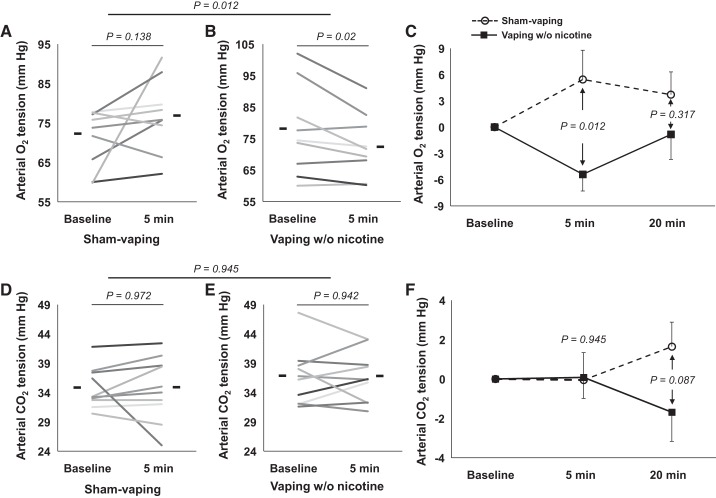
When heated by an electronic cigarette, propylene glycol and glycerol produce a nicotine-carrying-aerosol. This hygroscopic/hyperosmolar aerosol can deposit deep within the lung. Whether these deposits trigger local inflammation and disturb pulmonary gas exchanges is not known. The aim of this study was to assess the acute effects of high-wattage electronic cigarette vaping with or without nicotine on lung inflammation biomarkers, transcutaneous gas tensions, and pulmonary function tests in young and healthy tobacco smokers. Acute effects of vaping without nicotine on arterial blood gas tensions were also assessed in heavy smokers suspected of coronary artery disease. Using a single-blind within-subjects study design, 25 young tobacco smokers underwent three experimental sessions in random order: sham-vaping and vaping with and without nicotine at 60 W. Twenty heavy smokers were also exposed to sham-vaping ( = 10) or vaping without nicotine ( = 10) in an open-label, randomized parallel study. In the young tobacco smokers, compared with sham-vaping: ) serum club cell protein-16 increased after vaping without nicotine (mean ± SE, -0.5 ± 0.2 vs. +1.1 ± 0.3 µg/l, = 0.013) and vaping with nicotine (+1.2 ± 0.3 µg/l, = 0.009); ) transcutaneous oxygen tension decreased for 60 min after vaping without nicotine (nadir, -0.3 ± 1 vs. -15.3 ± 2.3 mmHg, < 0.001) and for 80-min after vaping with nicotine (nadir, -19.6 ± 2.8 mmHg, < 0.001). Compared with sham vaping, vaping without nicotine decreased arterial oxygen tension for 5 min in heavy-smoking patients (+5.4 ± 3.3 vs. -5.4 ± 1.9 mmHg, = 0.012). Acute vaping of propylene glycol/glycerol aerosol at high wattage with or without nicotine induces airway epithelial injury and sustained decrement in transcutaneous oxygen tension in young tobacco smokers. Intense vaping conditions also transiently impair arterial oxygen tension in heavy smokers.
当电子香烟加热时,丙二醇和甘油会产生携带尼古丁的气溶胶。这种吸湿/高渗气溶胶可以沉积在肺部深处。目前尚不清楚这些沉积物是否会引发局部炎症并干扰肺气体交换。本研究的目的是评估高瓦特电子香烟吸烟(含尼古丁和不含尼古丁)对年轻健康吸烟者的肺炎症生物标志物、经皮气体张力和肺功能测试的急性影响。还评估了在怀疑患有冠心病的重度吸烟者中,不含尼古丁的电子香烟吸烟对动脉血气张力的急性影响。使用单盲、个体内设计,25 名年轻吸烟者随机顺序接受三种实验:假吸烟、含尼古丁和不含尼古丁的 60W 吸烟。20 名重度吸烟者也在开放标签、随机平行研究中暴露于假吸烟(n=10)或不含尼古丁的吸烟(n=10)。与假吸烟相比,在年轻吸烟者中:血清 club 细胞蛋白 16 在不含尼古丁的吸烟后增加(平均±SE,-0.5±0.2 与+1.1±0.3μg/l,=0.013)和含尼古丁的吸烟后增加(+1.2±0.3μg/l,=0.009);经皮氧分压在不含尼古丁的吸烟后 60 分钟(最低点,-0.3±1 与-15.3±2.3mmHg,<0.001)和含尼古丁的吸烟后 80 分钟(最低点,-19.6±2.8mmHg,<0.001)下降。与假吸烟相比,在重度吸烟者中,不含尼古丁的吸烟使动脉氧分压在 5 分钟内下降(+5.4±3.3 与-5.4±1.9mmHg,=0.012)。高瓦特含或不含尼古丁的丙二醇/甘油气溶胶的急性吸烟会导致气道上皮损伤,并使年轻吸烟者的经皮氧分压持续下降。强烈的吸烟条件也会使重度吸烟者的动脉氧分压短暂受损。