Forestry College, Beijing Forestry University, Beijing, China.
Tianjin LVYIN Landscape and Ecology Construction Co., Ltd, Tianjin, China.
PLoS One. 2019 Feb 6;14(2):e0210777. doi: 10.1371/journal.pone.0210777. eCollection 2019.
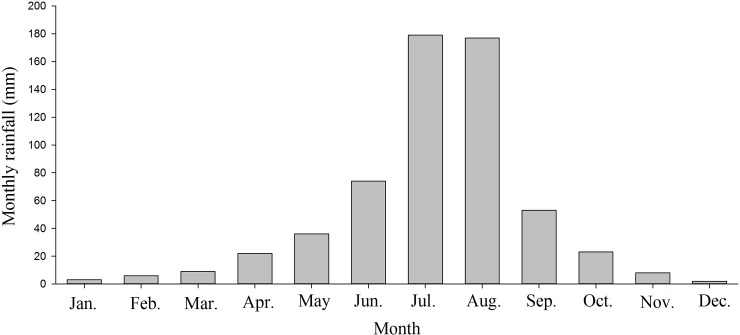
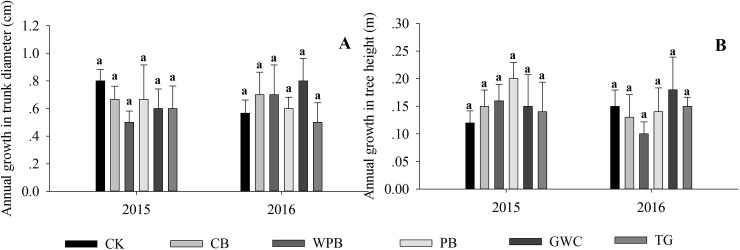
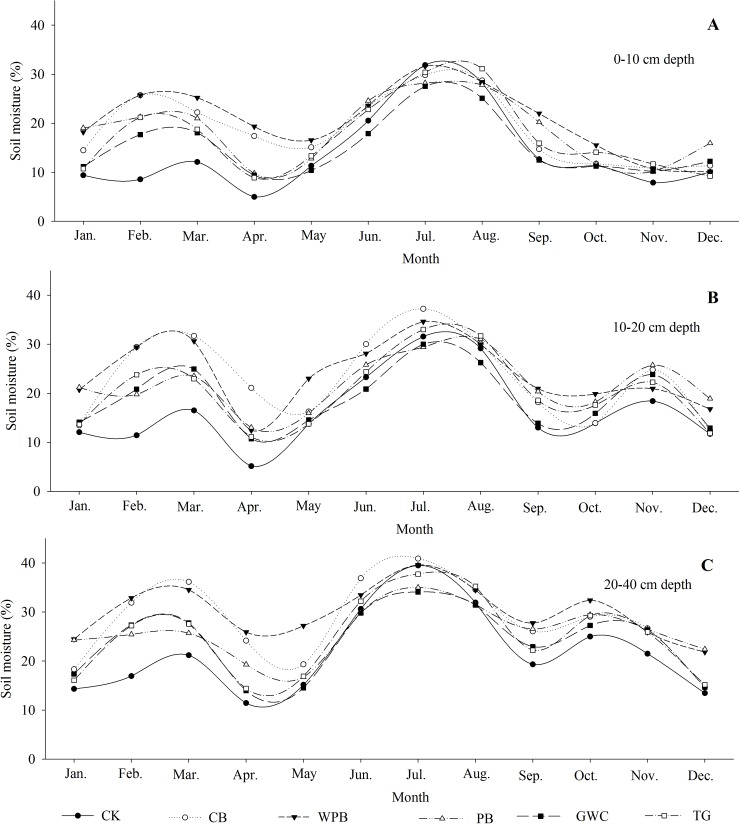
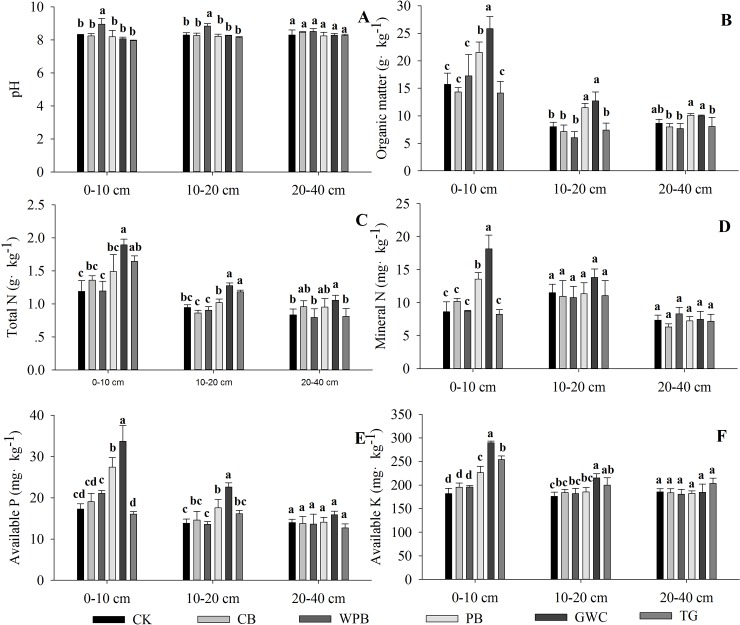
Mulching is a widely employed soil management practice. The mulches used have variable effects on the soil properties and plant growth. In China, mulches are used to cover bare soil at a few places in landscapes, where most of the soil is uncovered, especially in tree pits. As to improve our understanding on the effect of various mulches on soil properties and tree growth after two years of the treatment justifying its implication in soil fertility and tree growth. A comparison study was conducted to determine the effects of inorganic (cobblestone-CB; water permeable brick-WPB), organic (pine bark-PB; green waste compost-GWC), and living (turf grass-TG) mulches on soil physical and chemical properties at three different depths (0-10 cm, 10-20 cm, and 20-40cm), and on tree growth (Sophora japonica) in urban tree pits. Soil moisture was measured once a month in 2015.The soil samples were collected from the tree pits two years after mulching and used to evaluate the physical and chemical properties. Further, trunk diameter and tree height were determined once a year. During the most months, all types of mulches significantly affected the moisture content of the soil at all the depths analyzed. In July and August, however, the moisture content of PB and TG treated soil decreased when compared with that of unmulched bare soil. Two years after mulching, the bulk density of the soil treated with PB, GWC, and TG was significantly affected at10-20 cm, with GWC exhibiting a relatively better effect. The treatments with PB, GWC, and TG also improved the total porosity, macroporosity, and microporosity of the soil at lower depths. Further, WPB worsened the bulk density and porosity of the soil, elevating the pH at lower depths. The organic matter, total N, mineral N, available P, and available K contents of the soil at lower depths increased when mulched with organic material. Turf grass significantly increased only the total N and available K at 0-10 and 10-20 cm. There was no significant difference in the soil properties among the treatments at 20-40 cm. Furthermore, the trunk diameter and tree height were not affected by the mulches two years after mulching. In conclusion, organic mulches especially GWC, not only increased soil fertility significantly but improved soil physical characters (0-10 cm depth) comparing to other mulches, are suitable to cover bare soil in urban tree pits.
覆盖是一种广泛应用的土壤管理措施。使用的覆盖物对土壤性质和植物生长有不同的影响。在中国,覆盖物被用于景观中的几个地方覆盖裸土,大部分土壤是未覆盖的,特别是在树坑中。为了提高我们对各种覆盖物对土壤性质和树木生长的影响的理解,在两年的处理后,证明了它对土壤肥力和树木生长的影响。进行了一项比较研究,以确定无机(鹅卵石-CB;透水砖-WPB)、有机(松皮-PB;绿肥堆肥-GWC)和活体(草坪-TG)覆盖物对土壤物理和化学性质的影响,这些性质在三个不同的深度(0-10cm、10-20cm 和 20-40cm)和城市树坑中树木生长(槐树)的影响。2015 年每月测量一次土壤水分。在覆盖两年后,从树坑中采集土壤样本,用于评估物理和化学性质。此外,每年测量一次树干直径和树高。在大多数月份,所有类型的覆盖物都显著影响了分析的所有深度的土壤水分含量。然而,在 7 月和 8 月,与未覆盖的裸土相比,PB 和 TG 处理的土壤的含水量下降。覆盖两年后,PB、GWC 和 TG 处理的土壤在 10-20cm 处的容重显著受到影响,GWC 表现出较好的效果。PB、GWC 和 TG 处理还改善了较低深度的土壤总孔隙度、大孔隙度和微孔隙度。此外,WPB 恶化了较低深度土壤的容重和孔隙度,提高了较低深度的 pH 值。用有机物质覆盖后,土壤较低深度的有机质、总氮、矿质氮、有效磷和速效钾含量增加。草坪草仅在 0-10cm 和 10-20cm 处显著增加了总氮和速效钾。在 20-40cm 处,各处理之间的土壤性质没有显著差异。此外,树干直径和树高在覆盖两年后不受覆盖物的影响。总之,有机覆盖物,特别是 GWC,不仅显著增加了土壤肥力,而且与其他覆盖物相比,还改善了土壤物理性质(0-10cm 深度),适合覆盖城市树坑中的裸土。