Department of Biological Engineering, Massachusetts Institute of Technology, Cambridge, MA 02139, USA.
Singapore-MIT Alliance for Research and Technology, Infectious Diseases IRG, Singapore 117600, Singapore.
Cell Rep. 2019 Feb 5;26(6):1668-1678.e4. doi: 10.1016/j.celrep.2019.01.053.
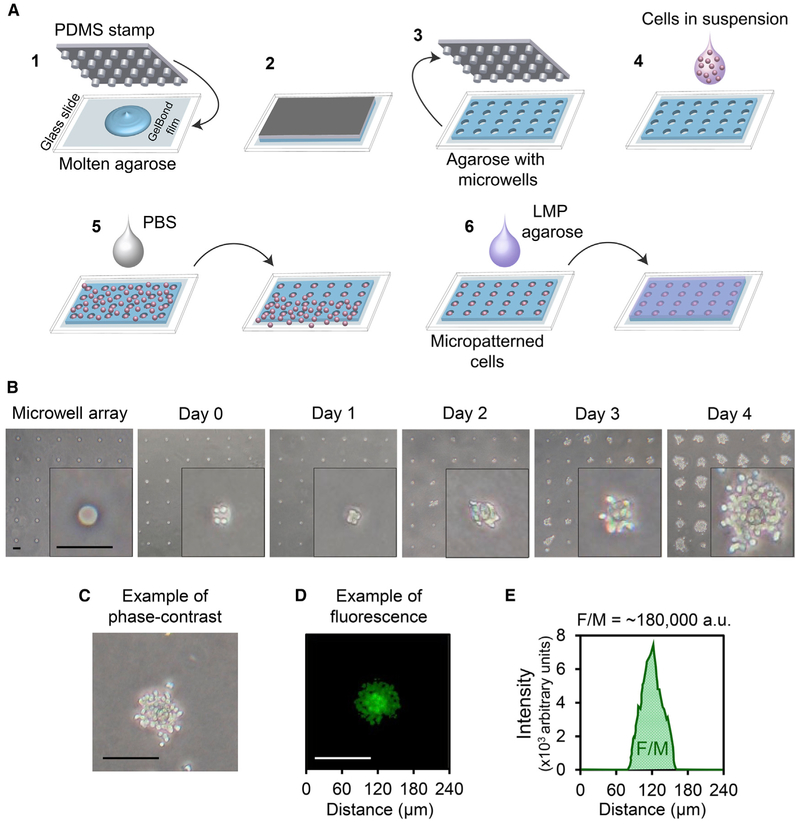
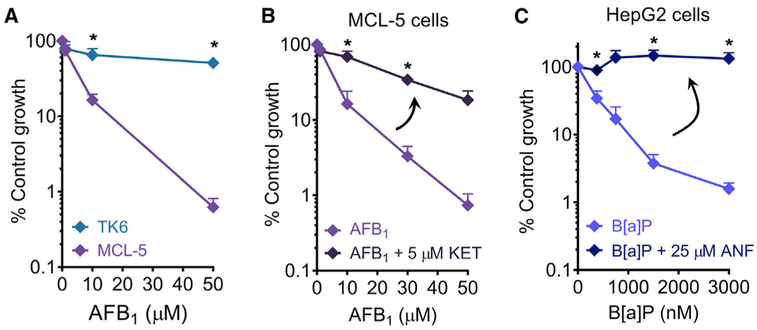
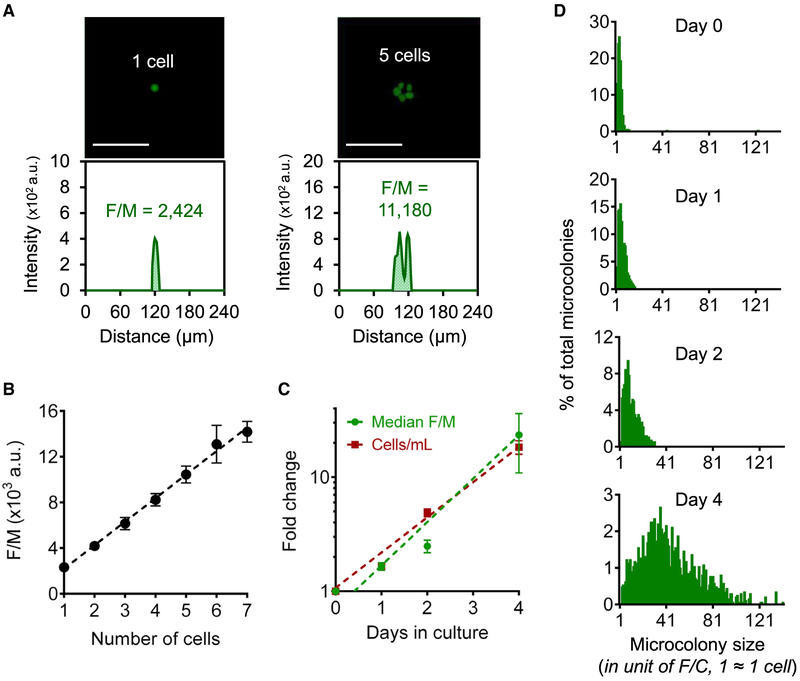
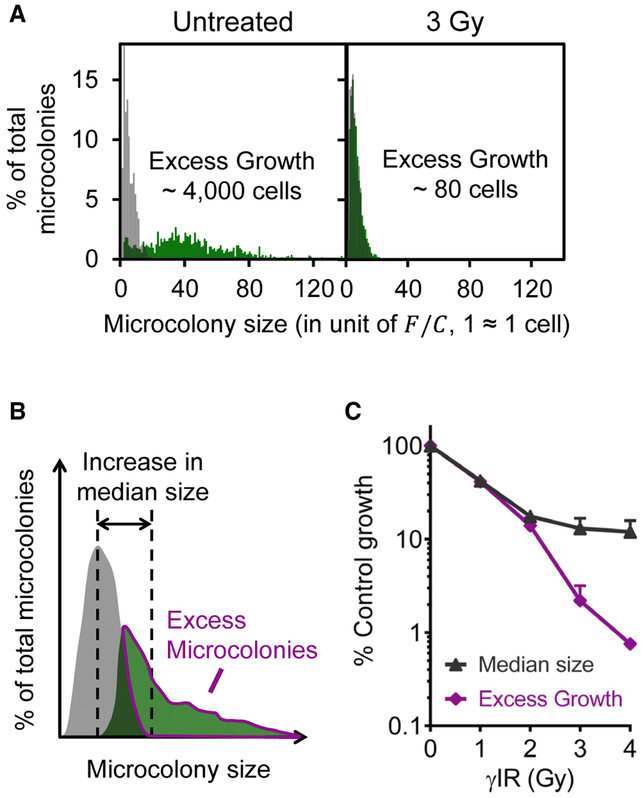
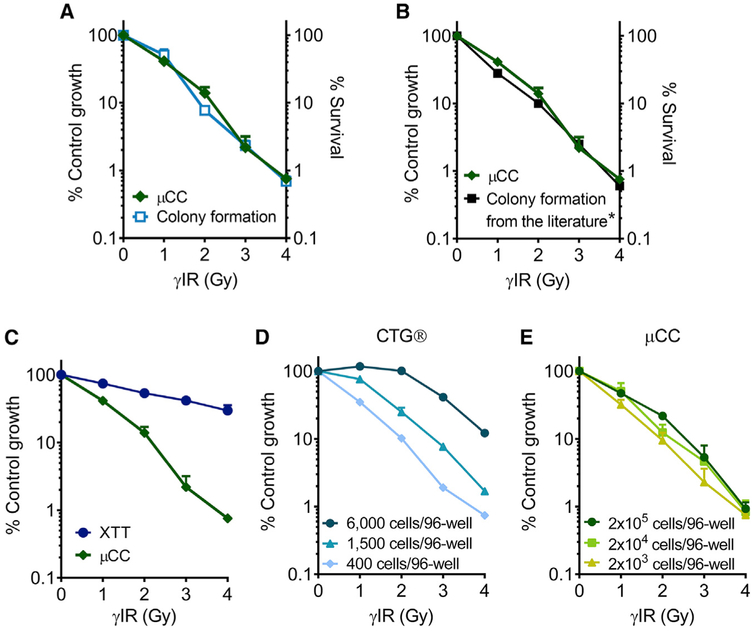
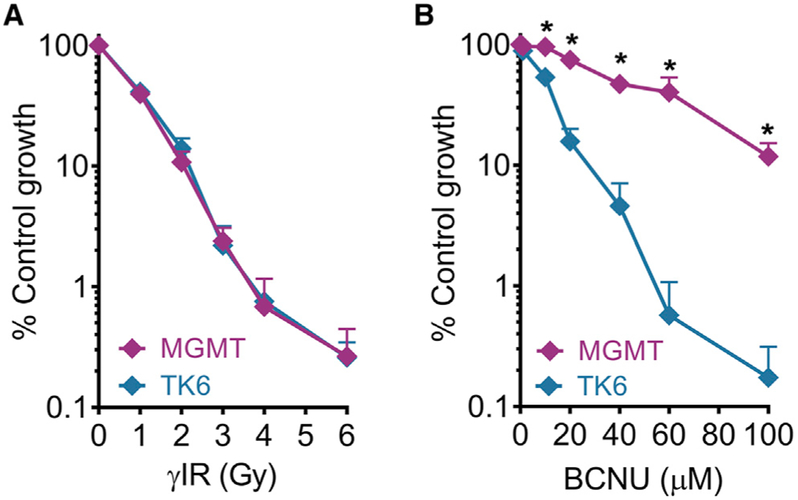
Cell survival is a critical and ubiquitous endpoint in biology. The broadly accepted colony formation assay (CFA) directly measures a cell's ability to divide; however, it takes weeks to perform and is incompatible with high-throughput screening (HTS) technologies. Here, we describe the MicroColonyChip, which exploits microwell array technology to create an array of colonies. Unlike the CFA, where visible colonies are counted by eye, using fluorescence microscopy, microcolonies can be analyzed in days rather than weeks. Using automated analysis of microcolony size distributions, the MicroColonyChip achieves comparable sensitivity to the CFA (and greater sensitivity than the 2,3-bis-(2-methoxy-4-nitro-5-sulfophenyl)-2H-tetrazolium-5-carboxanilide [XTT] assay). Compared to CellTiter-Glo, the MicroColonyChip is as sensitive and also robust to artifacts caused by differences in initial cell seeding density. We demonstrate efficacy via studies of radiosensitivity and chemosensitivity and show that the approach is amenable to multiplexing. We conclude that the MicroColonyChip is a rapid and automated alternative for cell survival quantitation.
细胞存活是生物学中一个关键且普遍的终点。被广泛接受的集落形成测定(CFA)直接测量细胞的分裂能力;然而,它需要数周的时间才能完成,并且与高通量筛选(HTS)技术不兼容。在这里,我们描述了微菌落芯片,它利用微孔阵列技术来创建菌落阵列。与 CFA 不同,CFA 通过荧光显微镜用肉眼来计数可见的菌落,而微菌落可以在几天内而不是数周内进行分析。通过对微菌落大小分布的自动分析,微菌落芯片实现了与 CFA 相当的灵敏度(比 2,3-双-(2-甲氧基-4-硝基-5-磺苯基)-2H-四唑-5-羧基苯胺[XTT]测定法更灵敏)。与 CellTiter-Glo 相比,微菌落芯片同样灵敏,并且对由于初始细胞接种密度差异引起的伪影也具有稳健性。我们通过放射敏感性和化学敏感性研究证明了该方法的有效性,并表明该方法适用于多重检测。我们得出结论,微菌落芯片是一种快速且自动化的细胞存活定量替代方法。