Brain Institute of Rio Grande do Sul (BraIns), Postgraduate Program in Medicine and Health Sciences (PUCRS), Pontifical Catholic University of Rio Grande do Sul, Porto Alegre, RS, 90610000, Brazil.
J Biomed Sci. 2019 Feb 6;26(1):15. doi: 10.1186/s12929-019-0501-5.
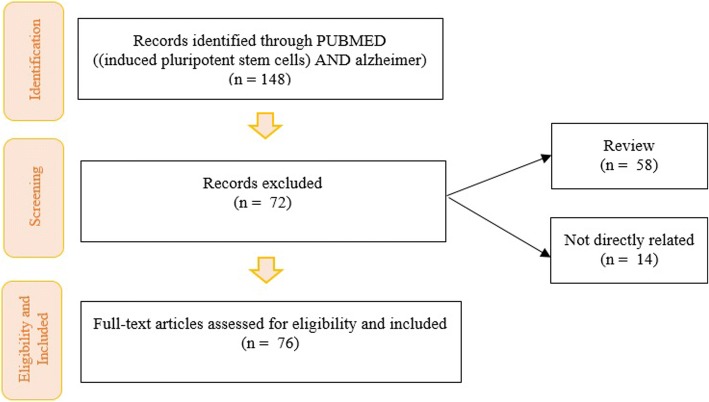
Among the various types of dementia, Alzheimer's disease (AD) is the most prevalent and is clinically defined as the appearance of progressive deficits in cognition and memory. Considering that AD is a central nervous system disease, getting tissue from the patient to study the disease before death is challenging. The discovery of the technique called induced pluripotent stem cells (iPSCs) allows to reprogram the patient's somatic cells to a pluripotent state by the forced expression of a defined set of transcription factors. Many studies have shown promising results and made important conclusions beyond AD using iPSCs approach. Due to the accumulating knowledge related to this topic and the important advances obtained until now, we review, using PubMed, and present an update of all publications related to AD from the use of iPSCs. The first iPSCs generated for AD were carried out in 2011 by Yahata et al. (PLoS One 6:e25788, 2011) and Yaqi et al. (Hum Mol Genet 20:4530-9, 2011). Like other authors, both authors used iPSCs as a pre-clinical tool for screening therapeutic compounds. This approach is also essential to model AD, testing early toxicity and efficacy, and developing a platform for drug development. Considering that the iPSCs technique is relatively recent, we can consider that the AD field received valuable contributions from iPSCs models, contributing to our understanding and the treatment of this devastating disorder.
在各种类型的痴呆症中,阿尔茨海默病(AD)最为常见,临床上定义为认知和记忆逐渐出现缺陷。鉴于 AD 是一种中枢神经系统疾病,在患者死亡前从患者身上获取组织来研究该疾病具有挑战性。诱导多能干细胞(iPSC)技术的发现,通过强制表达一组特定的转录因子,使患者的体细胞重编程为多能状态。许多研究使用 iPSC 方法取得了有希望的结果,并得出了超出 AD 的重要结论。由于与该主题相关的知识不断积累,以及迄今为止取得的重要进展,我们使用 PubMed 进行了回顾,并展示了从使用 iPSC 研究 AD 的所有出版物的更新。Yahata 等人(PLoS One 6:e25788, 2011)和 Yaqi 等人(Hum Mol Genet 20:4530-9, 2011)于 2011 年首次进行了用于 AD 的 iPSC 研究。与其他作者一样,两位作者都将 iPSC 用作筛选治疗化合物的临床前工具。这种方法对于模拟 AD、测试早期毒性和疗效以及开发药物开发平台也至关重要。考虑到 iPSC 技术相对较新,我们可以认为 AD 领域从 iPSC 模型中获得了有价值的贡献,有助于我们对这种破坏性疾病的理解和治疗。