Southeast Fisheries Science Center, National Marine Fisheries Service, Beaufort, North Carolina, 28516, USA.
Department of Oceanography, Naval Postgraduate School, Monterey, California, 93943, USA.
Sci Rep. 2019 Feb 6;9(1):1481. doi: 10.1038/s41598-018-37527-1.
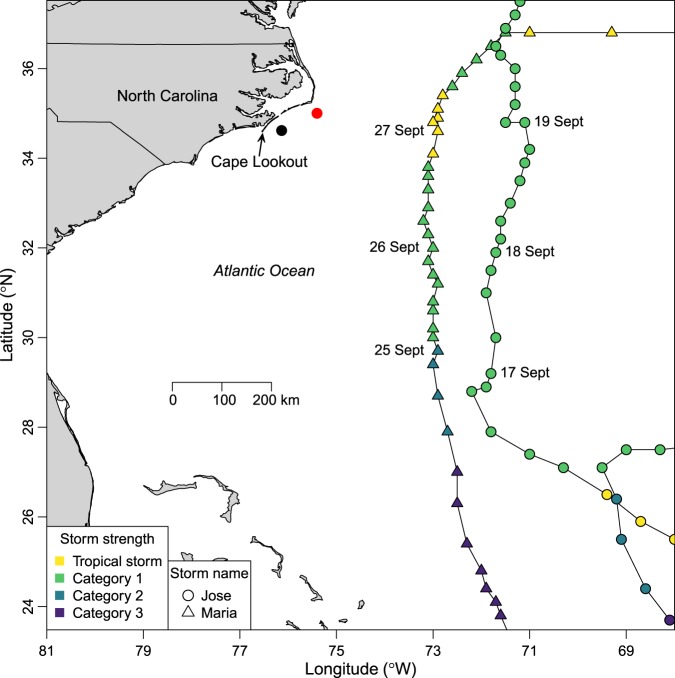
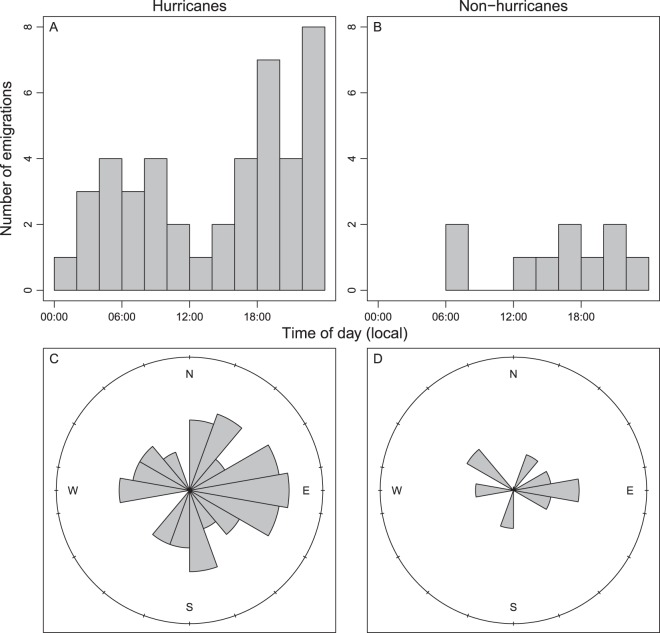
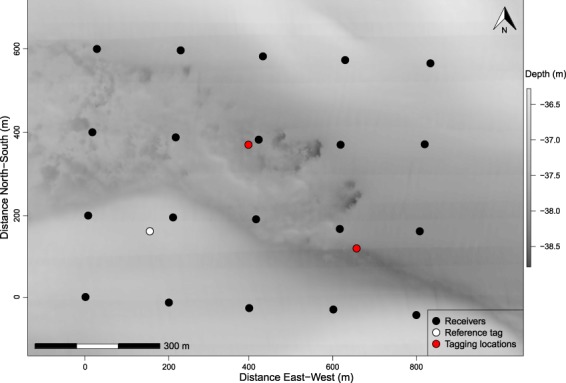
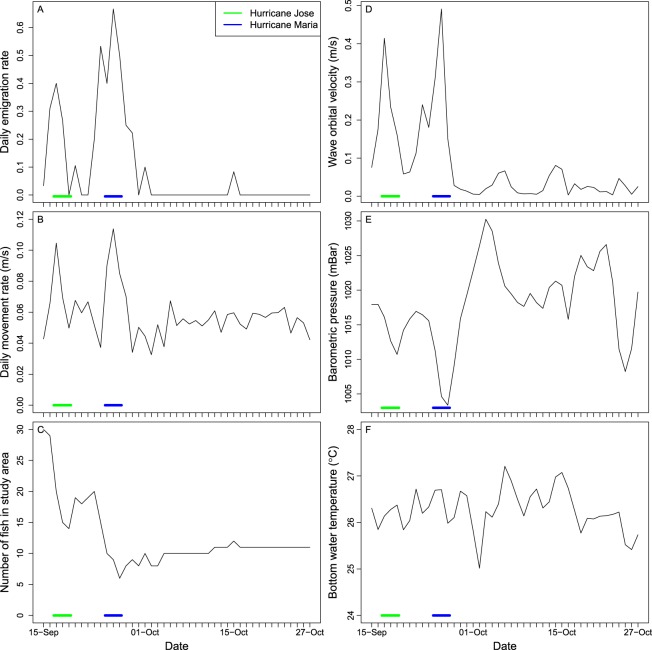
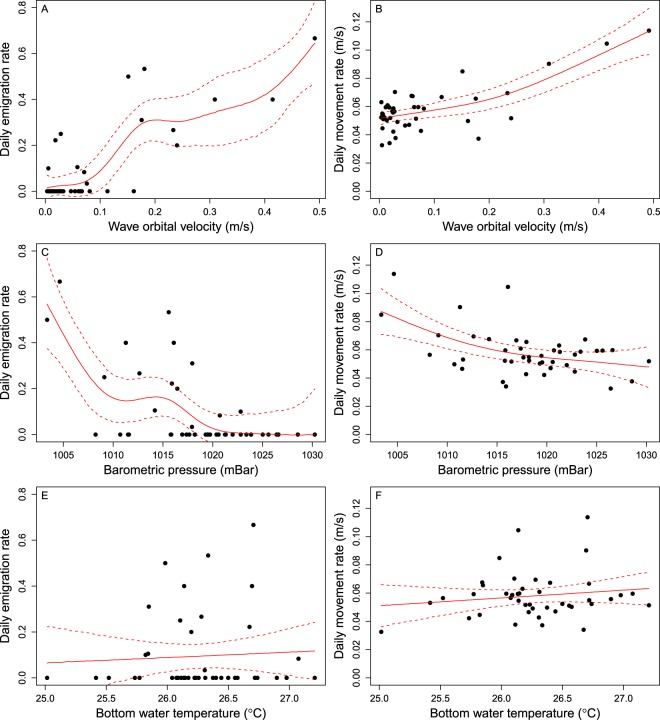
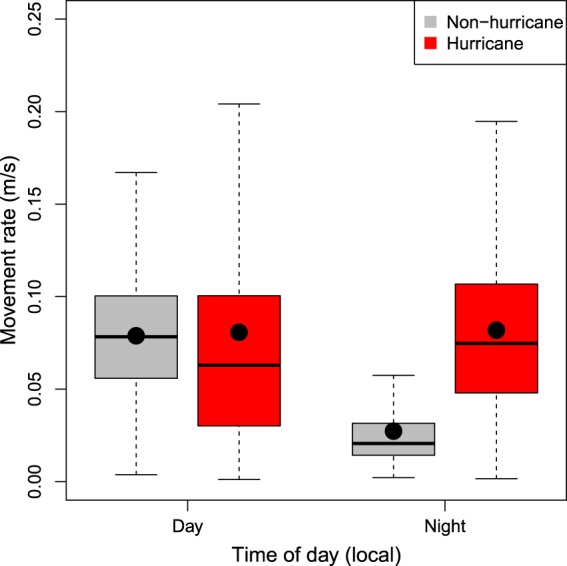
Extreme weather events strongly influence marine, freshwater, and estuarine ecosystems in myriad ways. We quantified movements of a demersal oceanic fish species (gray triggerfish Balistes capriscus; N = 30) before, during, and after two hurricanes in 2017 using fine-scale acoustic telemetry at a 37-m deep study site in North Carolina, USA. During storms, gray triggerfish movement and emigration rates were 100% and 2550% higher, respectively, than on days with no storms. We found that increased movement rates were much more strongly correlated with wave orbital velocity (i.e., wave-generated oscillatory flow at the seabed) than either barometric pressure or bottom water temperature, two covariates that have been demonstrated to be important for organisms in shallower water. Higher movement rates during storms were due to increased mobility at night, and emigrations typically occurred at night in the direction of deeper water. Overall, we found significant storm effects on the movement behavior of a demersal fish species in the open ocean, despite our study occurring in deeper water than previous studies that have examined storm effects on animal movement. We conclude that tropical storms are a driving force behind the structure of marine ecosystems, in part by influencing movements of mobile animals.
极端天气事件以多种方式强烈影响海洋、淡水和河口生态系统。我们使用美国北卡罗来纳州一个 37 米深的研究点的精细声学遥测技术,在 2017 年两次飓风之前、期间和之后对一种底栖海洋鱼类(灰鲷 Balistes capriscus;N=30)的运动进行了量化。在风暴期间,灰鲷的运动和洄游率分别比无风暴日高出 100%和 2550%。我们发现,运动率的增加与波轨道速度(即海底的波浪产生的振荡流)的相关性要强得多,而与气压或底层水温的相关性较弱,这两个协变量已被证明对较浅水中的生物很重要。在风暴期间,较高的运动率是由于夜间移动性增加所致,而洄游通常发生在夜间向较深水域的方向。总的来说,我们发现尽管我们的研究发生在比以前研究动物运动的风暴影响更深的水域中,但极端天气事件对深海鱼类的运动行为有显著影响。我们的结论是,热带风暴是海洋生态系统结构的驱动因素之一,部分原因是它们影响了移动动物的运动。