Department of Pathology, Dunedin School of Medicine, University of Otago, Dunedin, New Zealand.
Biology Department, Sultan Qaboos University, Muscat, Oman.
J Immunol Res. 2019 Jan 8;2019:5364632. doi: 10.1155/2019/5364632. eCollection 2019.
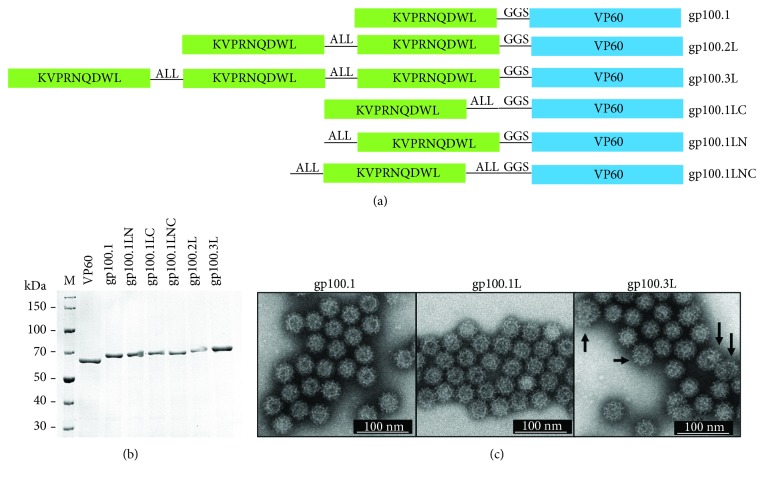
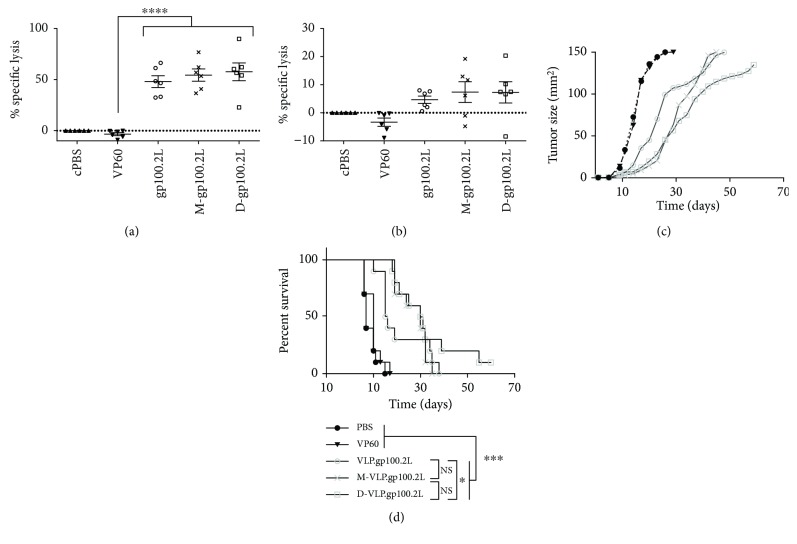
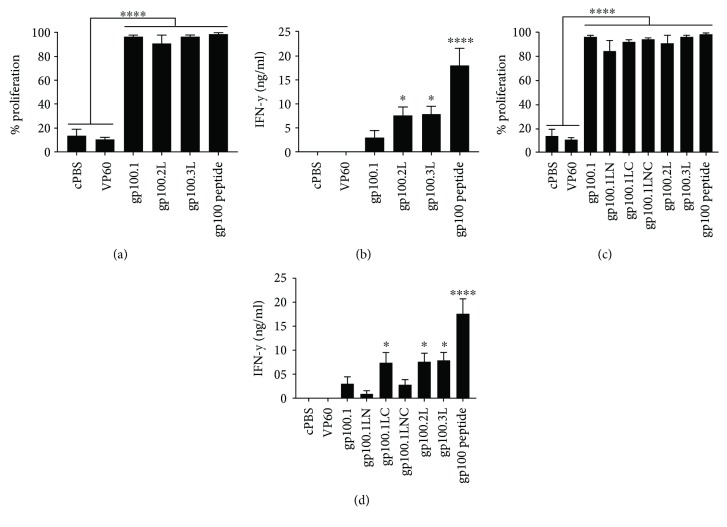
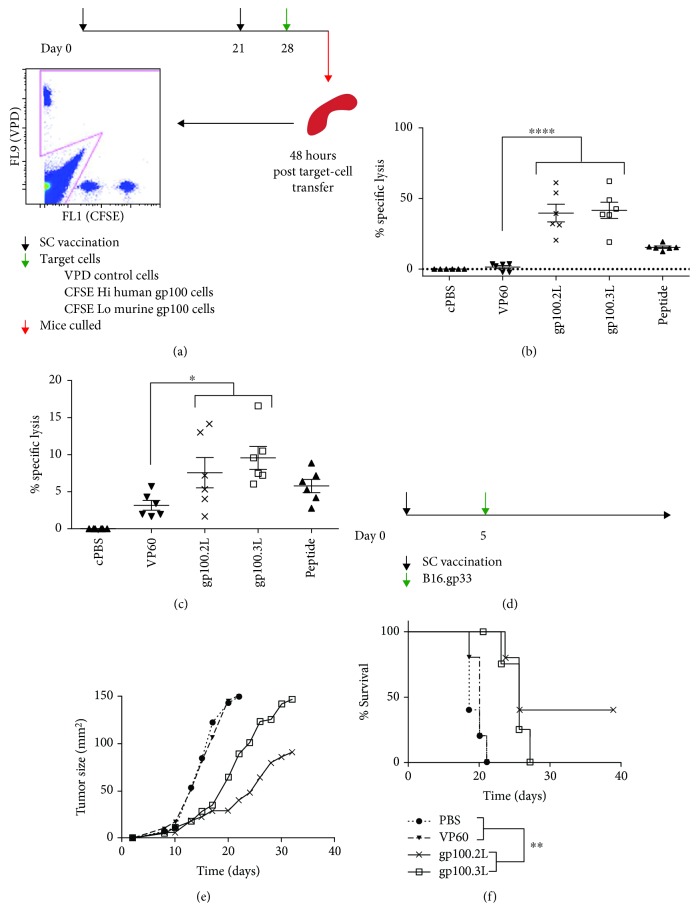
Virus-like particles (VLP) from the rabbit haemorrhagic disease virus (RHDV) can deliver tumour antigens to induce anticancer immune responses. In this study, we explored how RHDV VLP can be functionalised to enhance the immune response by increasing antigen loading, incorporating linkers to enhance epitope processing, and targeting receptor-mediated internalisation of VLP. RHDV VLP were developed to deliver up to three copies of gp100 which contained proteasome cleavable linkers to target the correct processing of the epitope. Addition of mono- and dimannosides, conjugated to the surface of the gp100 VLP, would utilise a second pathway of internalisation, mannose receptor mediated, to further augment antigen internalised by phagocytosis/macropinocytosis. cell culture studies showed that a processing linker at the C-terminus of the epitope (gp100.1LC) induced enhanced T-cell activation (7.3 ng/ml interferon- (IFN-) release) compared to no linker (3.0 ng/ml IFN-) or the linker at the N-terminus (0.8 ng/ml IFN-). VLP delivering two (gp100.2L) or three (gp100.3L) gp100 epitopes induced similar high T-cell activation (7.6 ng/ml IFN-) compared to gp100.1LC. An cytotoxicity assay and a therapeutic tumour trial confirmed that mice vaccinated with either gp100.2L or gp100.3L induced a specific antitumour immune response. Mannosylation of the gp100.2L VLP further enhanced the generated immune response, demonstrated by prolonged survival of mice vaccinated with dimannosylated gp100.2L VLP (D-gp100.2L) by 22 days compared to gp100.2L-vaccinated mice. This study showed that functionalisation of RHDV VLP by addition of an epitope-processing linker and mannosylation of the surface facilitates the efficacy of VLP as vaccination vectors for tumour immunotherapy.
兔出血症病毒(RHDV)的病毒样颗粒(VLP)可将肿瘤抗原递送至体内,诱发抗癌免疫应答。在本研究中,我们探索了 RHDV VLP 如何通过增加抗原负载、加入连接子以增强表位加工,以及靶向受体介导的 VLP 内化来实现功能化,从而增强免疫应答。我们开发了 RHDV VLP,使其能够递呈多达 3 个拷贝的 gp100,这些 gp100 含有蛋白酶体可切割的连接子,以靶向正确加工表位。表面连接有单甘露糖和二甘露糖的 gp100 VLP 可利用甘露糖受体介导的内化途径,进一步增加吞噬作用/巨胞饮作用内化的抗原。细胞培养研究表明,位于表位 C 末端的加工连接子(gp100.1LC)诱导的 T 细胞激活作用(7.3ng/ml 干扰素-γ(IFN-γ)释放)强于无连接子(3.0ng/ml IFN-γ)或位于 N 末端的连接子(0.8ng/ml IFN-γ)。递呈两个(gp100.2L)或三个(gp100.3L)gp100 表位的 VLP 诱导的 T 细胞激活作用相似(7.6ng/ml IFN-γ)。细胞毒性测定和治疗性肿瘤试验证实,接种 gp100.2L 或 gp100.3L 的小鼠可诱导出特异性抗肿瘤免疫应答。gp100.2L VLP 的甘露糖化进一步增强了产生的免疫应答,接种二甘露糖化 gp100.2L VLP(D-gp100.2L)的小鼠比接种 gp100.2L 的小鼠的存活时间延长了 22 天。本研究表明,通过添加表位加工连接子和表面甘露糖化对 RHDV VLP 进行功能化,可提高 VLP 作为肿瘤免疫治疗疫苗载体的功效。