University of Rostock, Department of Neurology, Division of Neuroimmunology, Rostock, Germany.
Steinbeis Transfer Center for Proteome Analysis, Rostock, Germany.
PLoS Genet. 2019 Feb 7;15(2):e1007961. doi: 10.1371/journal.pgen.1007961. eCollection 2019 Feb.
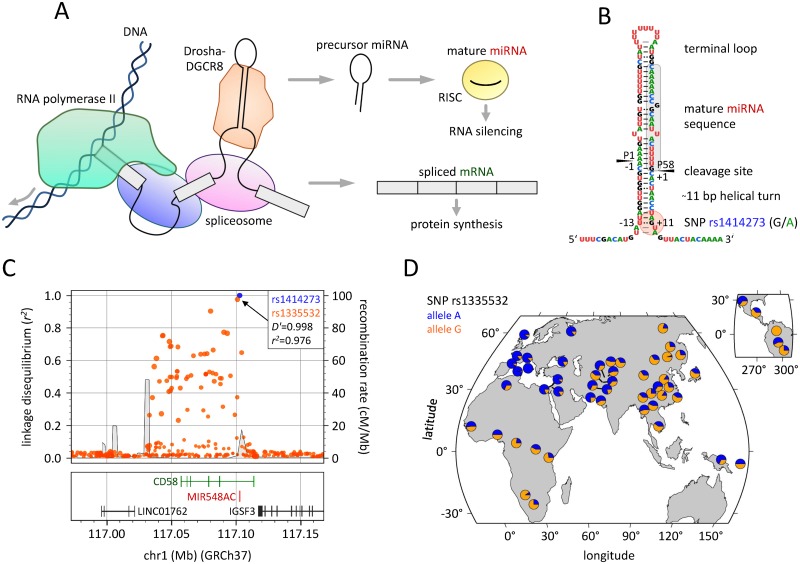
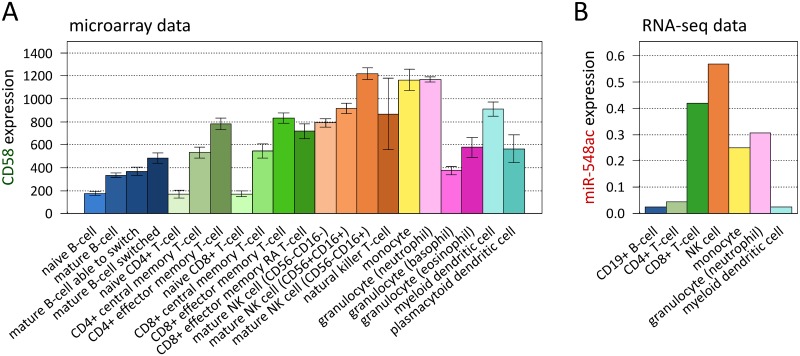
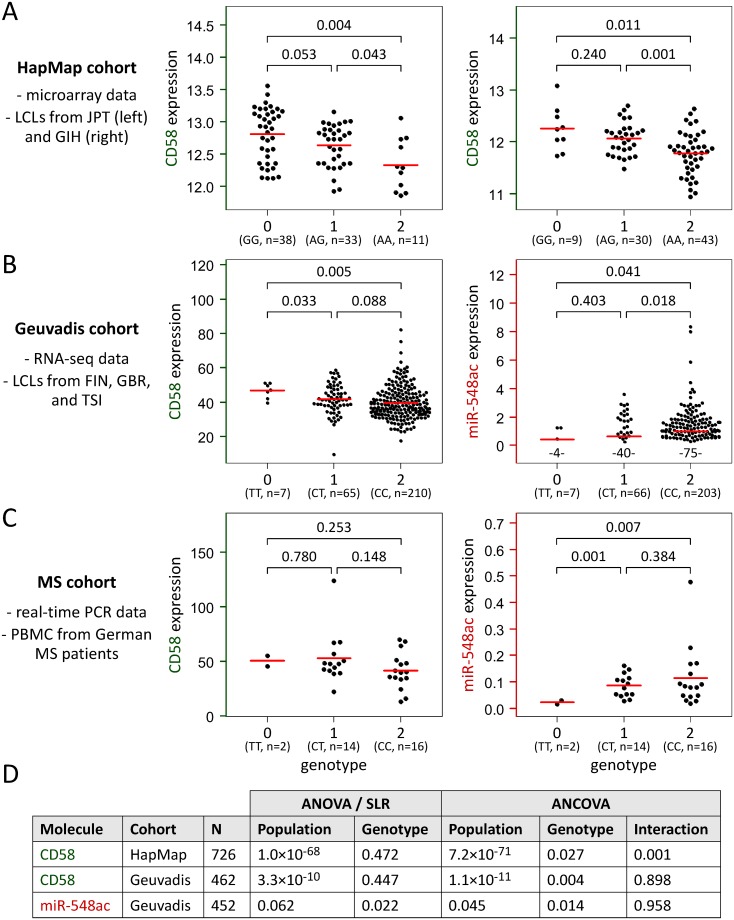
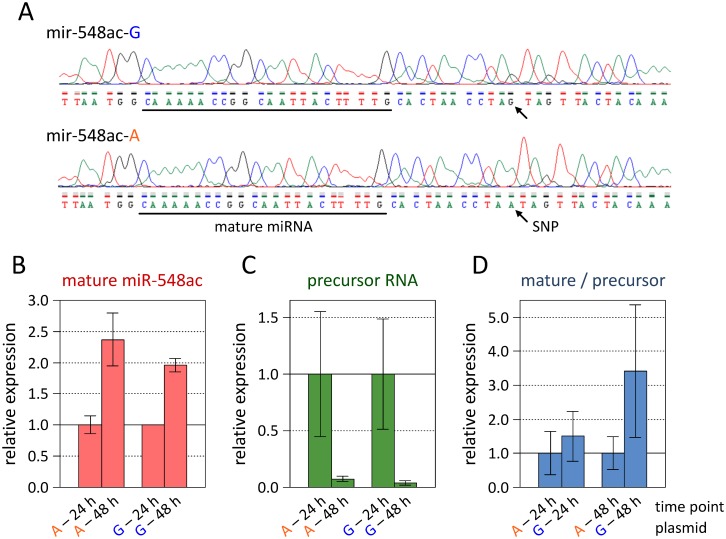
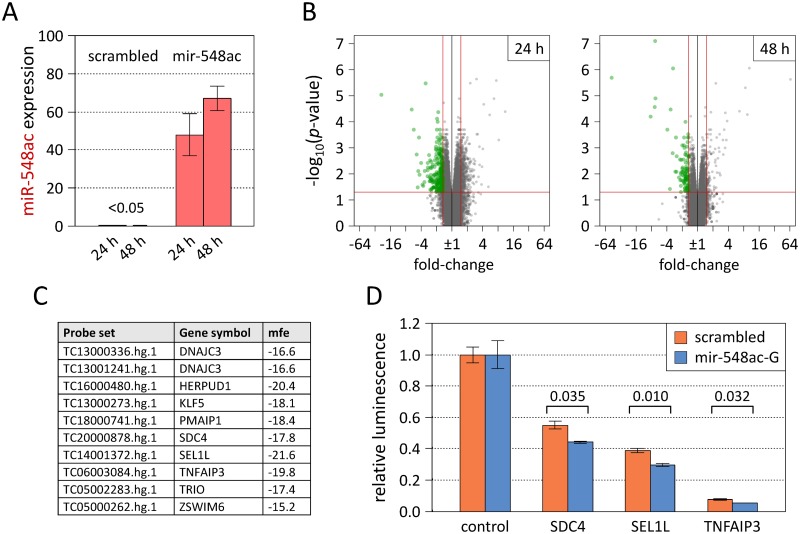
Genome-wide association studies have identified more than 200 genetic variants to be associated with an increased risk of developing multiple sclerosis (MS). Still, little is known about the causal molecular mechanisms that underlie the genetic contribution to disease susceptibility. In this study, we investigated the role of the single-nucleotide polymorphism (SNP) rs1414273, which is located within the microRNA-548ac stem-loop sequence in the first intron of the CD58 gene. We conducted an expression quantitative trait locus (eQTL) analysis based on public RNA-sequencing and microarray data of blood-derived cells of more than 1000 subjects. Additionally, CD58 transcripts and mature hsa-miR-548ac molecules were measured using real-time PCR in peripheral blood samples of 32 MS patients. Cell culture experiments were performed to evaluate the efficiency of Drosha-mediated stem-loop processing dependent on genotype and to determine the target genes of this underexplored microRNA. Across different global populations and data sets, carriers of the MS risk allele showed reduced CD58 mRNA levels but increased hsa-miR-548ac levels. We provide evidence that the SNP rs1414273 might alter Drosha cleavage activity, thereby provoking partial uncoupling of CD58 gene expression and microRNA-548ac production from the shared primary transcript in immune cells. Moreover, the microRNA was found to regulate genes, which participate in inflammatory processes and in controlling the balance of protein folding and degradation. We thus uncovered new regulatory implications of the MS-associated haplotype of the CD58 gene locus, and we remind that paradoxical findings can be encountered in the analysis of eQTLs upon data aggregation. Our study illustrates that a better understanding of RNA processing events might help to establish the functional nature of genetic variants, which predispose to inflammatory and neurological diseases.
全基因组关联研究已经确定了 200 多个与多发性硬化症(MS)风险增加相关的遗传变异。然而,对于遗传因素导致疾病易感性的因果分子机制知之甚少。在这项研究中,我们研究了位于 CD58 基因第一内含子 microRNA-548ac 茎环序列内的单核苷酸多态性(SNP)rs1414273 的作用。我们进行了基于超过 1000 个个体的血液衍生细胞的公共 RNA 测序和微阵列数据的表达数量性状基因座(eQTL)分析。此外,使用实时 PCR 在 32 名 MS 患者的外周血样本中测量了 CD58 转录物和成熟的 hsa-miR-548ac 分子。进行细胞培养实验以评估依赖基因型的 Drosha 介导的茎环加工效率,并确定该未充分研究的 microRNA 的靶基因。在不同的全球人群和数据集上,MS 风险等位基因的携带者显示 CD58 mRNA 水平降低,但 hsa-miR-548ac 水平升高。我们提供的证据表明,SNP rs1414273 可能改变 Drosha 切割活性,从而在免疫细胞中的共享初级转录物中引起 CD58 基因表达和 microRNA-548ac 产生的部分解偶联。此外,发现 microRNA 调节参与炎症过程和控制蛋白质折叠和降解平衡的基因。因此,我们揭示了 CD58 基因座与 MS 相关单倍型的新调控意义,并提醒人们在数据聚合时分析 eQTL 可能会遇到矛盾的发现。我们的研究表明,更好地理解 RNA 加工事件可能有助于确定导致炎症和神经疾病的遗传变异的功能性质。