Deng Ying, Li Tong, Xie Xiaoqin, Xia Dengmei, Ding Li, Xiang Hongmei, Ma Jessie J, Li Wei
National Office for Maternal and Child Health Surveillance of China, Department of Pediatrics, West China Second University Hospital.
Laboratory of Molecular Epidemiology for Birth Defects, West China Institute of Women and Children's Health, Sichuan University.
Medicine (Baltimore). 2019 Feb;98(6):e14003. doi: 10.1097/MD.0000000000014003.
Hyper-IgE syndrome (HIES) is a rare primary immunodeficiency presenting as two forms including autosomal dominant HIES (AD-HIES) and autosomal recessive HIES (AR-HIES), which are mainly caused by mutations in STAT3 and DOCK8, respectively. To date, only about 500 cases have been reported worldwide including 37 cases in China. The spectrum and prevalence of mutations and molecular pathogenesis in HIES remain poorly understood.
Here we reported two Chinese children presenting clinical manifestations of HIES.
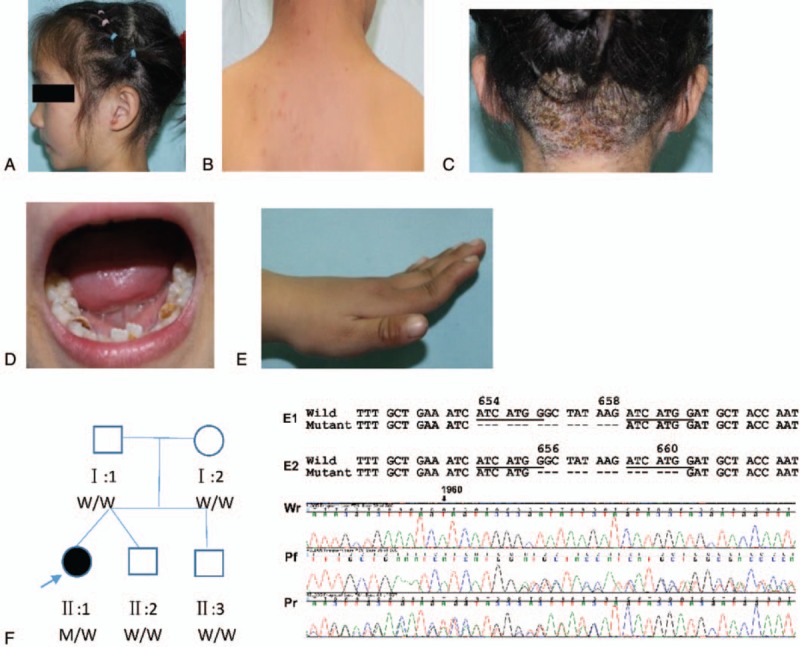
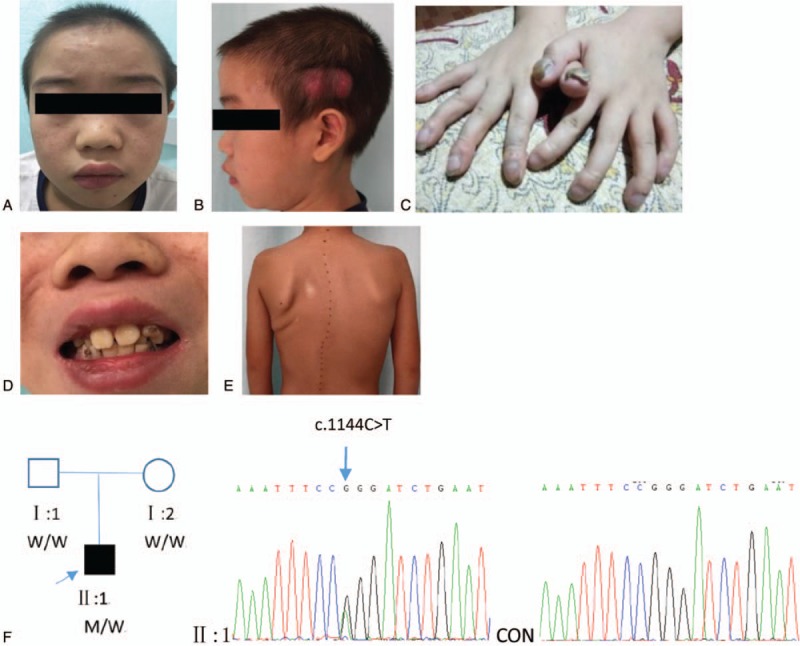
Based on medical history, clinical manifestations, and laboratory findings, a diagnosis of HIES was made for both children. Targeted next-generation sequencing (NGS) identified a novel heterozygous deletion of 15 bp (c.1960_1974del, p.G654_D658del or alternatively c.1966_1980del, and p.G656_D660del), and a recurrent missense mutation (c.1144C>T, p.R382W) in STAT3 in the two patients, respectively.
The two patients have been given the successful treatment of skin infections with cefaclor.
Both patients have been under follow-up for more than 6 months, with no signs of recurrent infections.
Our results extend the spectrum of STAT3 mutations associated with ADHIES and highlight the value of targeted NGS in confirming diagnosis of genetic disorders.
高免疫球蛋白E综合征(HIES)是一种罕见的原发性免疫缺陷病,表现为两种形式,包括常染色体显性遗传HIES(AD-HIES)和常染色体隐性遗传HIES(AR-HIES),它们分别主要由STAT3和DOCK8基因突变引起。迄今为止,全球仅报道了约500例病例,其中中国有37例。HIES中突变的范围和患病率以及分子发病机制仍知之甚少。
在此,我们报告了两名表现出HIES临床表现的中国儿童。
根据病史、临床表现和实验室检查结果,两名儿童均被诊断为HIES。靶向二代测序(NGS)分别在两名患者中鉴定出一个新的15bp杂合缺失(c.1960_1974del,p.G654_D658del或c.1966_1980del,p.G656_D660del),以及STAT3基因中的一个复发性错义突变(c.1144C>T,p.R382W)。
两名患者均接受了头孢克洛治疗皮肤感染并取得成功。
两名患者均已接受随访超过6个月,无反复感染迹象。
我们的结果扩展了与AD-HIES相关的STAT3突变谱,并突出了靶向NGS在确诊遗传性疾病中的价值。