Department of Pediatric Neurology/Emma Children's Hospital, Academic Medical Center, University of Amsterdam, Amsterdam, The Netherlands.
Department of Clinical Epidemiology, Biostatistics and Bio-informatics, Academic Medical Center, University of Amsterdam, Amsterdam, The Netherlands.
Orphanet J Rare Dis. 2019 Feb 7;14(1):30. doi: 10.1186/s13023-019-1008-6.
Over 80% of women with X-linked adrenoleukodystrophy (ALD) develop spinal cord disease in adulthood for which treatment is supportive only. For future clinical trials quantitative data on disease progression rates are essential. Moreover, diagnosis can be challenging in ALD women, as the most important diagnostic biomarker is normal in 15-20%. Better biomarkers are needed. The purpose of this single centre cross-sectional follow-up study in women with ALD was to assess whether Expanded Disability Status Scale (EDSS), AMC Linear Disability Scale (ALDS) and Short Form (36) Health Survey (SF-36) can detect disease progression and to model the effect of age and duration of symptoms on the rate of progression. Moreover, we performed a pilot study to assess if a semi-targeted lipidomics approach can identify possible new diagnostic biomarkers.
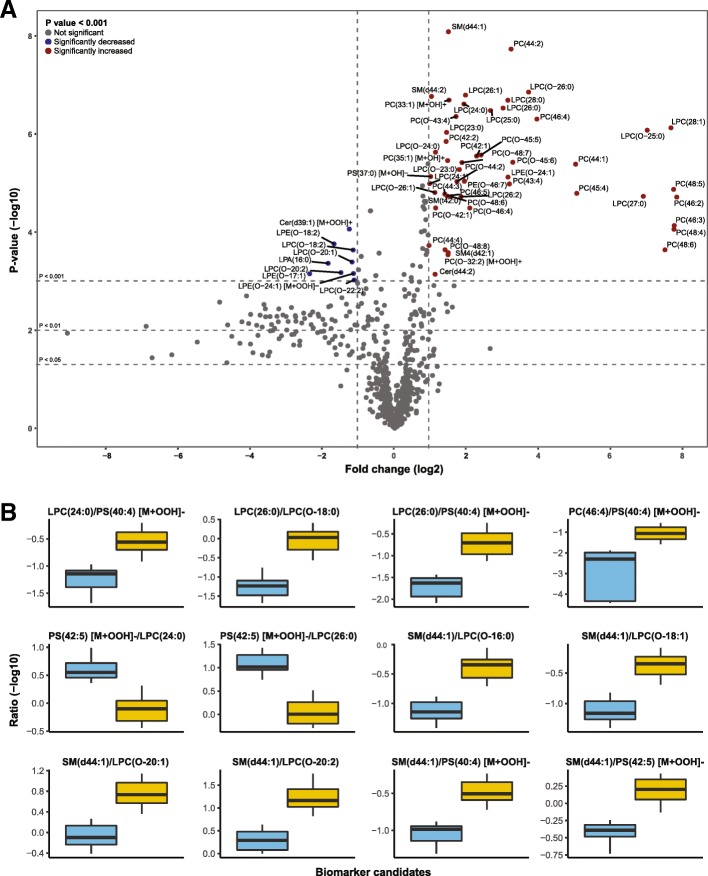
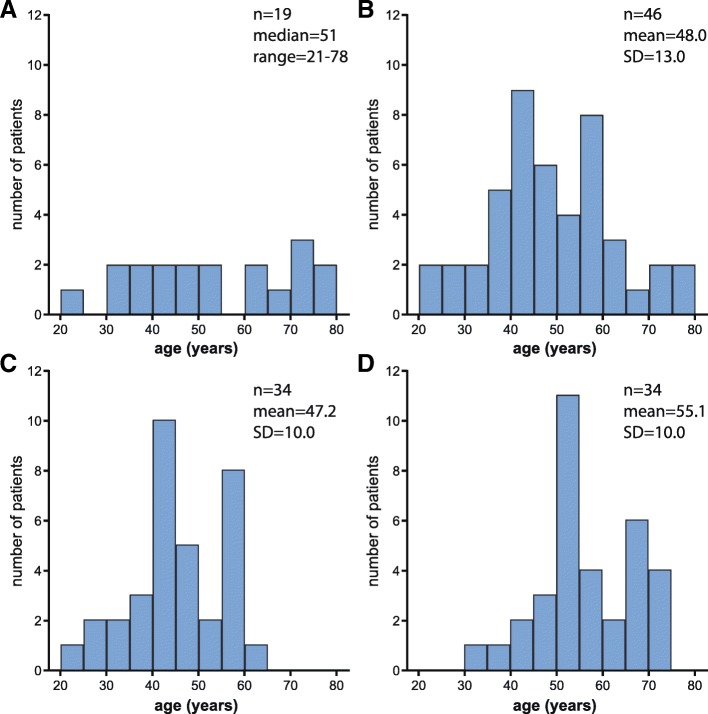
In this study 46 women (baseline clinical data published by our group previously) were invited for a follow-up visit. Newly identified women at our center were also recruited. We analysed 65 baseline and 34 follow-up assessments. Median time between baseline and follow-up was 7.8 years (range 6.4-8.7). Mean age at baseline was 49.2 ± 14.2 years, at follow-up 55.4 ± 10.1. EDSS increased significantly (+ 0.08 points/year), but the other outcome measures did not. Increasing age and duration of symptoms were associated with more disability. For the pilot study we analysed plasma of 20 ALD women and 10 controls with ultra-high performance liquid chromatography coupled to high-resolution mass spectrometry, which identified 100 potential biomarker ratios with strong differentiating properties and non-overlapping data distributions between ALD women and controls.
Progression of spinal cord disease can be detected with EDSS, but not with ALDS or SF-36 after a follow-up period of almost 8 years. Moreover, age and the duration of symptoms seem positively associated with the rate of progression. Although a significant progression was measurable, it was below the rate generally conceived as clinically relevant. Therefore, EDSS, ALDS and SF-36 are not suitable as primary outcome measures in clinical trials for spinal cord disease in ALD women. In addition, a semi-targeted lipidomics approach can identify possible new diagnostic biomarkers for women with ALD.
超过 80%的 X 连锁肾上腺脑白质营养不良(ALD)女性在成年后会发展为脊髓疾病,而目前对此病的治疗仅为支持性治疗。因此,未来临床试验中需要有疾病进展率的定量数据。此外,ALD 女性的诊断具有挑战性,因为最重要的诊断生物标志物在 15-20%的患者中是正常的。需要更好的生物标志物。本研究旨在评估扩展残疾状况量表(EDSS)、AMC 线性残疾量表(ALDS)和健康调查简表 36(SF-36)是否能检测疾病进展,并建立年龄和症状持续时间对进展率的影响模型。此外,我们还进行了一项初步研究,以评估半靶向脂质组学方法是否可以识别可能的新诊断生物标志物。
本研究共邀请了 46 名(我们小组先前已发表了基线临床数据)女性进行随访,同时也招募了新发现的女性患者。我们共分析了 65 次基线和 34 次随访评估,基线和随访之间的中位时间为 7.8 年(6.4-8.7 年)。基线时的平均年龄为 49.2±14.2 岁,随访时为 55.4±10.1 岁。EDSS 显著增加(每年增加 0.08 分),但其他结局指标没有增加。年龄增加和症状持续时间与残疾程度增加相关。在初步研究中,我们对 20 名 ALD 女性和 10 名对照者的血浆进行了超高效液相色谱-高分辨率质谱分析,鉴定出 100 个具有强区分特性和 ALD 女性与对照组之间无重叠数据分布的潜在生物标志物比值。
在近 8 年的随访后,EDSS 可检测到脊髓疾病的进展,但 ALDS 或 SF-36 则不行。此外,年龄和症状持续时间似乎与进展率呈正相关。尽管可测量到明显的进展,但低于通常认为具有临床意义的进展率。因此,EDSS、ALDS 和 SF-36 不适合作为 ALD 女性脊髓疾病临床试验的主要结局指标。此外,半靶向脂质组学方法可识别 ALD 女性的潜在新诊断生物标志物。