Peterson Jill, Brunie Aurélie, Ndeye Salif, Diatta Elisabeth, Stanback John, Chin-Quee Dawn
FHI 360, Washington, DC, USA.
Centre de Recherche pour le Développement Humain, Sénégal, Dakar, Senegal.
Gates Open Res. 2018 Dec 3;2:65. doi: 10.12688/gatesopenres.12880.1.
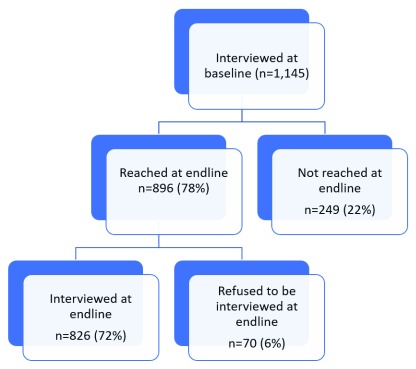
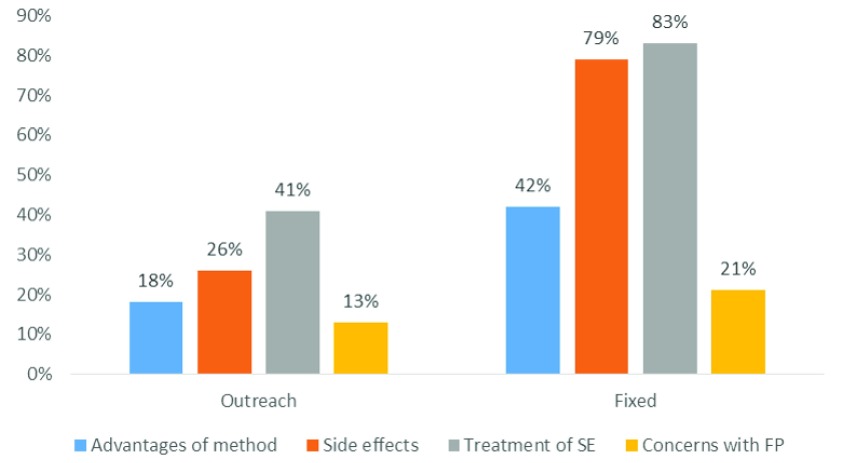
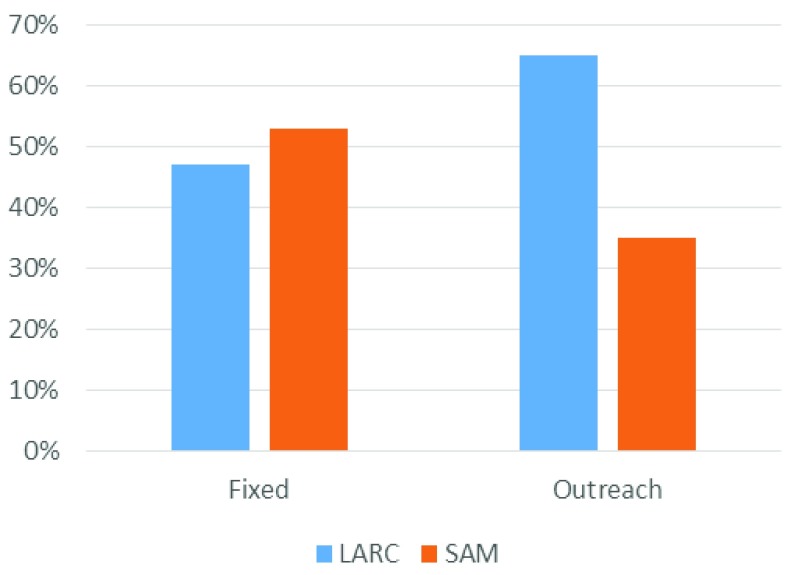
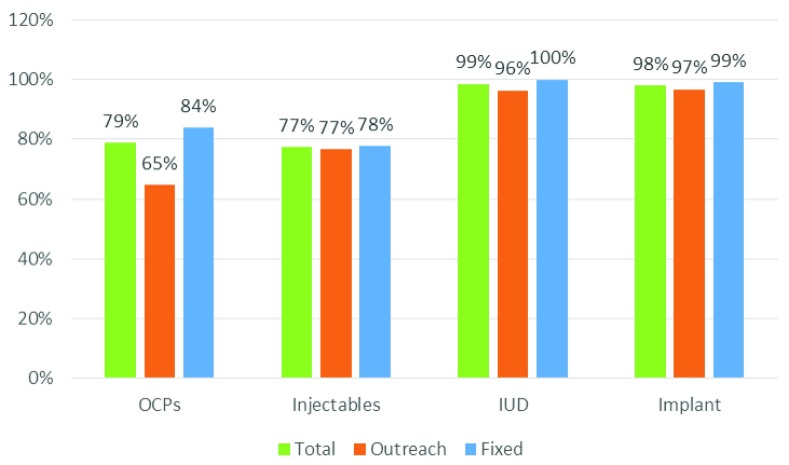
Given the role that continued use of family planning (FP) by current users plays in increasing contraceptive prevalence rates (CPR), this research aims to measure method-specific continuation rates for fixed-site and community-based program interventions and to document reasons for discontinuation. This research compared discontinuation rates for clients initiating family planning through two types of strategies-services provided at existing health centers that provided regular, ongoing services, and "one-off" outreach services in communities. Data collectors surveyed consenting clients who were initiating a modern method, or reinitiating after a break of at least six months, and conducted a follow up survey after seven months. Long acting reversible contraception (LARC) was more commonly initiated through outreach strategies than through fixed sites. LARC made up 65% of methods initiated through the outreach setting and 47% of those initiated through a fixed-site strategy. Continuation rates varied from 99% for intrauterine devices (IUDs) to 77% for injectables and were very similar between outreach and fixed-site strategies, with the exception of oral contraceptive pills (OCPs). Only 65% of outreach initiators continued using OCPs, compared to 84% of fixed-site initiators. Top reported reasons for discontinuation were side effects and little or no sexual relations. Project interventions allowed most women to continue with their chosen method of FP for the seven-month duration of the study whether initiated through fixed site or outreach strategies, showing promise in helping Senegal to increase its CPR. It is feasible to offer both LARC and short acting methods through outreach strategies. Further research into the sensitivity of demand to the price charged is needed.
鉴于现有计划生育(FP)使用者持续使用计划生育措施对提高避孕普及率(CPR)具有重要作用,本研究旨在衡量定点和社区项目干预措施特定方法的持续使用率,并记录停用原因。本研究比较了通过两种策略开始使用计划生育措施的客户的停用率,一种是在提供定期、持续服务的现有健康中心提供的服务,另一种是在社区开展的“一次性”外展服务。数据收集者对开始采用现代避孕方法或在至少中断六个月后重新开始使用的同意参与的客户进行了调查,并在七个月后进行了跟踪调查。长效可逆避孕法(LARC)通过外展策略开始使用的情况比通过定点服务更为普遍。通过外展服务开始采用的避孕方法中,LARC占65%,而通过定点策略开始采用的占47%。持续使用率从宫内节育器(IUD)的99%到注射剂的77%不等,除口服避孕药(OCP)外,外展和定点策略的持续使用率非常相似。外展服务开始使用OCP的客户中只有65%继续使用,而定点服务开始使用的客户中这一比例为84%。报告的停用主要原因是副作用以及很少或没有性关系。项目干预措施使大多数女性在为期七个月的研究期间能够继续使用其选择的计划生育方法——无论该方法是通过定点服务还是外展策略开始采用的,这表明在帮助塞内加尔提高避孕普及率方面具有潜力。通过外展策略提供LARC和短效避孕方法都是可行的。需要进一步研究需求对所收取价格的敏感度。