Kim Hyeong Su, Kim Jung Han, Han Boram, Choi Dae Ro
Division of Hemato-Oncology, Department of Internal Medicine, Kangnam Sacred-Heart Hospital, Hallym University Medical Center, Hallym University College of Medicine, Seoul 07441, Korea.
Division of Hemato-Oncology, Department of Internal Medicine, Hallym University Medical Center, Anyang 14068, Korea.
Medicina (Kaunas). 2019 Feb 7;55(2):41. doi: 10.3390/medicina55020041.
This meta-analysis investigated the relationship between thyroid transcription factor-1 (TTF-1) expression and epidermal growth factor receptor (EGFR) mutations in non-small-cell lung cancer (NSCLC) to clarify whether TTF-1 can be a potential surrogate marker for EGFR mutation status in advanced NSLCL.
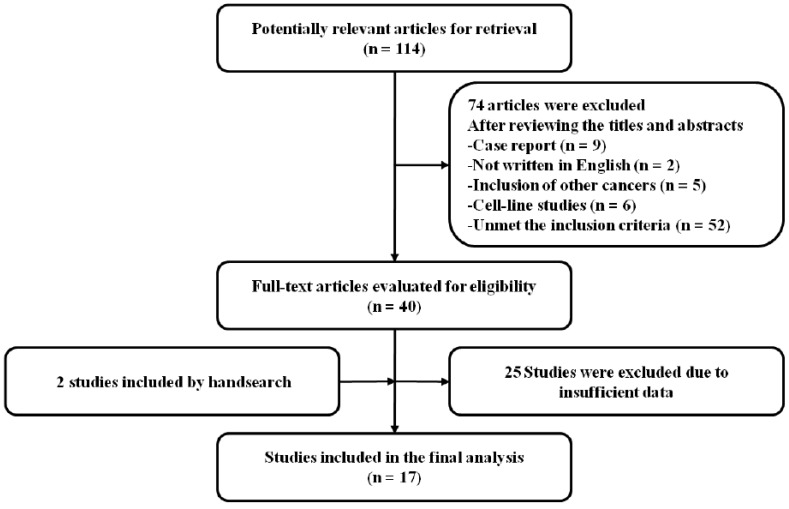
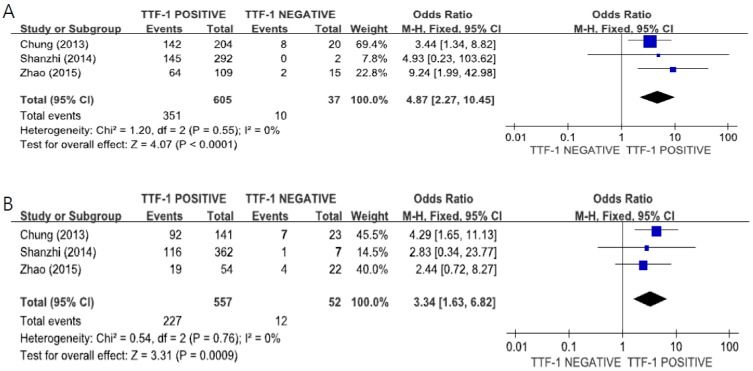
A systematic searching of databases, including PubMed, EMBASE, Cochrane Library, and Google Scholar, was performed to identify studies assessing the correlation of TTF-1 expression with EGFR mutations. From 17 studies, 9764 patients were included in the combined analysis of odds ratio (OR) for the correlation between TTF-1 expression and mutations.
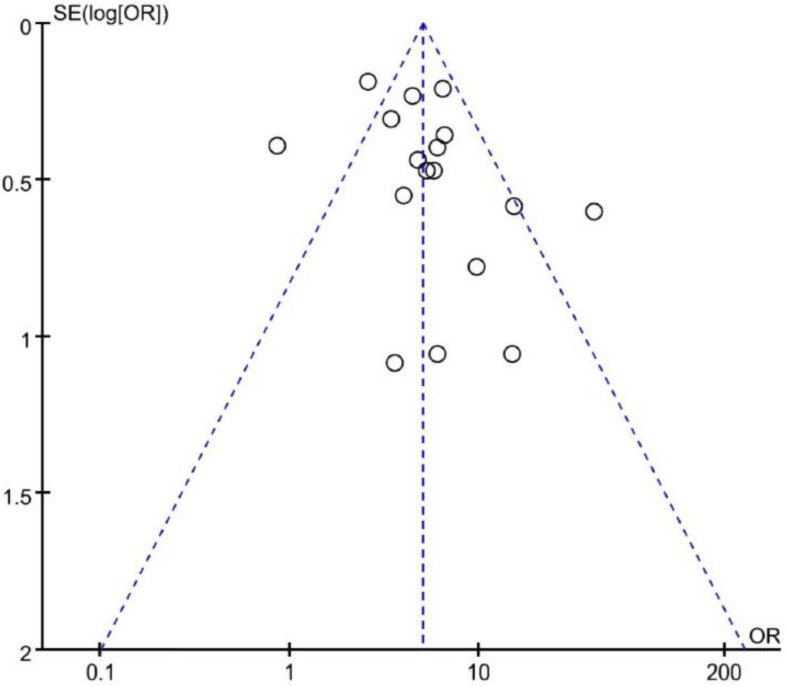
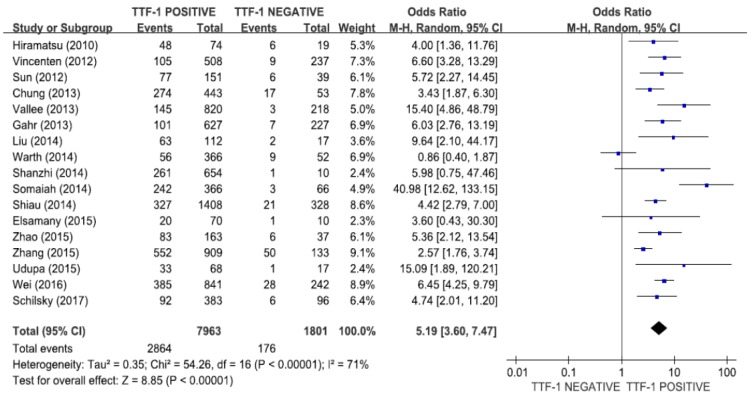
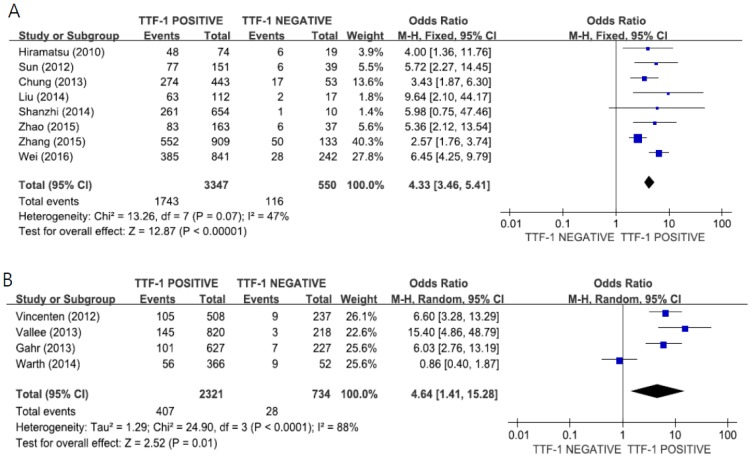
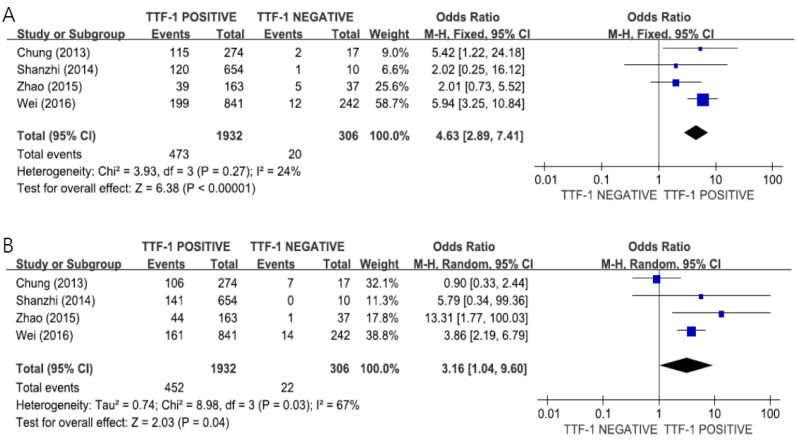
Compared with NSCLCs showing negative TTF-1 expression, tumors harboring TTF-1 overexpression showed a significantly higher rate of EGFR mutations (OR = 5.19, 95% confidence interval: 3.60⁻7.47, p < 0.00001). This correlation was observed in both subgroups of East Asian (OR = 4.33, 95% CI: 3.46⁻5.41, p < 0.00001) and European patients (OR = 4.64, 95% CI: 1.41⁻15.28, p < 0.01). In addition, TTF-1 expression was significantly associated with EGFR mutations in exon 19 (OR = 4.63, 95% CI: 2.89⁻7.41, p < 0.00001) as well as exon 21 (OR = 3.16, 95% CI: 1.04⁻9.60, p = 0.04).
This meta-analysis demonstrates a significant correlation between TTF-1 expression and EGFR mutations in patients with NSCLC. The status of TTF-1 expression may be a biomarker to guide anticancer treatment in patients with NSCLC and unknown EGFR mutation status.
本荟萃分析研究了非小细胞肺癌(NSCLC)中甲状腺转录因子-1(TTF-1)表达与表皮生长因子受体(EGFR)突变之间的关系,以阐明TTF-1是否可作为晚期NSLCL中EGFR突变状态的潜在替代标志物。
对包括PubMed、EMBASE、Cochrane图书馆和谷歌学术在内的数据库进行系统检索,以确定评估TTF-1表达与EGFR突变相关性的研究。从17项研究中,9764例患者被纳入TTF-1表达与突变相关性比值比(OR)的合并分析。
与TTF-1表达阴性的NSCLC相比,TTF-1过表达的肿瘤显示出显著更高的EGFR突变率(OR = 5.19,95%置信区间:3.60⁻7.47,p < 0.00001)。在东亚亚组(OR = 4.33,95% CI:3.46⁻5.41,p < 0.00001)和欧洲患者亚组(OR = 4.64,95% CI:1.41⁻15.28,p < 0.01)中均观察到这种相关性。此外,TTF-1表达与外显子19(OR = 4.63,95% CI:2.89⁻7.41,p < 0.00001)以及外显子21(OR = 3.16,95% CI:1.04⁻9.60,p = 0.04)中的EGFR突变显著相关。
本荟萃分析表明NSCLC患者中TTF-1表达与EGFR突变之间存在显著相关性。TTF-1表达状态可能是指导EGFR突变状态未知的NSCLC患者进行抗癌治疗的生物标志物。