Department of Pharmacology and Chemical Biology, and Human Genetics, UPMC Hillman Cancer Center, Magee-Womens Research Institute, University of Pittsburgh, 204 Craft Avenue, Pittsburgh, PA, 15213, USA.
Graduate Program in Integrated Systems Biology, University of Pittsburgh, Pittsburgh, USA.
Breast Cancer Res. 2019 Feb 8;21(1):22. doi: 10.1186/s13058-019-1102-7.
Breast cancer is the most common invasive cancer among women worldwide. Next-generation sequencing (NGS) has revolutionized the study of cancer across research labs around the globe; however, genomic testing in clinical settings remains limited. Advances in sequencing reliability, pipeline analysis, accumulation of relevant data, and the reduction of costs are rapidly increasing the feasibility of NGS-based clinical decision making.
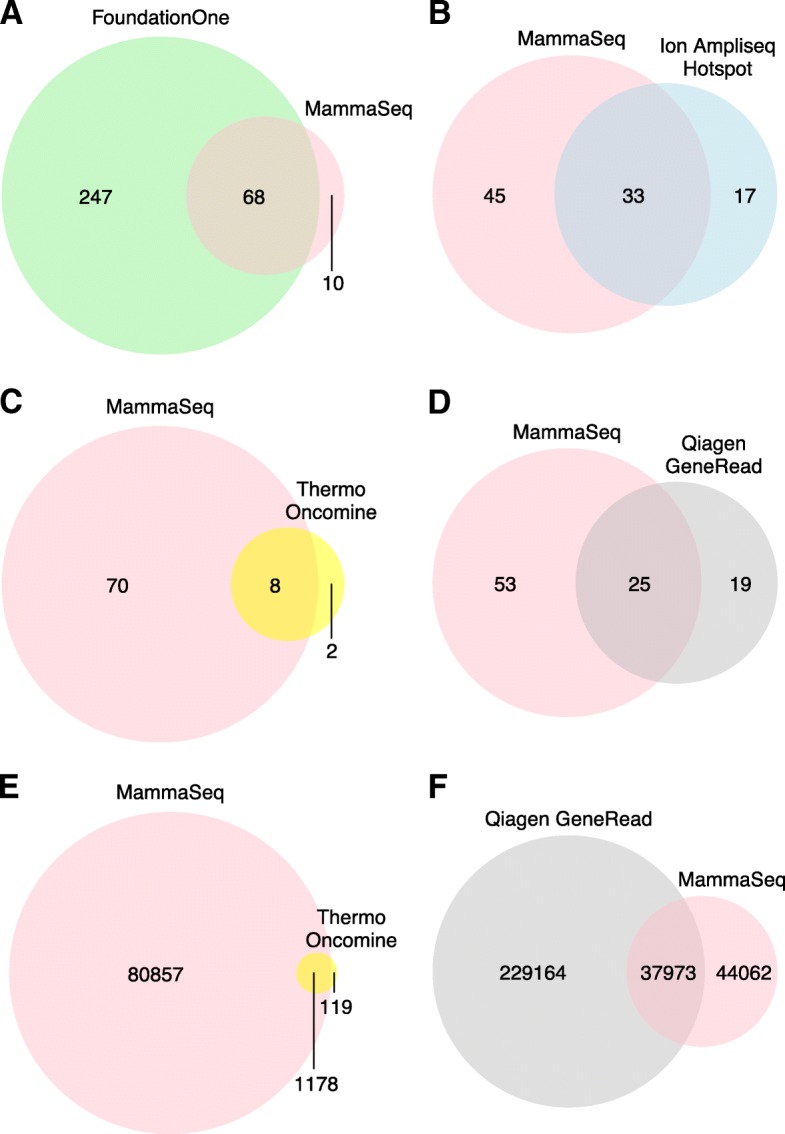
We report the development of MammaSeq, a breast cancer-specific NGS panel, targeting 79 genes and 1369 mutations, optimized for use in primary and metastatic breast cancer. To validate the panel, 46 solid tumors and 14 plasma circulating tumor DNA (ctDNA) samples were sequenced to a mean depth of 2311× and 1820×, respectively. Variants were called using Ion Torrent Suite 4.0 and annotated with cravat CHASM. CNVKit was used to call copy number variants in the solid tumor cohort. The oncoKB Precision Oncology Database was used to identify clinically actionable variants. Droplet digital PCR was used to validate select ctDNA mutations.
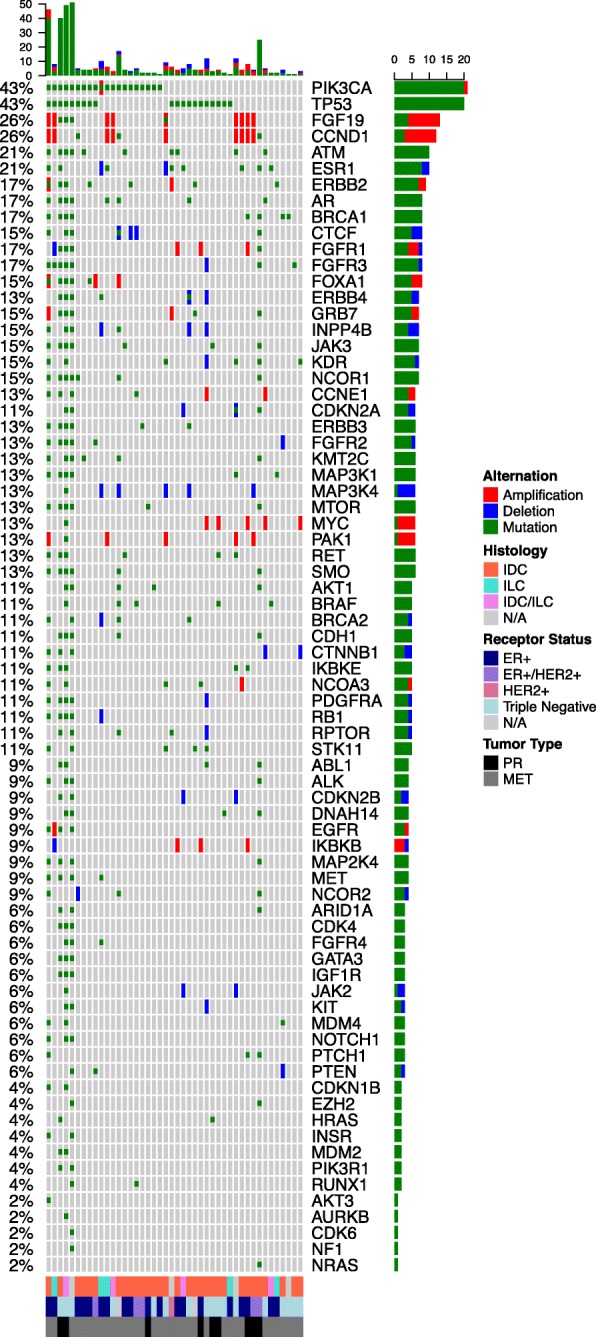
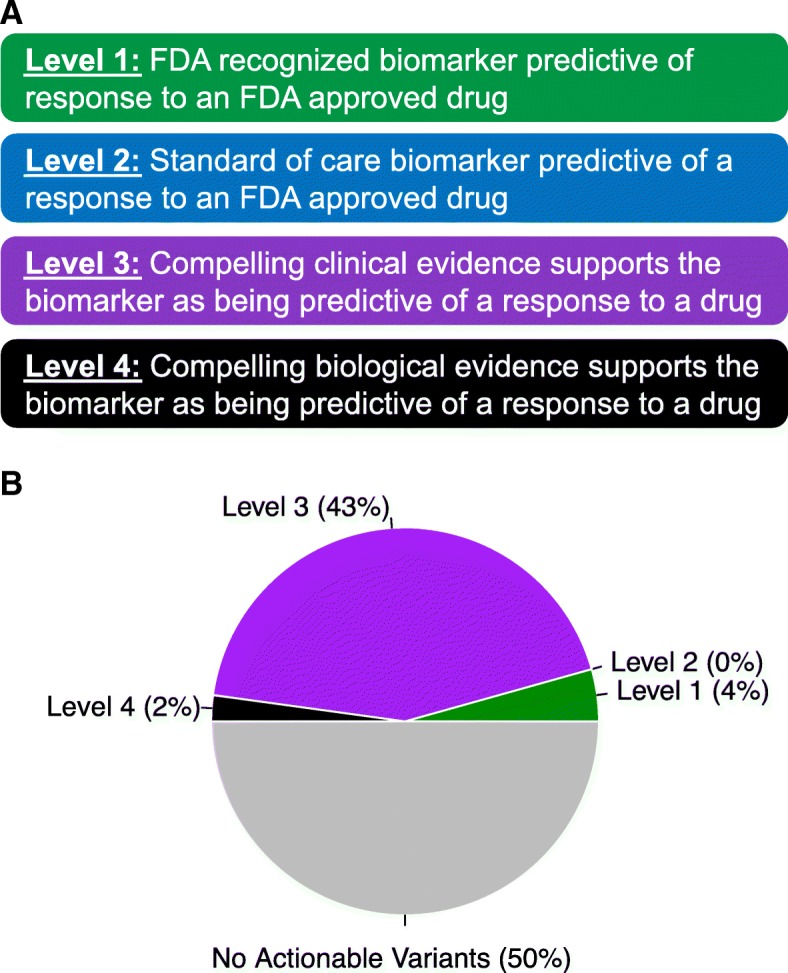
In cohorts of 46 solid tumors and 14 ctDNA samples from patients with advanced breast cancer, we identified 592 and 43 protein-coding mutations. Mutations per sample in the solid tumor cohort ranged from 1 to 128 (median 3), and the ctDNA cohort ranged from 0 to 26 (median 2.5). Copy number analysis in the solid tumor cohort identified 46 amplifications and 35 deletions. We identified 26 clinically actionable variants (levels 1-3) annotated by OncoKB, distributed across 20 out of 46 cases (40%), in the solid tumor cohort. Allele frequencies of ESR1 and FOXA1 mutations correlated with CA.27.29 levels in patient-matched blood draws.
In solid tumor biopsies and ctDNA, MammaSeq detects clinically actionable mutations (OncoKB levels 1-3) in 22/46 (48%) solid tumors and in 4/14 (29%) of ctDNA samples. MammaSeq is a targeted panel suitable for clinically actionable mutation detection in breast cancer.
乳腺癌是全球女性中最常见的侵袭性癌症。下一代测序(NGS)彻底改变了全球研究实验室的癌症研究;然而,临床环境中的基因组测试仍然有限。测序可靠性、管道分析、相关数据积累和成本降低方面的进步正在迅速提高基于 NGS 的临床决策的可行性。
我们报告了 MammaSeq 的开发,这是一种针对 79 个基因和 1369 个突变的乳腺癌特异性 NGS 面板,针对原发性和转移性乳腺癌进行了优化。为了验证该面板,对 46 个实体瘤和 14 个血浆循环肿瘤 DNA(ctDNA)样本进行了测序,平均深度分别为 2311×和 1820×。使用 Ion Torrent Suite 4.0 调用变体,并使用 cravat CHASM 进行注释。CNVKit 用于在实体瘤队列中调用拷贝数变异。使用 oncoKB 精准肿瘤学数据库识别临床可操作的变体。使用液滴数字 PCR 验证选择的 ctDNA 突变。
在 46 例晚期乳腺癌患者的实体瘤和 14 例 ctDNA 样本队列中,我们鉴定出 592 个和 43 个蛋白编码突变。实体瘤队列中每个样本的突变数为 1 至 128(中位数 3),ctDNA 队列中为 0 至 26(中位数 2.5)。实体瘤队列中的拷贝数分析鉴定出 46 个扩增和 35 个缺失。我们在实体瘤队列中鉴定出 26 个临床可操作的变体(OncoKB 水平 1-3),分布在 20 例中的 46 例(40%)。在患者匹配的血液样本中,ESR1 和 FOXA1 突变的等位基因频率与 CA.27.29 水平相关。
在实体瘤活检和 ctDNA 中,MammaSeq 在 46 例实体瘤中的 22 例(48%)和 14 例 ctDNA 样本中的 4 例(29%)中检测到临床可操作的突变(OncoKB 水平 1-3)。MammaSeq 是一种适合于乳腺癌临床可操作突变检测的靶向面板。