Center for Neuroscience and Cell Biology, University of Coimbra, Coimbra, Portugal; Faculty of Sciences and Technology, University of Coimbra, Coimbra, Portugal; Faculty of Medicine, University of Coimbra, Coimbra, Portugal.
Center for Neuroscience and Cell Biology, University of Coimbra, Coimbra, Portugal.
Redox Biol. 2019 Apr;22:101130. doi: 10.1016/j.redox.2019.101130. Epub 2019 Jan 30.
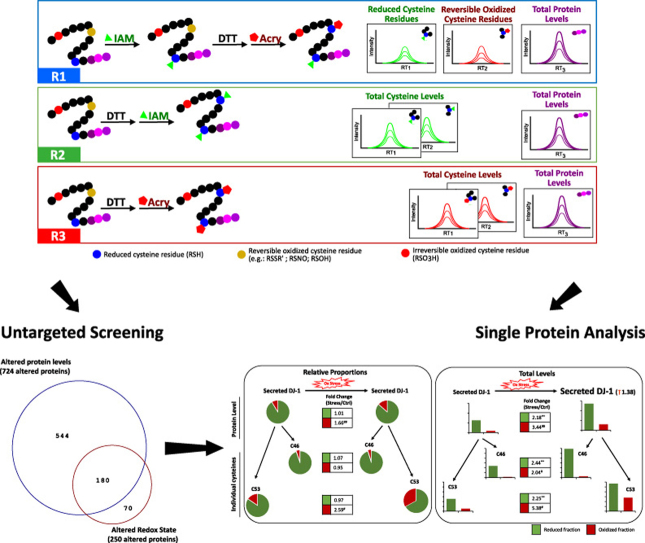
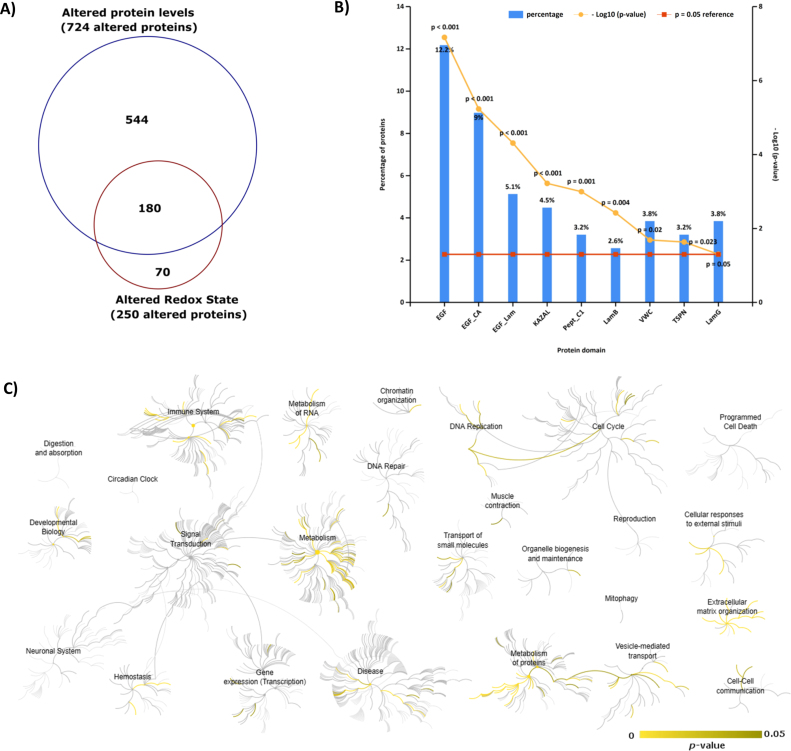
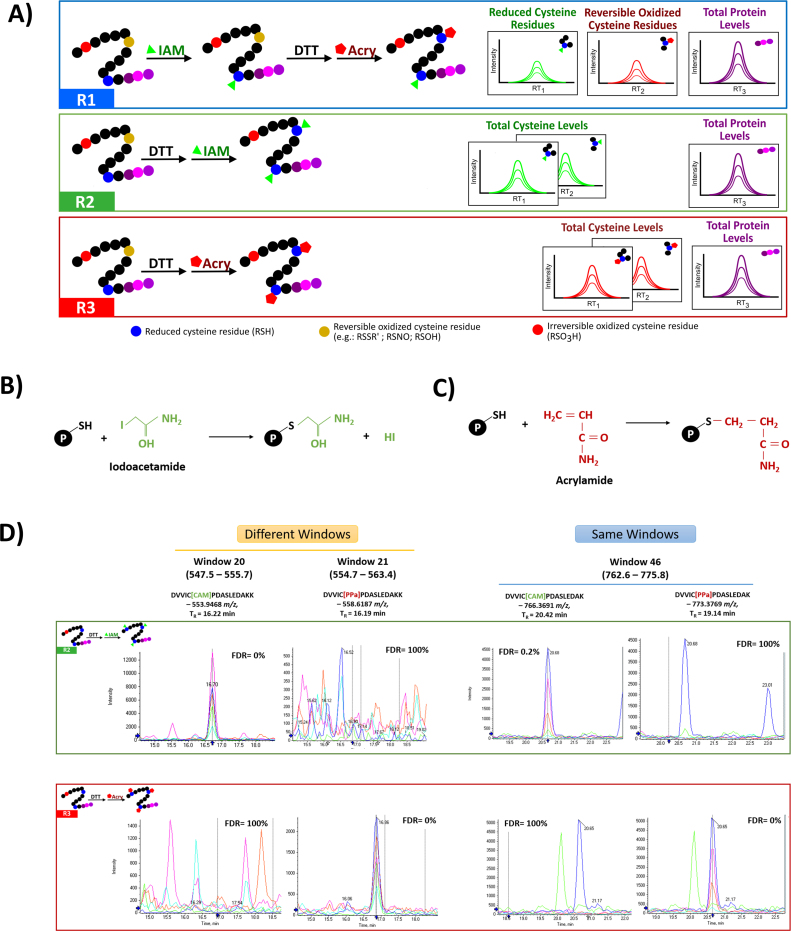
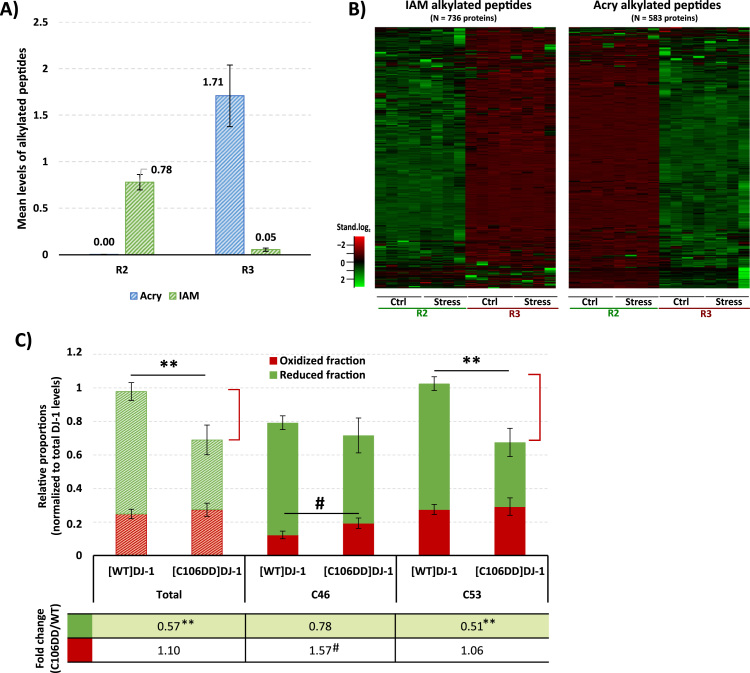
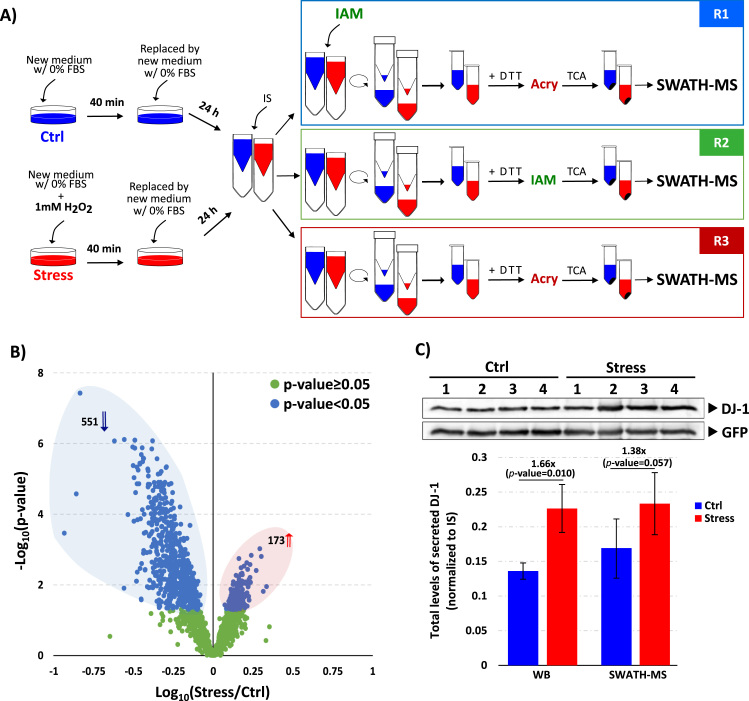
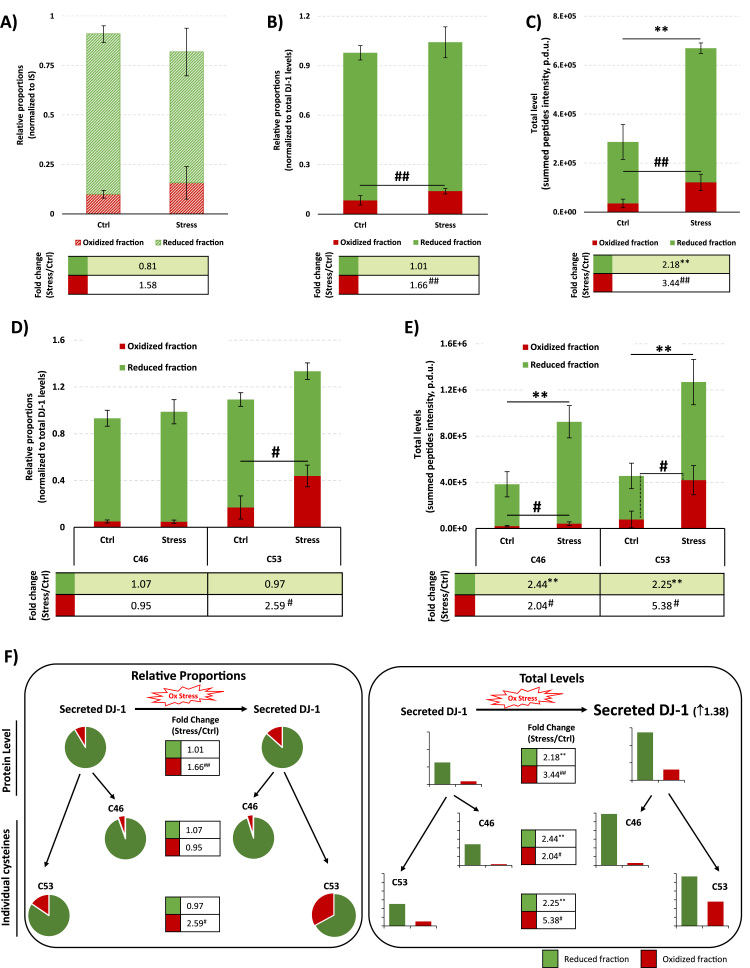
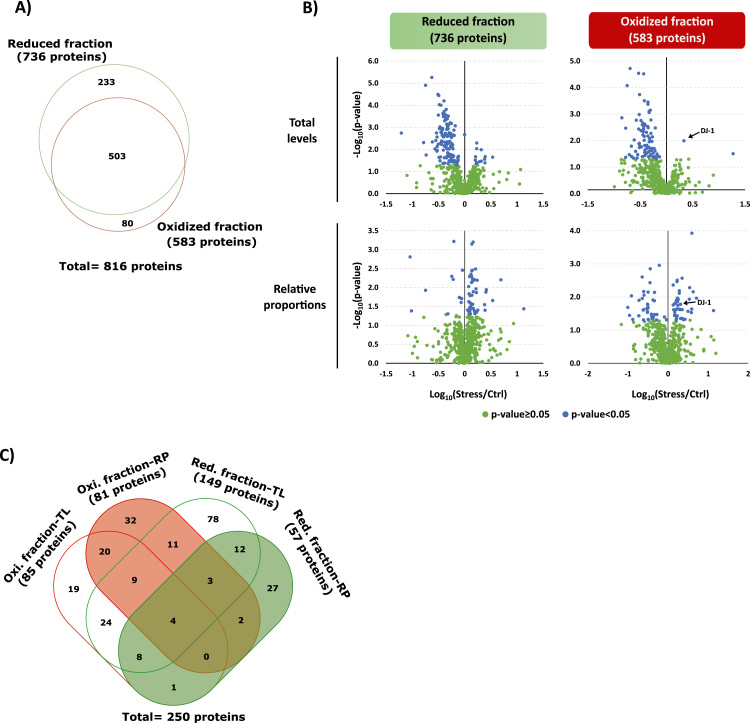
Most of the redox proteomics strategies are focused on the identification and relative quantification of cysteine oxidation without considering the variation in the total levels of the proteins. However, protein synthesis and protein degradation also belong to the regulatory mechanisms of the cells, being therefore important to consider the changes in total protein levels in PTMs-focused analyses, such as cysteine redox characterization. Therefore, a novel integrative approach combining the SWATH-MS method with differential alkylation using a combination of commonly available alkylating reagents (oxSWATH) is presented, by which it is possible to integrate the information regarding relative cysteine oxidation with the analysis of the total protein levels in a cost-effective high-throughput approach. The proposed method was tested using a redox-regulated protein and further applied to a comparative analysis of secretomes obtained from cells cultured under control or oxidative stress conditions to strengthen the importance of considering the overall proteome changes. Using the OxSWATH method it was possible to determine both the relative proportion of reduced and reversible oxidized oxoforms, as well as the total levels of each oxoform by taking into consideration the total levels of the protein. Therefore, using OxSWATH the comparative analyses can be performed at two different levels by considering the relative proportion or the total levels at both peptide and protein level. Moreover, since samples are acquired in SWATH-MS mode, besides the redox centered analysis, a generic differential protein expression analysis can also be performed, allowing a truly comprehensive evaluation of proteomics changes upon the oxidative stimulus. Data are available via ProteomeXchange and SWATHAtlas with the identifiers PXD006802, PXD006802, and PASS01210.
大多数氧化还原蛋白质组学策略都集中在鉴定和相对定量半胱氨酸氧化,而不考虑蛋白质总水平的变化。然而,蛋白质合成和蛋白质降解也属于细胞的调节机制,因此在以 PTM 为重点的分析(如半胱氨酸氧化还原特征分析)中,考虑总蛋白水平的变化非常重要。因此,本文提出了一种新的综合方法,该方法将 SWATH-MS 方法与使用常用烷基化试剂(oxSWATH)的差异烷基化相结合,通过这种方法,可以将相对半胱氨酸氧化的信息与总蛋白水平的分析相结合,以经济高效的高通量方式进行分析。该方法使用氧化还原调节蛋白进行了测试,并进一步应用于在对照或氧化应激条件下培养的细胞分泌组的比较分析,以加强考虑整体蛋白质组变化的重要性。使用 OxSWATH 方法,可以通过考虑蛋白质的总水平,确定还原和可逆氧化形式的相对比例,以及每种氧化形式的总水平。因此,使用 OxSWATH 可以在两个不同水平上进行比较分析,既可以考虑肽和蛋白质水平的相对比例,也可以考虑总水平。此外,由于样品是在 SWATH-MS 模式下采集的,除了氧化还原中心分析外,还可以进行通用的差异蛋白质表达分析,从而可以真正全面地评估氧化刺激下的蛋白质组变化。数据可通过 ProteomeXchange 和 SWATHAtlas 获取,标识符为 PXD006802、PXD006802 和 PASS01210。