Hu Zhaoyang, Liu Jin, Zhou Leng, Tian Xin, Abbott Geoffrey W
Laboratory of Anesthesiology & Critical Care Medicine, Translational Neuroscience Center, West China Hospital, Sichuan University, Chengdu, Sichuan, China.
Department of Anesthesiology, West China Hospital, Sichuan University, Chengdu, Sichuan, China.
Physiol Rep. 2019 Feb;7(3):e13957. doi: 10.14814/phy2.13957.
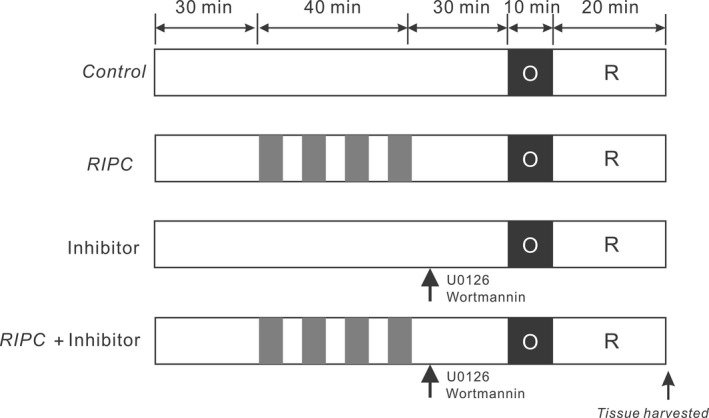
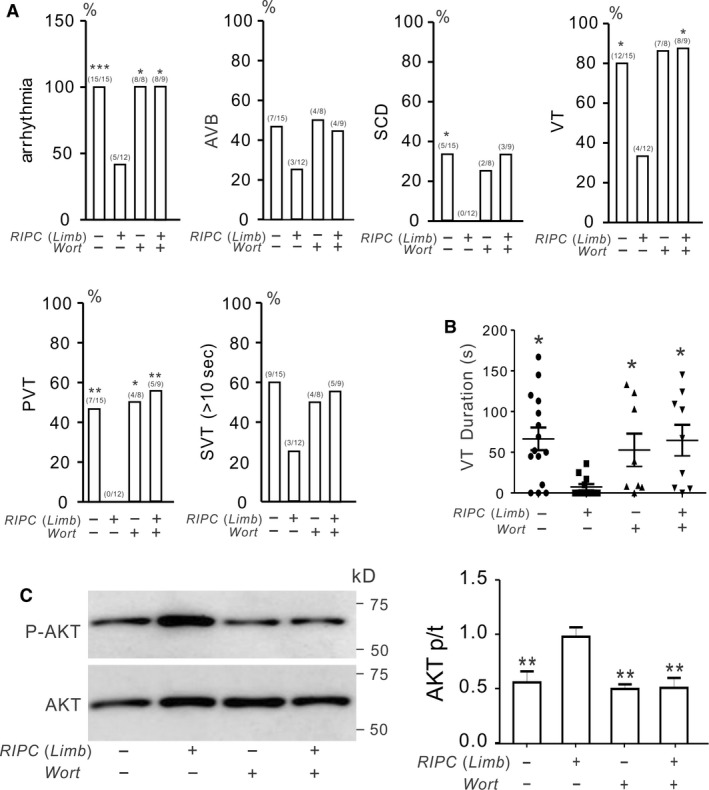
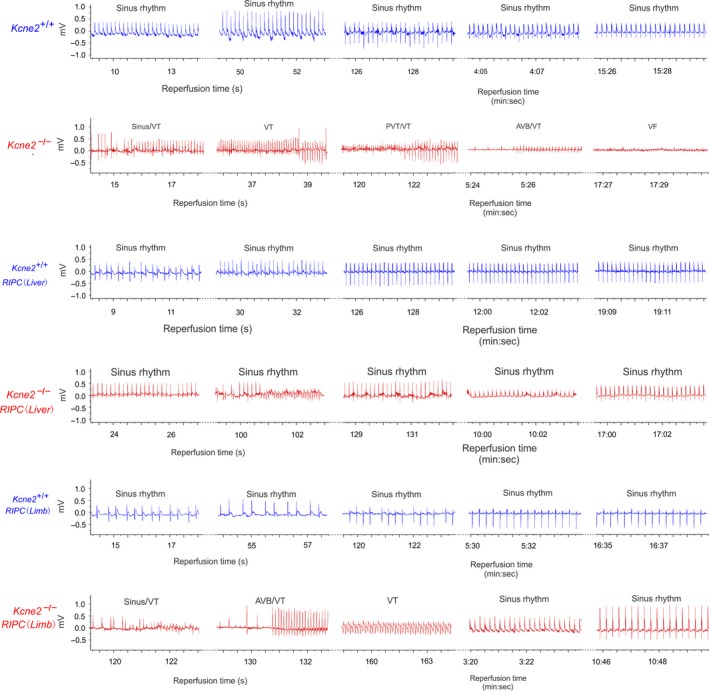
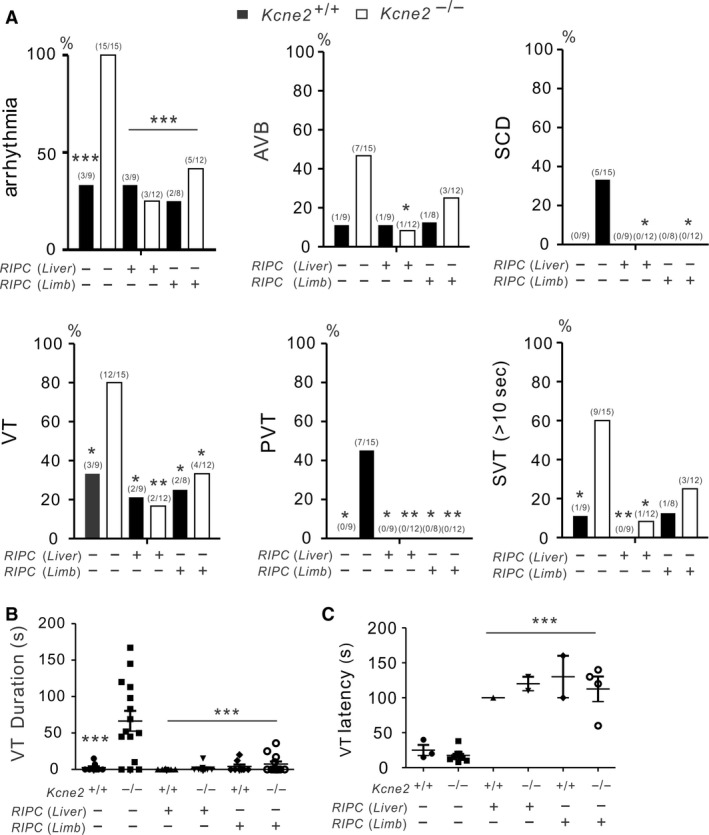
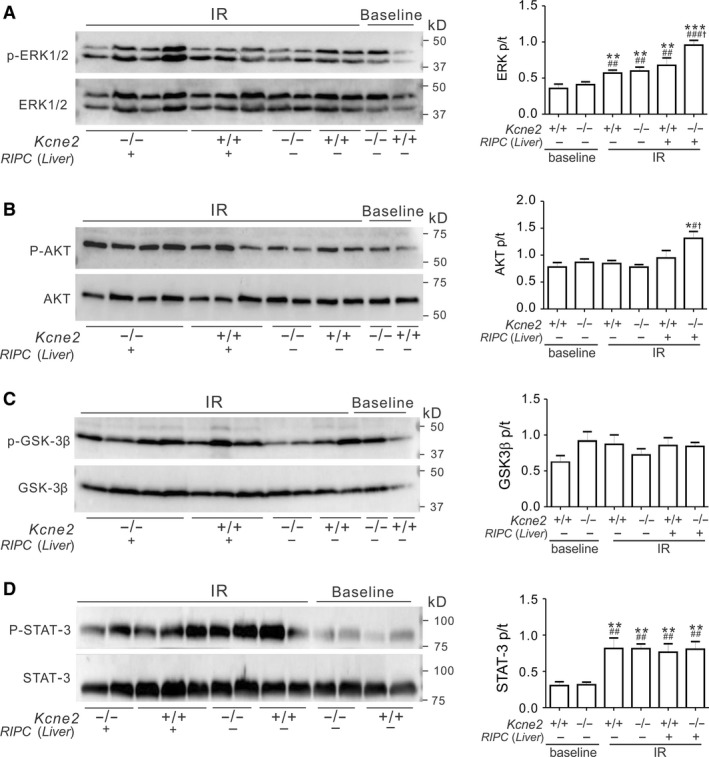
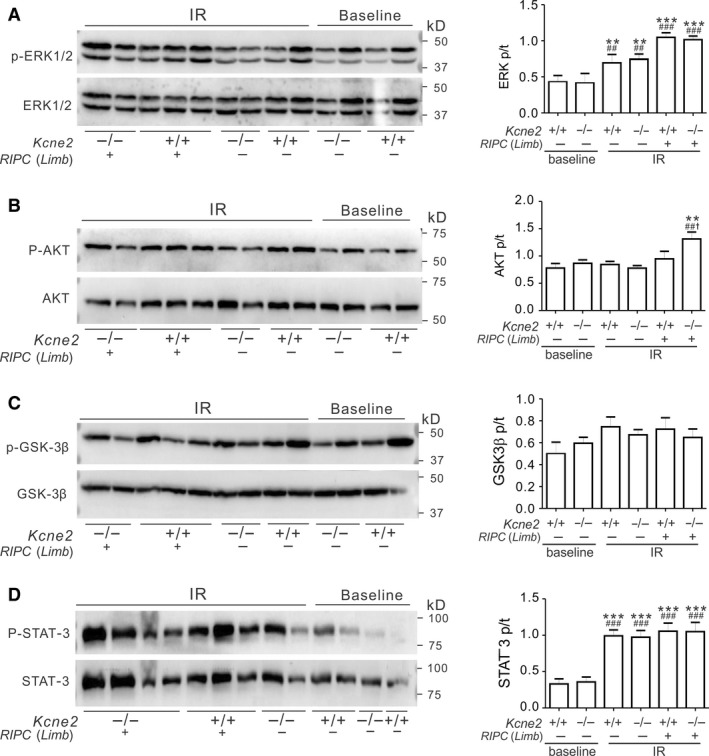
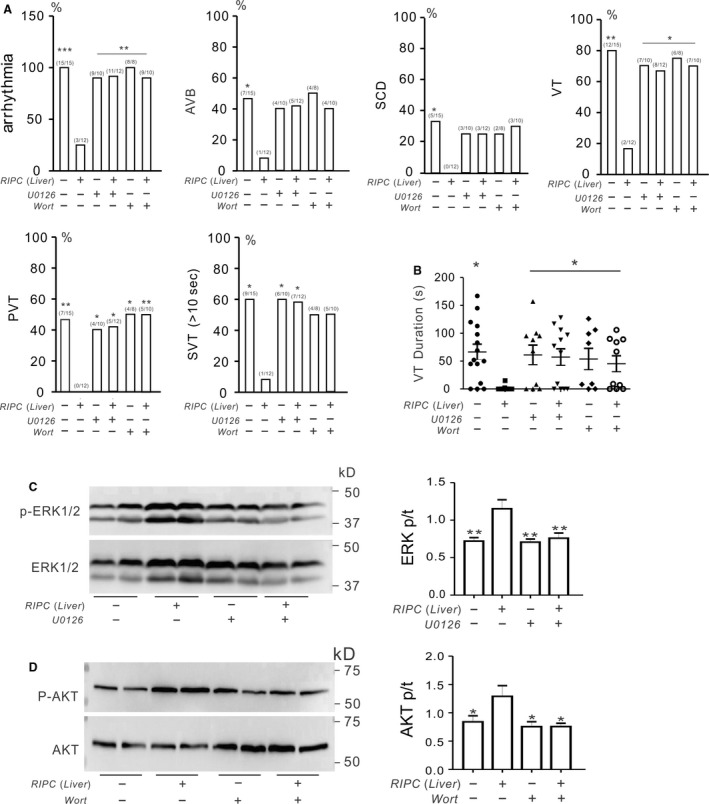
Sudden cardiac death (SCD) is the leading global cause of mortality. SCD often arises from cardiac ischemia reperfusion (IR) injury, pathologic sequence variants within ion channel genes, or a combination of the two. Alternative approaches are needed to prevent or ameliorate ventricular arrhythmias linked to SCD. Here, we investigated the efficacy of remote ischemic preconditioning (RIPC) of the limb versus the liver in reducing ventricular arrhythmias in a mouse model of SCD. Mice lacking the Kcne2 gene, which encodes a potassium channel β subunit associated with acquired Long QT syndrome were exposed to IR injury via coronary ligation. This resulted in ventricular arrhythmias in all mice (15/15) and SCD in 5/15 mice during reperfusion. Strikingly, prior RIPC (limb or liver) greatly reduced the incidence and severity of all ventricular arrhythmias and completely prevented SCD. Biochemical and pharmacological analysis demonstrated that RIPC cardioprotection required ERK1/2 and/or AKT phosphorylation. A lack of alteration in GSK-3β phosphorylation suggested against conventional reperfusion injury salvage kinase (RISK) signaling pathway protection. If replicated in human studies, limb RIPC could represent a noninvasive, nonpharmacological approach to limit dangerous ventricular arrhythmias associated with ischemia and/or channelopathy-linked SCD.
心脏性猝死(SCD)是全球主要的死亡原因。SCD通常源于心脏缺血再灌注(IR)损伤、离子通道基因内的病理性序列变异或两者的结合。需要采取其他方法来预防或改善与SCD相关的室性心律失常。在此,我们研究了肢体与肝脏的远程缺血预处理(RIPC)在减少SCD小鼠模型室性心律失常方面的效果。缺乏Kcne2基因(该基因编码与获得性长QT综合征相关的钾通道β亚基)的小鼠通过冠状动脉结扎暴露于IR损伤。这导致所有小鼠(15/15)出现室性心律失常,5/15小鼠在再灌注期间发生SCD。令人惊讶的是,预先进行RIPC(肢体或肝脏)可大大降低所有室性心律失常的发生率和严重程度,并完全预防SCD。生化和药理学分析表明,RIPC的心脏保护作用需要ERK1/2和/或AKT磷酸化。GSK-3β磷酸化缺乏改变表明传统的再灌注损伤挽救激酶(RISK)信号通路保护作用不成立。如果在人体研究中得到验证,肢体RIPC可能代表一种限制与缺血和/或通道病相关的SCD的危险室性心律失常的非侵入性、非药物方法。