Committee on Immunology, University of Chicago, Chicago, IL, USA; Department of Medicine, University of Chicago, Chicago, IL, USA.
Division of Infection and Immunity, Cardiff University School of Medicine, Cardiff, UK.
Cell. 2019 Feb 21;176(5):967-981.e19. doi: 10.1016/j.cell.2018.12.039. Epub 2019 Feb 7.
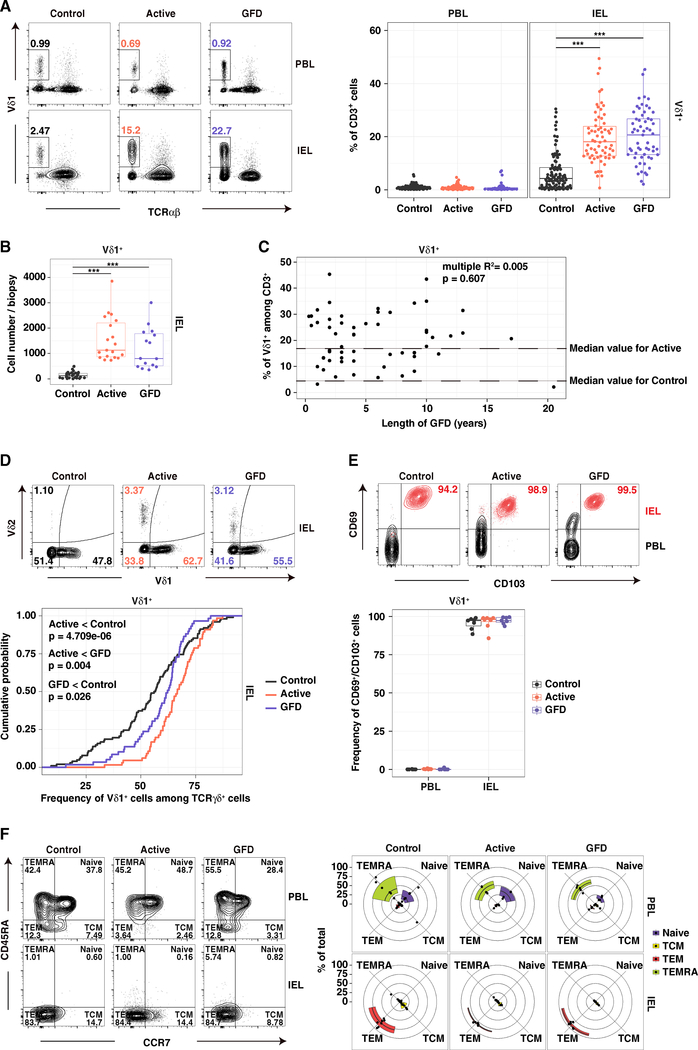
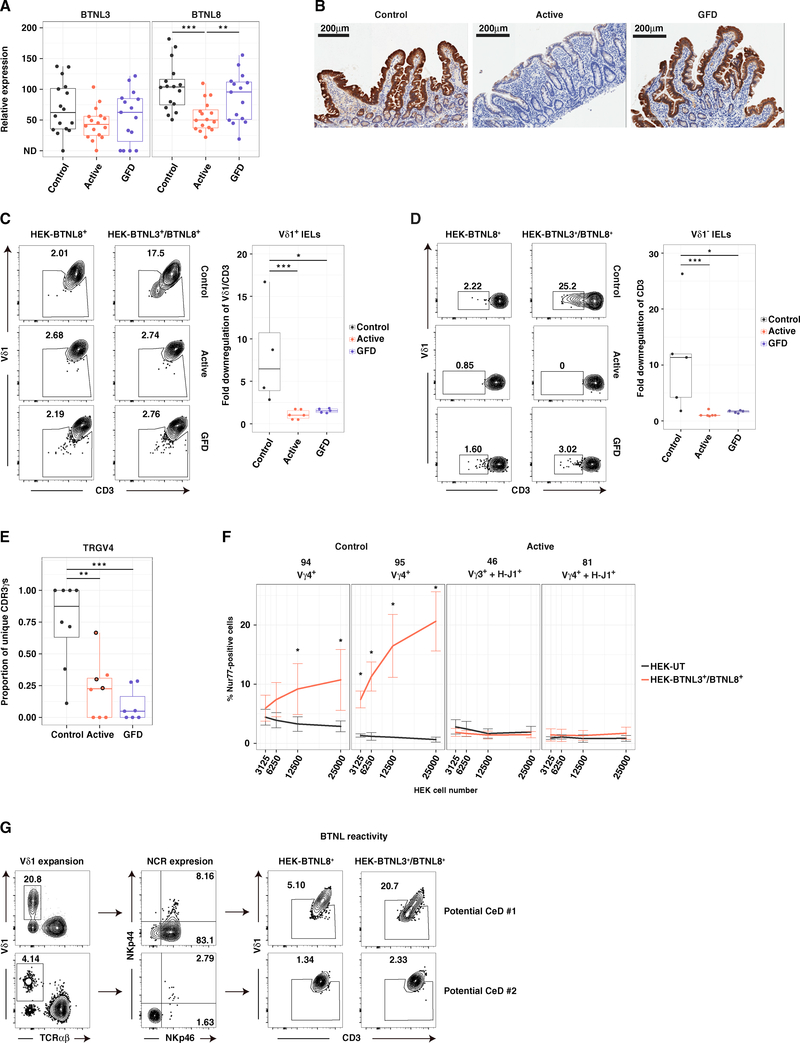
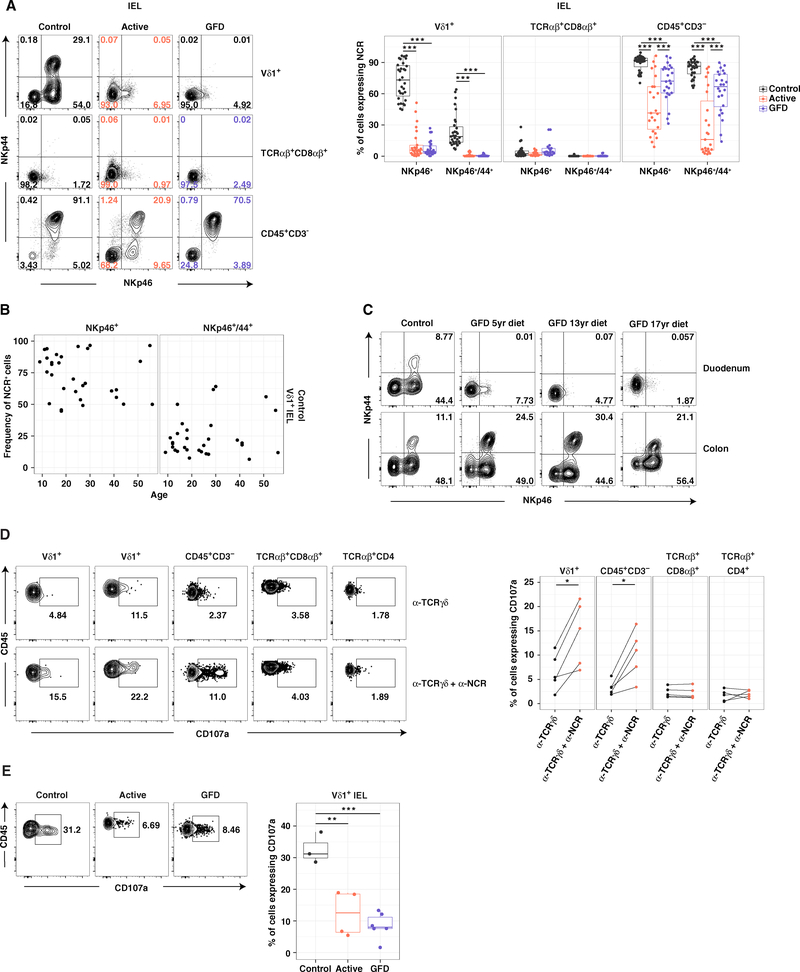
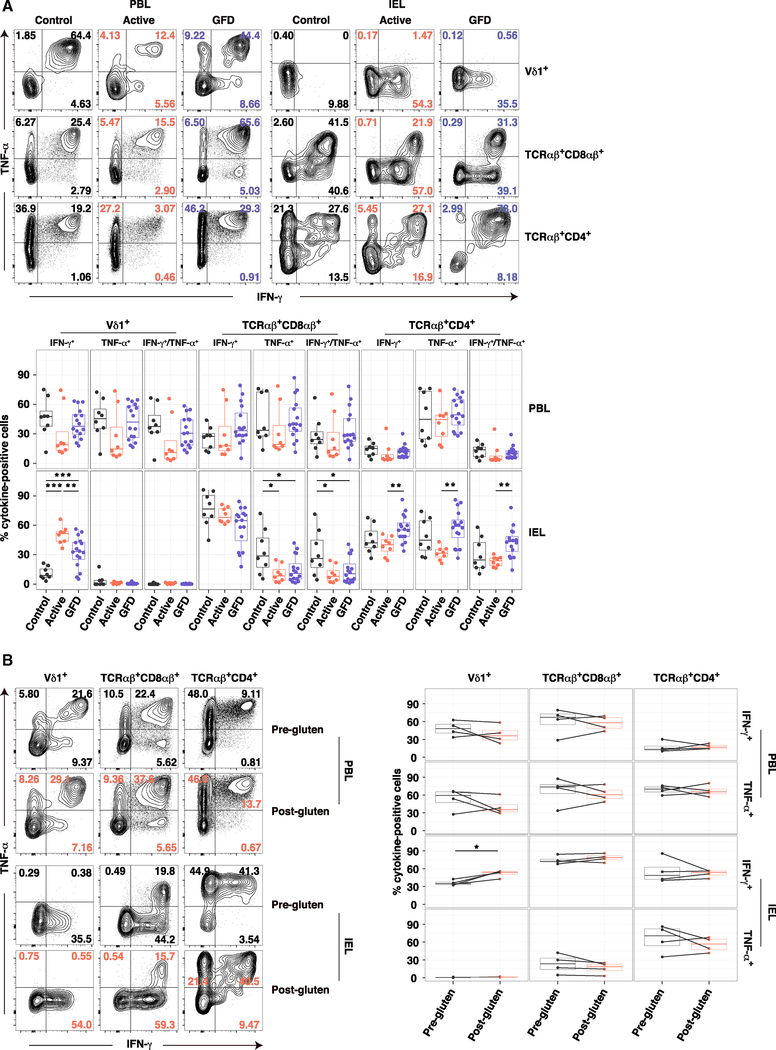
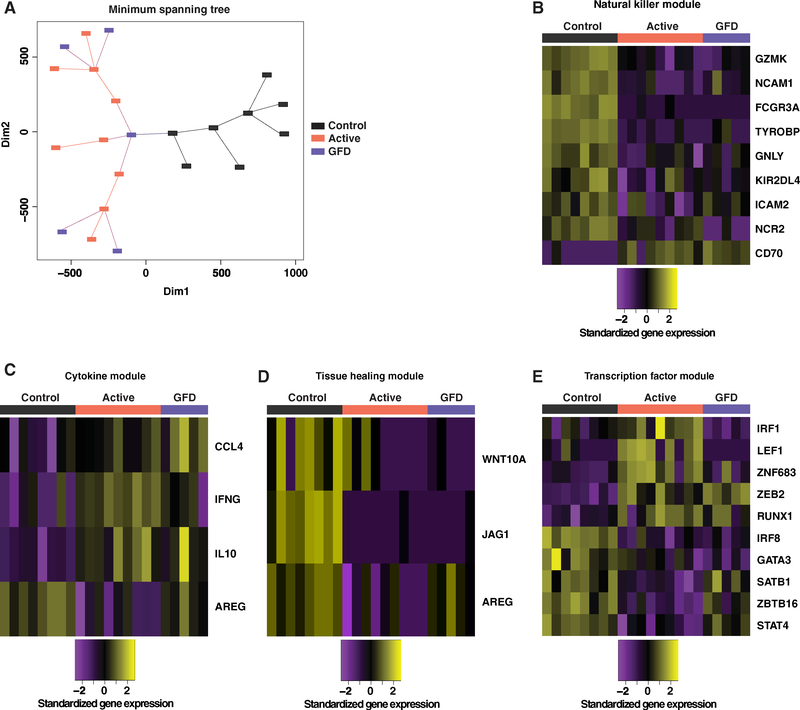
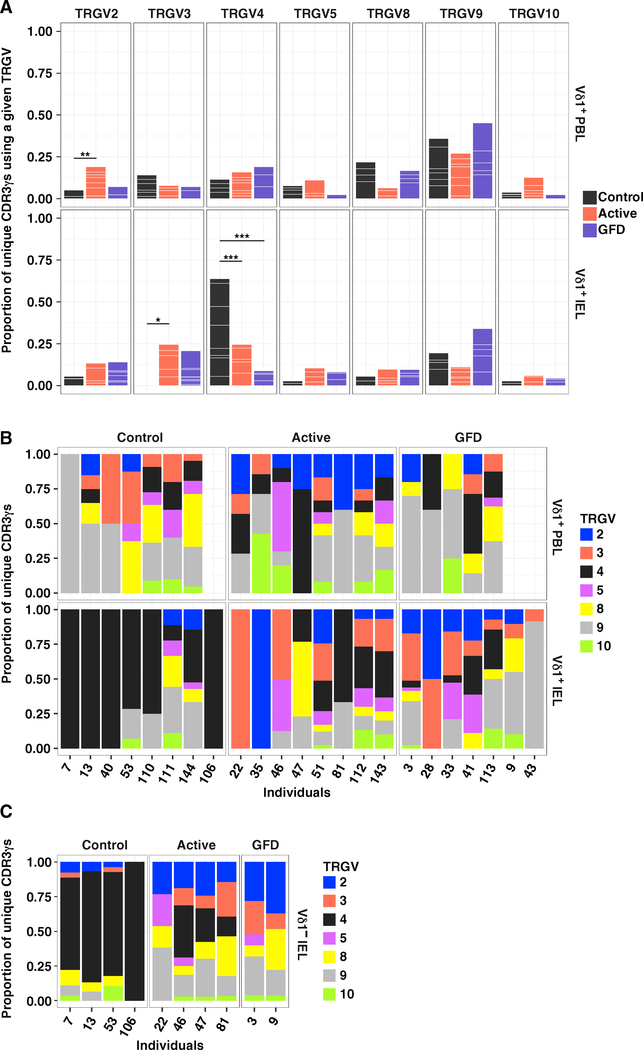
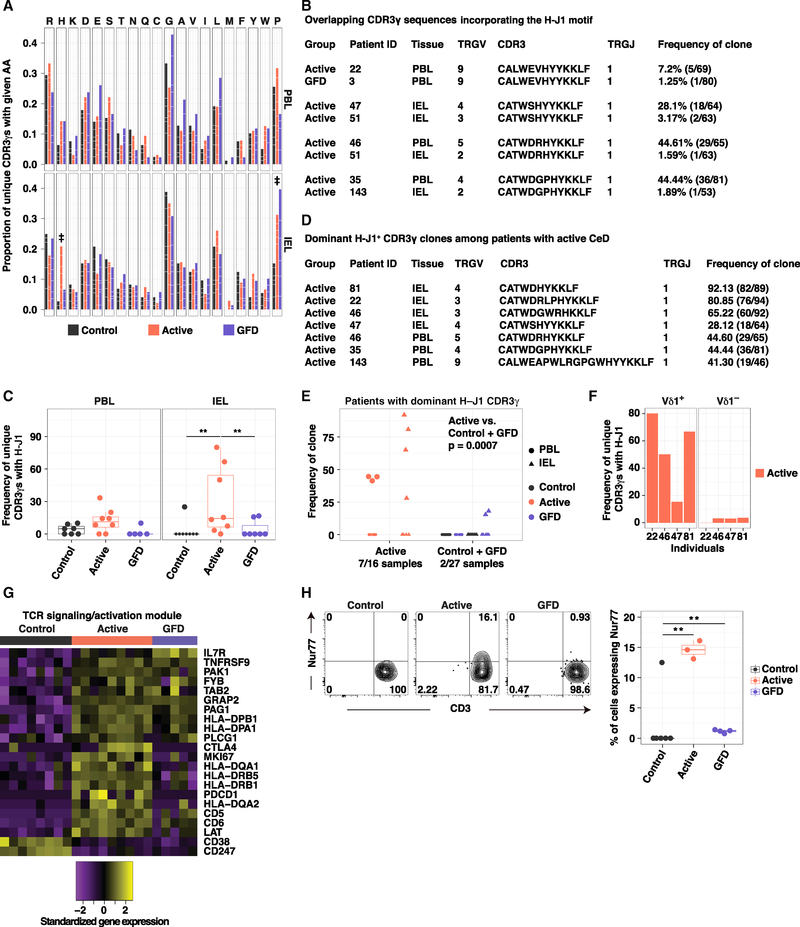
Tissue-resident lymphocytes play a key role in immune surveillance, but it remains unclear how these inherently stable cell populations respond to chronic inflammation. In the setting of celiac disease (CeD), where exposure to dietary antigen can be controlled, gluten-induced inflammation triggered a profound depletion of naturally occurring Vγ4/Vδ1 intraepithelial lymphocytes (IELs) with innate cytolytic properties and specificity for the butyrophilin-like (BTNL) molecules BTNL3/BTNL8. Creation of a new niche with reduced expression of BTNL8 and loss of Vγ4/Vδ1 IELs was accompanied by the expansion of gluten-sensitive, interferon-γ-producing Vδ1 IELs bearing T cell receptors (TCRs) with a shared non-germline-encoded motif that failed to recognize BTNL3/BTNL8. Exclusion of dietary gluten restored BTNL8 expression but was insufficient to reconstitute the physiological Vγ4/Vδ1 subset among TCRγδ IELs. Collectively, these data show that chronic inflammation permanently reconfigures the tissue-resident TCRγδ IEL compartment in CeD. VIDEO ABSTRACT.
组织驻留淋巴细胞在免疫监视中发挥着关键作用,但目前尚不清楚这些固有稳定的细胞群体如何对慢性炎症作出反应。在乳糜泻(CeD)中,饮食抗原的暴露可以得到控制,麸质诱导的炎症引发了具有天然细胞溶解特性和对丁酰膦蛋白样(BTNL)分子 BTNL3/BTNL8 特异性的天然存在的 Vγ4/Vδ1 上皮内淋巴细胞(IEL)的深刻耗竭。具有降低的 BTNL8 表达和 Vγ4/Vδ1 IEL 丧失的新龛的创建伴随着对麸质敏感、产生干扰素-γ的 Vδ1 IEL 的扩增,这些 IEL 具有共享的非种系编码基序的 T 细胞受体(TCR),不能识别 BTNL3/BTNL8。饮食 gluten 的排除恢复了 BTNL8 的表达,但不足以在 TCRγδ IEL 中重建生理 Vγ4/Vδ1 亚群。总之,这些数据表明,慢性炎症会永久性地重塑 CeD 中的组织驻留 TCRγδ IEL 区室。