Cao Qun, Puthongkham Pumidech, Venton B Jill
Dept. of Chemistry, University of Virginia, Charlottesville, VA 22901.
Anal Methods. 2019 Jan 21;11(3):247-261. doi: 10.1039/C8AY02472C. Epub 2018 Dec 21.
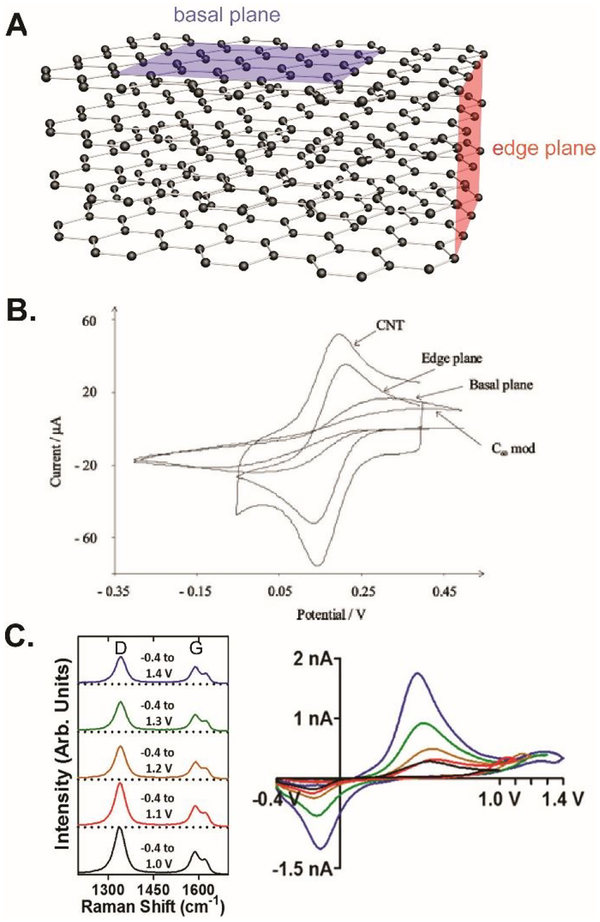
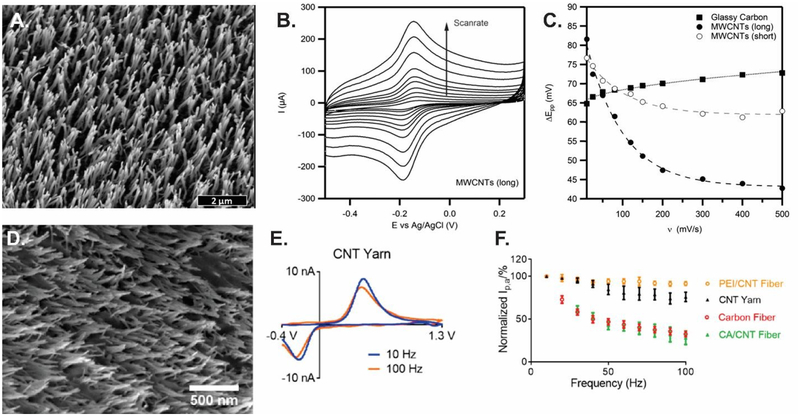
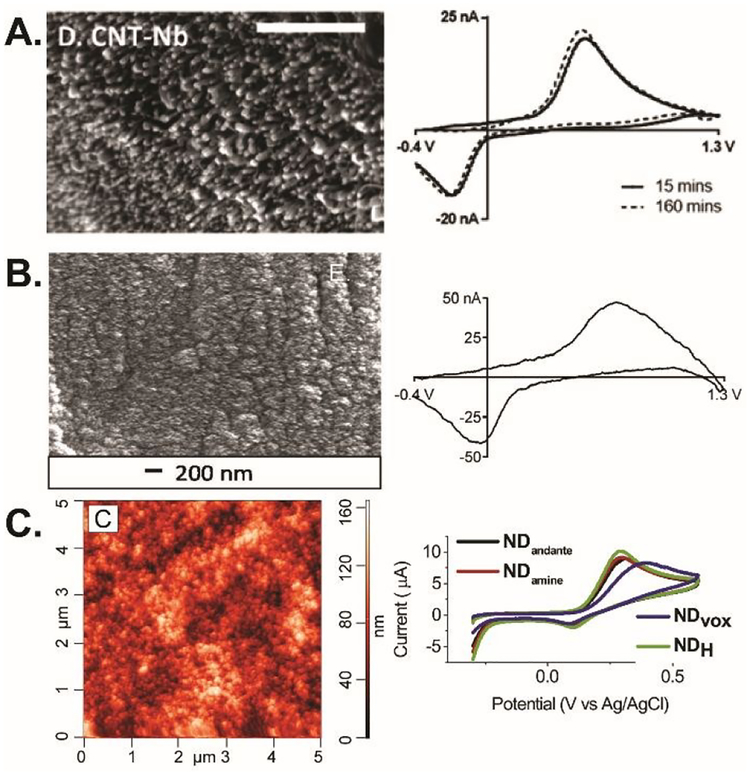
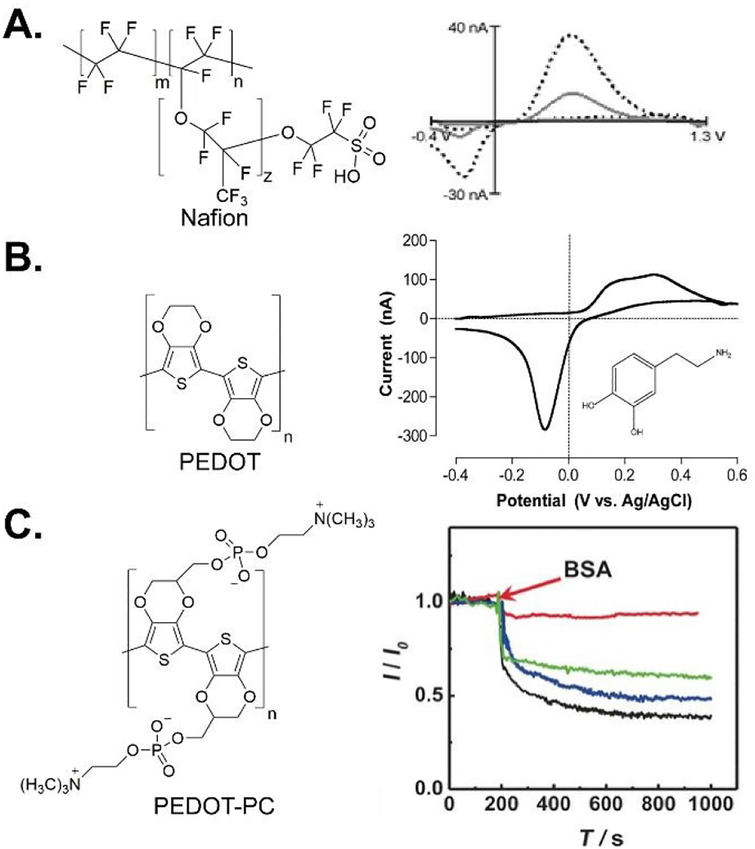
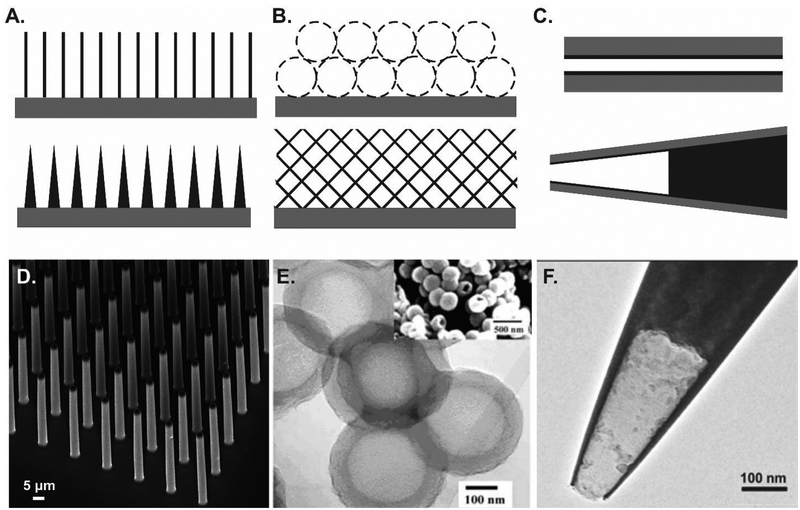
The carbon-fiber microelectrode has been used for decades as a neurotransmitter sensor. Recently, new strategies have been developed for making carbon electrodes, including using carbon nanomaterials or pyrolyzing photoresist etched by nanolithography or 3D printing. This review summarizes how chemical and 3D surface structures of new carbon electrodes are optimized for neurotransmitter detection. There are effects of the chemical structure that are advantageous and nanomaterials are used ranging from carbon nanotube (CNT) to graphene to nanodiamond. Functionalization of these materials promotes surface oxide groups that adsorb dopamine and dopants introduce defect sites good for electron transfer. Polymer coatings such as poly(3,4-ethylenedioxythiophene) (PEDOT) or Nafion also enhance the selectivity, particularly for dopamine over ascorbic acid. Changing the 3D surface structure of an electrode increases current by adding more surface area. If the surface structure has roughness or pores on the micron scale, the electrode also acts as a thin layer cell, momentarily trapping the analyte for redox cycling. Vertically-aligned CNTs as well as lithographically-made or 3D printed pillar arrays act as thin layer cells, producing more reversible cyclic voltammograms. A better understanding of how chemical and surface structure affects electrochemistry enables rational design of electrodes. New carbon electrodes are being tested and strategies to reduce biofouling are being developed. Future studies should test the robustness for long term implantation, explore electrochemical properties of neurotransmitters beyond dopamine, and combine optimized chemical and physical structures for real-time monitoring of neurotransmitters.
几十年来,碳纤维微电极一直被用作神经递质传感器。最近,人们开发了一些制造碳电极的新策略,包括使用碳纳米材料或热解通过纳米光刻或3D打印蚀刻的光刻胶。这篇综述总结了如何优化新型碳电极的化学和三维表面结构以用于神经递质检测。化学结构存在有利影响,使用的纳米材料范围从碳纳米管(CNT)到石墨烯再到纳米金刚石。这些材料的功能化促进了吸附多巴胺的表面氧化物基团,而掺杂剂引入了有利于电子转移的缺陷位点。诸如聚(3,4-乙撑二氧噻吩)(PEDOT)或Nafion之类的聚合物涂层也提高了选择性,特别是对于多巴胺相对于抗坏血酸的选择性。改变电极的三维表面结构通过增加更多表面积来增加电流。如果表面结构在微米尺度上具有粗糙度或孔隙,电极还可作为薄层电池,瞬间捕获分析物以进行氧化还原循环。垂直排列的碳纳米管以及光刻制造或3D打印的柱阵列可作为薄层电池,产生更可逆的循环伏安图。更好地理解化学和表面结构如何影响电化学能够实现电极的合理设计。新型碳电极正在接受测试,并且正在开发减少生物污染的策略。未来的研究应测试长期植入的稳健性,探索多巴胺以外神经递质的电化学性质,并结合优化的化学和物理结构以实现神经递质的实时监测。