Department of Cellular Biology and Anatomy, Medical College of Georgia at Augusta University, Augusta, GA, USA; James and Jean Culver Vision Discovery Institute, Augusta University, Augusta, GA, USA.
James and Jean Culver Vision Discovery Institute, Augusta University, Augusta, GA, USA; Department of Ophthalmology, Medical College of Georgia at Augusta University, Augusta, GA, USA.
Free Radic Biol Med. 2019 Apr;134:604-616. doi: 10.1016/j.freeradbiomed.2019.02.001. Epub 2019 Feb 10.
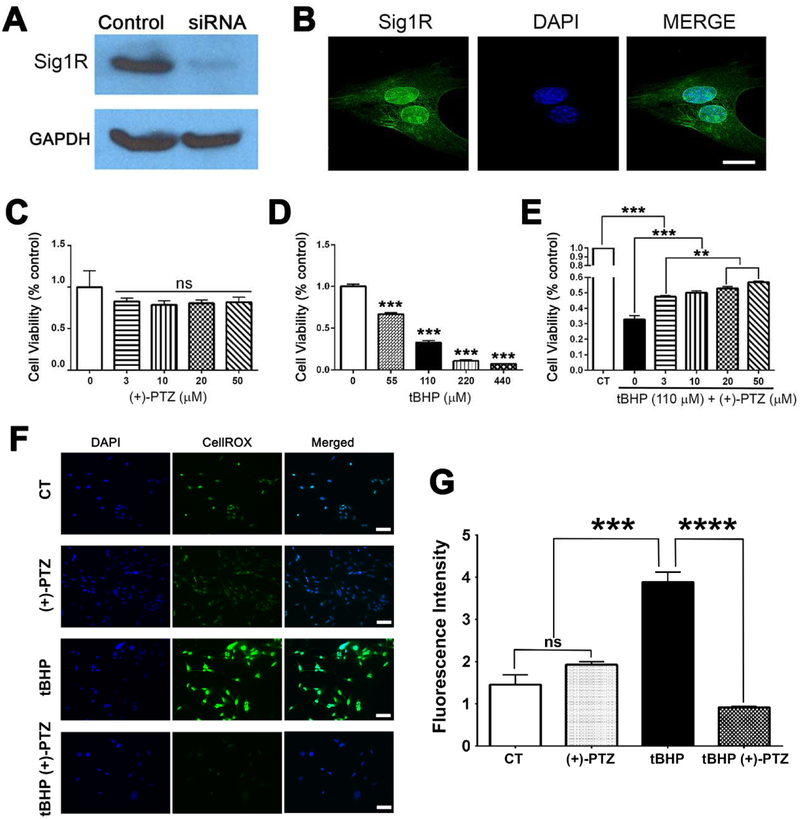
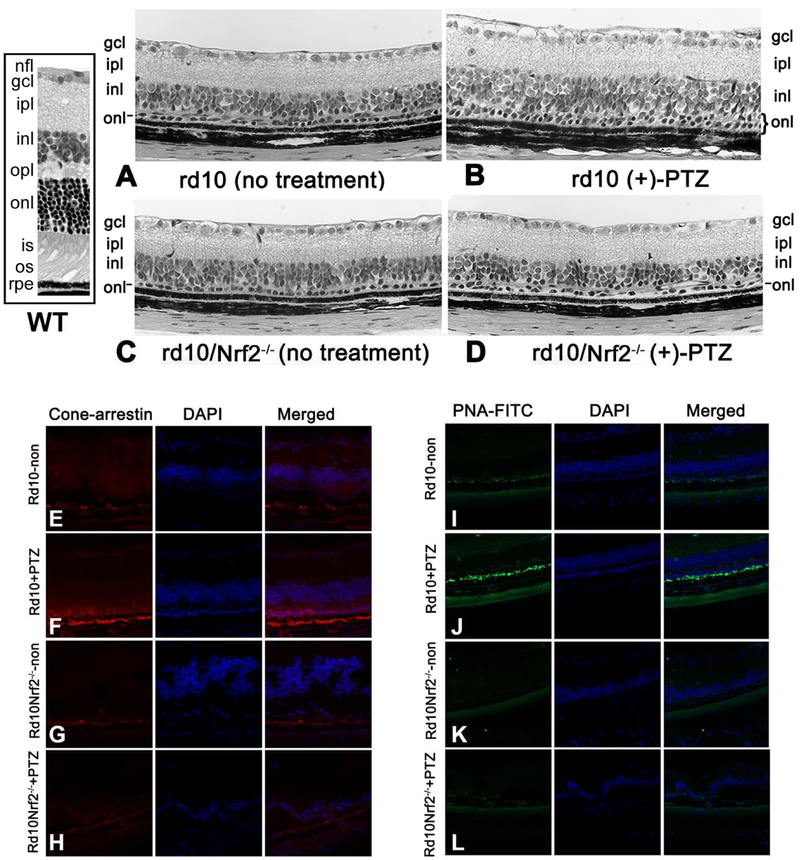
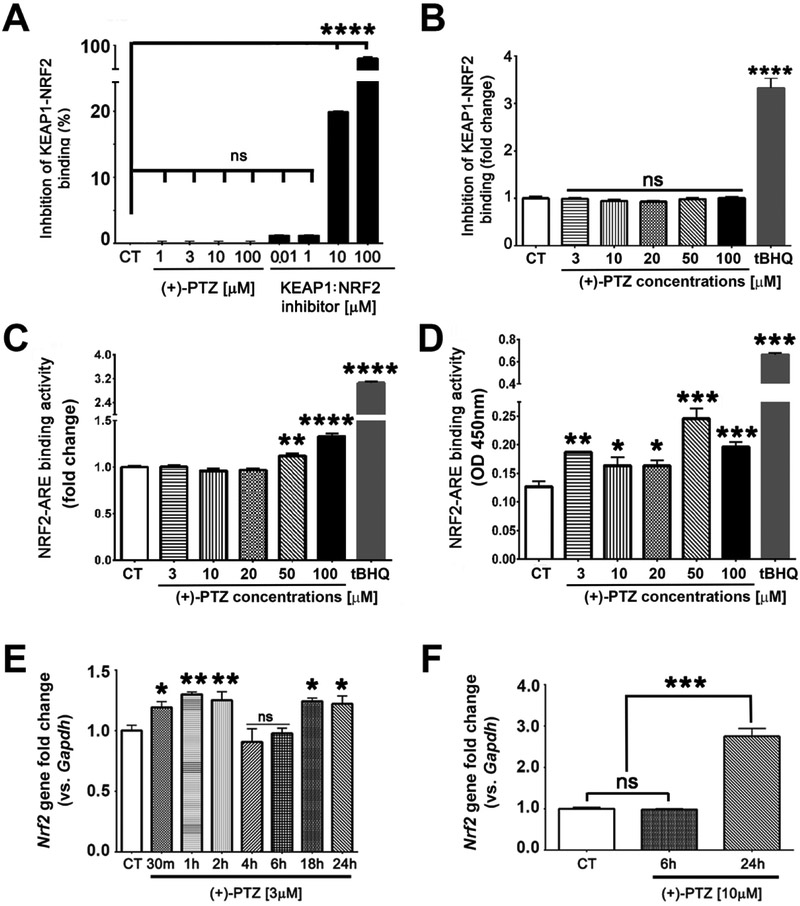
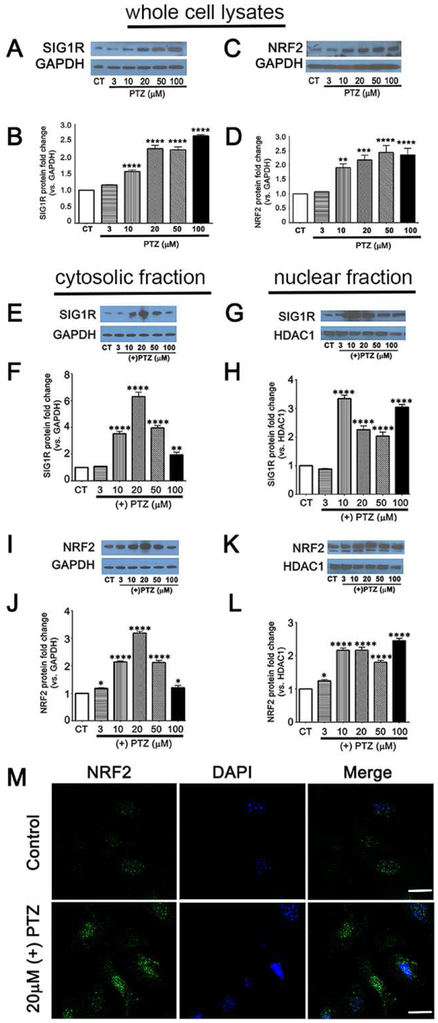
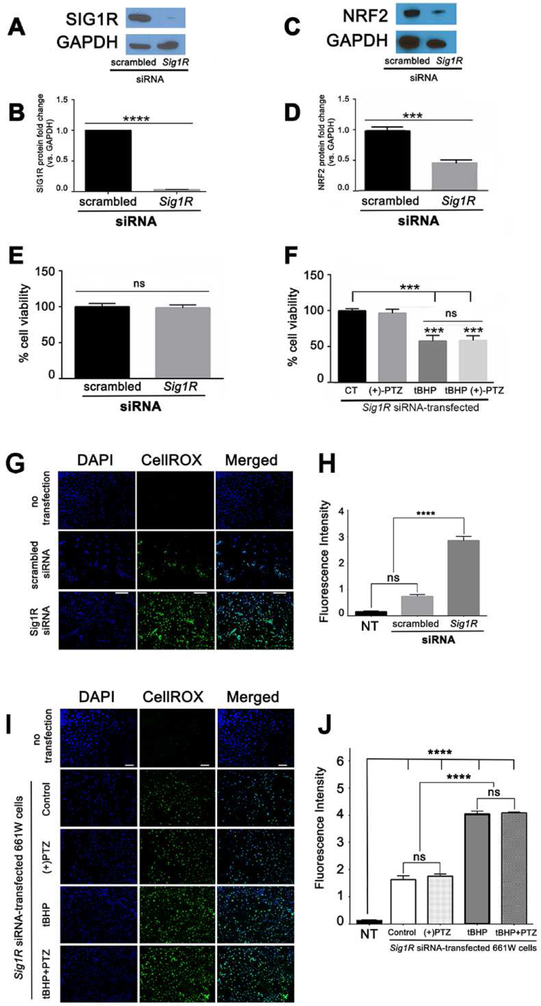
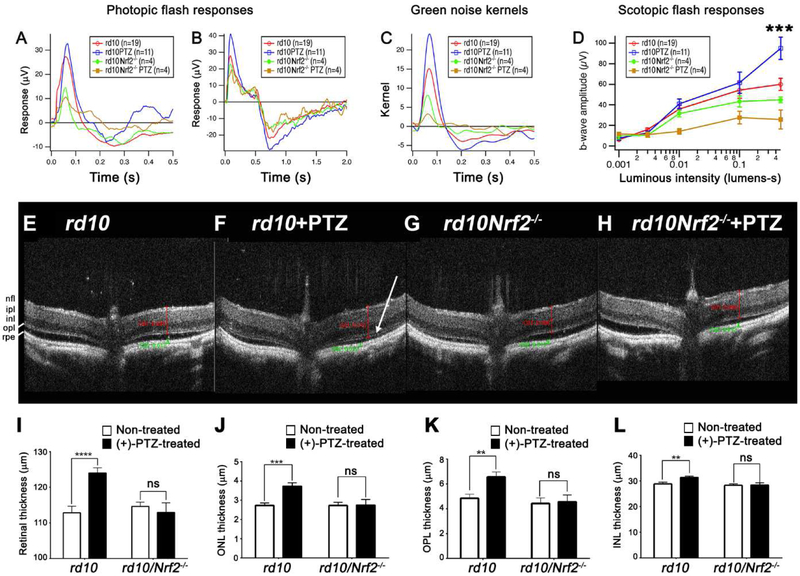
Sigma 1 receptor (Sig1R), a putative molecular chaperone, has emerged as a novel therapeutic target for retinal degenerative disease. Earlier studies showed that activation of Sig1R via the high-affinity ligand (+)-pentazocine ((+)-PTZ) induced profound rescue of cone photoreceptor cells in the rd10 mouse model of retinitis pigmentosa; however the mechanism of rescue is unknown. Improved cone function in (+)-PTZ-treated mice was accompanied by reduced oxidative stress and normalization of levels of NRF2, a transcription factor that activates antioxidant response elements (AREs) of hundreds of cytoprotective genes. Here, we tested the hypothesis that modulation of NRF2 is central to Sig1R-mediated cone rescue. Activation of Sig1R in 661W cone cells using (+)-PTZ induced dose-dependent increases in NRF2-ARE binding activity and NRF2 gene/protein expression, whereas silencing Sig1R significantly decreased NRF2 protein levels and increased oxidative stress, although (+)-PTZ did not disrupt NRF2-KEAP1 binding. In vivo studies were conducted to investigate whether, in the absence of NRF2, activation of Sig1R rescues cones. (+)-PTZ was administered systemically for several weeks to rd10/nrf2 and rd10/nrf2 mice. Through post-natal day 42, cone function was significant in rd10/nrf2, but minimal in rd10/nrf2 mice as indicated by electroretinographic recordings using natural noise stimuli, optical coherence tomography and retinal histological analyses. Immunodetection of cones was limited in (+)-PTZ-treated rd10/nrf2, though considerable in (+)-PTZ-treated rd10/nrf2mice. The data suggest that Sig1R-mediated cone rescue requires NRF2 and provide evidence for a previously-unrecognized relationship between these proteins.
Sigma 1 受体 (Sig1R),一种假定的分子伴侣,已成为视网膜退行性疾病的新的治疗靶点。早期研究表明,通过高亲和力配体 (+)-pentazocine ((+)-PTZ) 激活 Sig1R,可显著挽救色素性视网膜炎 rd10 小鼠模型中的视锥细胞;然而,挽救的机制尚不清楚。(+)-PTZ 处理的小鼠中视锥功能的改善伴随着氧化应激的减少和核因子红细胞 2 (NRF2) 水平的正常化,NRF2 是一种激活数百种细胞保护基因的抗氧化反应元件 (ARE) 的转录因子。在这里,我们测试了 Sig1R 介导的视锥细胞挽救作用的核心是 NRF2 调节的假设。使用 (+)-PTZ 在 661W 视锥细胞中激活 Sig1R 会诱导 NRF2-ARE 结合活性和 NRF2 基因/蛋白表达的剂量依赖性增加,而沉默 Sig1R 则显著降低 NRF2 蛋白水平并增加氧化应激,尽管 (+)-PTZ 并未破坏 NRF2-KEAP1 结合。进行了体内研究以调查在没有 NRF2 的情况下激活 Sig1R 是否可以挽救视锥细胞。(+)-PTZ 被系统地施用于 rd10/nrf2 和 rd10/nrf2 小鼠数周。通过生后第 42 天,电视网膜图记录使用自然噪声刺激、光学相干断层扫描和视网膜组织学分析表明,rd10/nrf2 中的视锥功能显著,而 rd10/nrf2 小鼠中的视锥功能最小。免疫检测显示 (+)-PTZ 处理的 rd10/nrf2 中的视锥细胞有限,但 (+)-PTZ 处理的 rd10/nrf2 小鼠中的视锥细胞则相当可观。这些数据表明 Sig1R 介导的视锥细胞挽救作用需要 NRF2,并为这些蛋白质之间以前未被认识到的关系提供了证据。