Department of Psychology, Semel Institute for Neuroscience and Human Behavior, University of California, Los Angeles, Los Angeles, California.
Department of Psychiatry and Behavioral Sciences, Semel Institute for Neuroscience and Human Behavior, University of California, Los Angeles, Los Angeles, California.
Biol Psychiatry Cogn Neurosci Neuroimaging. 2019 May;4(5):423-433. doi: 10.1016/j.bpsc.2018.12.008. Epub 2018 Dec 27.
Psychosis onset typically occurs in adolescence, and subclinical psychotic experiences peak in adolescence. Adolescence is also a time of critical neural and cognitive maturation. Using cross-sectional data from the Philadelphia Neurodevelopmental Cohort, we examined whether regional white matter (WM) development is disrupted in youths with psychosis spectrum (PS) features and whether WM maturation mediates the relationship between age and cognition in typically developing (TD) youths and youths with PS features.
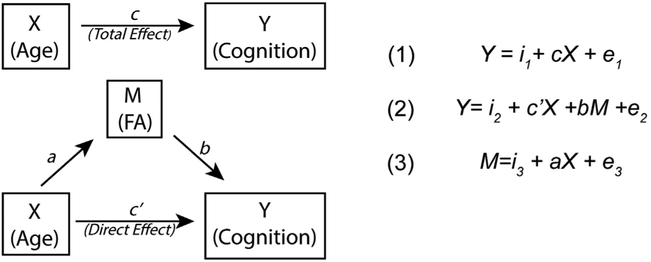
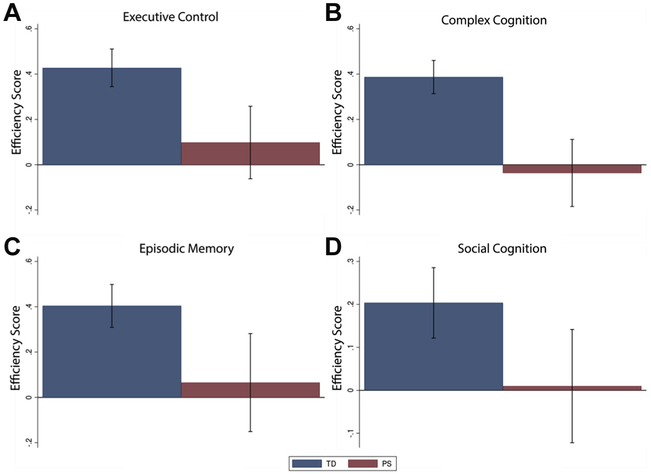
We examined WM microstructure, as assessed via diffusion tensor imaging, in 670 individuals (age 10-22 years; 499 TD group, 171 PS group) by using tract-based spatial statistics. Multiple regressions were used to evaluate age × group interactions on regional WM indices. Mediation analyses were conducted on four cognitive domains-executive control, complex cognition, episodic memory, and social cognition-using a bootstrapping approach.
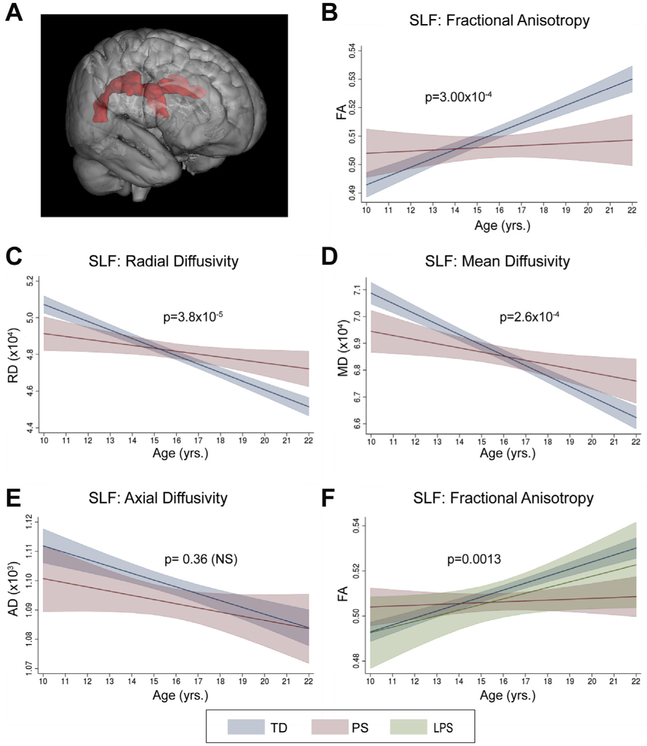
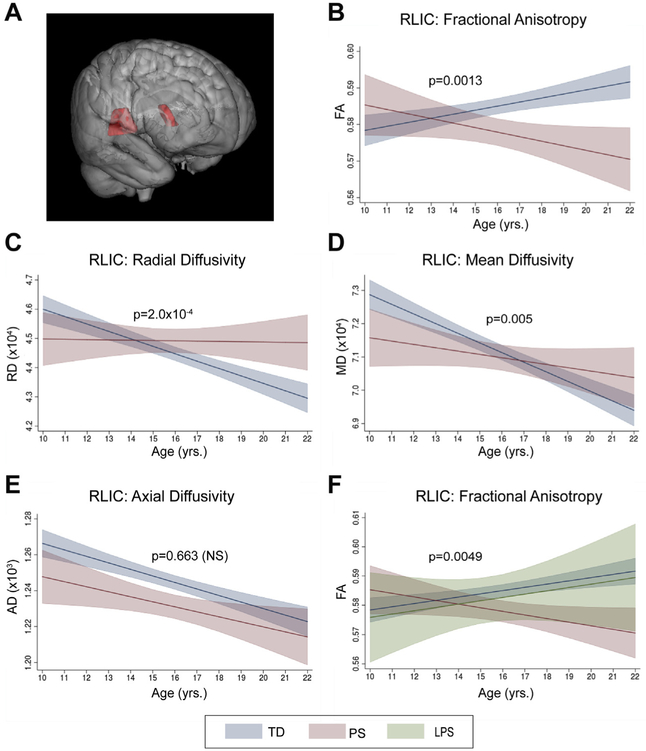
There were age × group interactions on fractional anisotropy (FA) in the superior longitudinal fasciculus (SLF) and retrolenticular internal capsule. Follow-up analyses revealed these effects were significant in both hemispheres. Bilateral SLF FA mediated the relationship between age and complex cognition in the TD group, but not the PS group. Regional FA did not mediate the age-associated increase in any of the other cognitive domains.
Our results showed aberrant age-related effects in SLF and retrolenticular internal capsule FA in youths with PS features. SLF development supports emergence of specific higher-order cognitive functions in TD youths, but not in youths with PS features. Future mechanistic explanations for these relationships could facilitate development of earlier and refined targets for therapeutic interventions.
精神病发作通常发生在青春期,亚临床精神病体验在青春期达到高峰。青春期也是神经和认知关键成熟的时期。本研究使用费城神经发育队列的横断面数据,研究了具有精神病谱(PS)特征的年轻人的区域白质(WM)发育是否受到破坏,以及 WM 成熟是否介导了具有 PS 特征的青少年和发育正常的青少年(TD)之间的年龄与认知之间的关系。
我们使用基于束流的空间统计学方法,检查了 670 名个体(年龄 10-22 岁;499 名 TD 组,171 名 PS 组)的 WM 微观结构,通过弥散张量成像评估。多元回归用于评估区域 WM 指数的年龄组交互作用。使用 bootstrap 方法对执行控制、复杂认知、情景记忆和社会认知四个认知领域进行中介分析。
在胼胝体上束(SLF)和视束后内囊有年龄与组别的交互作用。进一步的分析显示,在两个半球中,这种影响都是显著的。双侧 SLF FA 介导了 TD 组中年龄与复杂认知之间的关系,但在 PS 组中没有。区域 FA 没有介导任何其他认知领域与年龄相关的增加。
我们的结果显示,具有 PS 特征的年轻人的 SLF 和视束后内囊 FA 存在异常的与年龄相关的影响。SLF 的发育支持 TD 年轻人出现特定的高级认知功能,但不支持具有 PS 特征的年轻人。对这些关系的未来机制解释可能有助于开发更早和更精细的治疗干预目标。