Araújo Fátima Derlene da Rocha, Silva Rose Mary Ferreira da Lisboa, Oliveira Camilla Andrade Lima, Meira Zilda Maria Alves
Department of Pediatrics, Division of Pediatric Cardiology, Hospital das Clínicas, Federal University of Minas Gerais, Belo Horizonte, Brazil.
Department of Internal Medicine, Division of Cardiology, Hospital das Clínicas, Federal University of Minas Gerais, Belo Horizonte, Brazil.
Ann Pediatr Cardiol. 2019 Jan-Apr;12(1):18-24. doi: 10.4103/apc.APC_47_18.
The objective of this study is to evaluate the neutrophil-to-lymphocyte ratio (NLR) and platelet-lymphocyte ratio, from the hemograms obtained from children and adolescents with dilated cardiomyopathy (DCM), and to correlate them with the levels of B-type natriuretic peptide (BNP) and with the clinical evolution of these patients in the long term.
Follow-up of 57 patients with DCM was made retrospectively, with hemogram and BNP level determination being performed after optimized therapy for heart failure. We compared the findings of the patients' examinations that progressed with stability in relation to the occurrence of transplant listing, cardiac transplantation, or evolution to death.
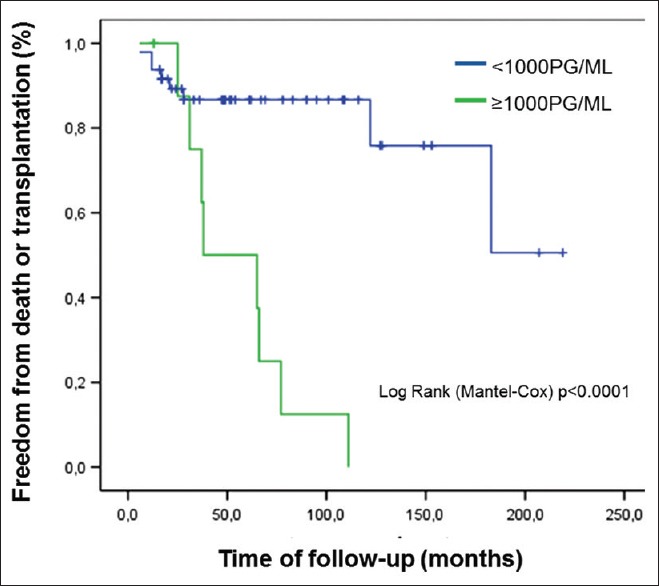
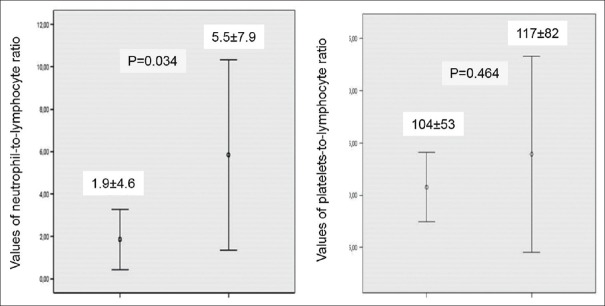
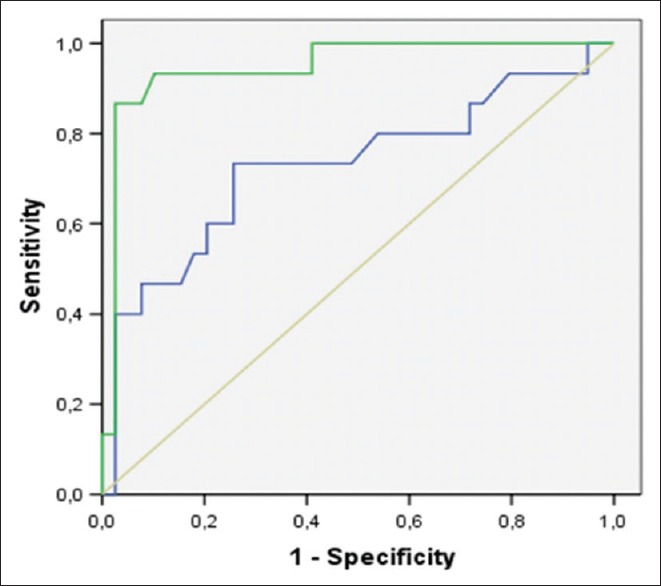
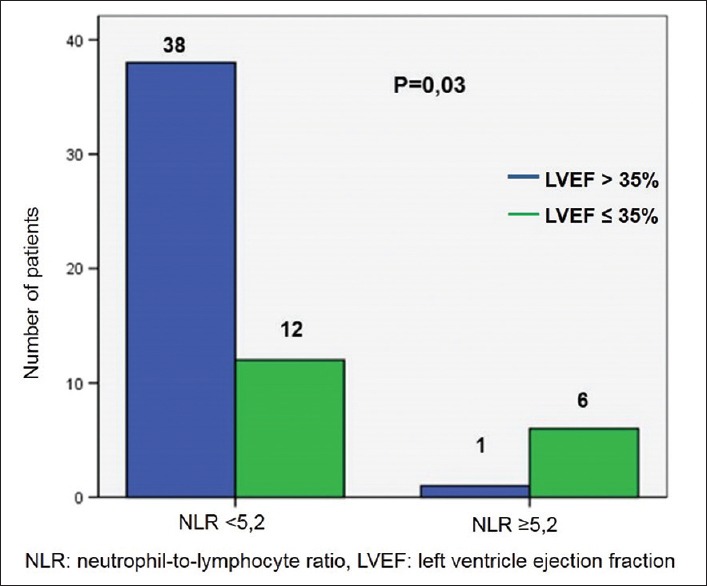
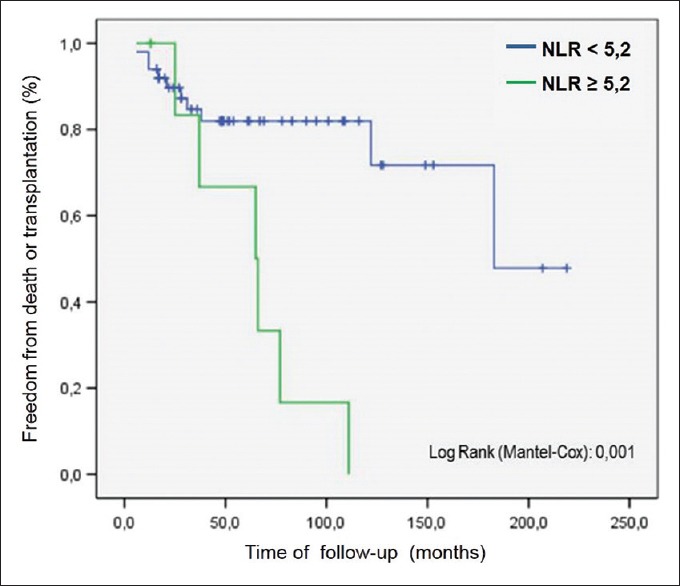
The average age was 48 months, and the follow-up was 64 months. The average of the levels of neutrophils was greater in poor evolution group (7026 vs. 3903; = 0.011) as well as the average of NLR (5.5 vs. 1.9; = 0.034). The averages of hemoglobin, total leukocytes, lymphocytes, and platelets were similar in the groups. The area under the receiver operating characteristic curve for NLR in relation to the poor evolution was of 72.9%, being the best cutoff point of NLR ≥5.2 (sensitivity: 93.8% and specificity: 87.8%). Kaplan-Meier curves demonstrate that patients with NLR ≤5.2 ( = 0.001) and BNP <1000 pg/dl ( < 0.0001) presented greater survival.
NLR (≥5.2) and lymphopenia (≤1000 lymphocyte/μL) were associated with a poor prognosis and a higher chance of evolution to death or cardiac transplant, similar to the findings for BNP.
本研究的目的是评估扩张型心肌病(DCM)患儿及青少年血常规中的中性粒细胞与淋巴细胞比值(NLR)和血小板与淋巴细胞比值,并将其与B型利钠肽(BNP)水平以及这些患者的长期临床病程相关联。
对57例DCM患者进行回顾性随访,在心力衰竭优化治疗后测定血常规和BNP水平。我们比较了患者检查结果,这些结果根据移植登记、心脏移植或死亡进展的稳定性情况进行分类。
平均年龄为48个月,随访时间为64个月。病情进展较差组的中性粒细胞平均水平更高(7026对3903;P = 0.011),NLR平均值也是如此(5.5对1.9;P = 0.034)。两组的血红蛋白、白细胞总数、淋巴细胞和血小板平均值相似。NLR与病情进展较差相关的受试者工作特征曲线下面积为72.9%,NLR≥5.2为最佳截断点(敏感性:93.8%,特异性:87.8%)。Kaplan-Meier曲线表明,NLR≤5.2(P = 0.001)和BNP<1000 pg/dl(P < 0.0001)的患者生存率更高。
NLR(≥5.2)和淋巴细胞减少(≤1000个淋巴细胞/μL)与预后不良以及死亡或心脏移植进展的可能性较高相关,这与BNP的研究结果相似。