Chayama Yuichi, Ando Lisa, Sato Yuya, Shigenobu Shuji, Anegawa Daisuke, Fujimoto Takayuki, Taii Hiroki, Tamura Yutaka, Miura Masayuki, Yamaguchi Yoshifumi
Department of Genetics, Graduate School of Pharmaceutical Sciences, The University of Tokyo, Tokyo, Japan.
Functional Genomics Facility, National Institute for Basic Biology, Okazaki, Japan.
Front Physiol. 2019 Jan 28;9:1973. doi: 10.3389/fphys.2018.01973. eCollection 2018.
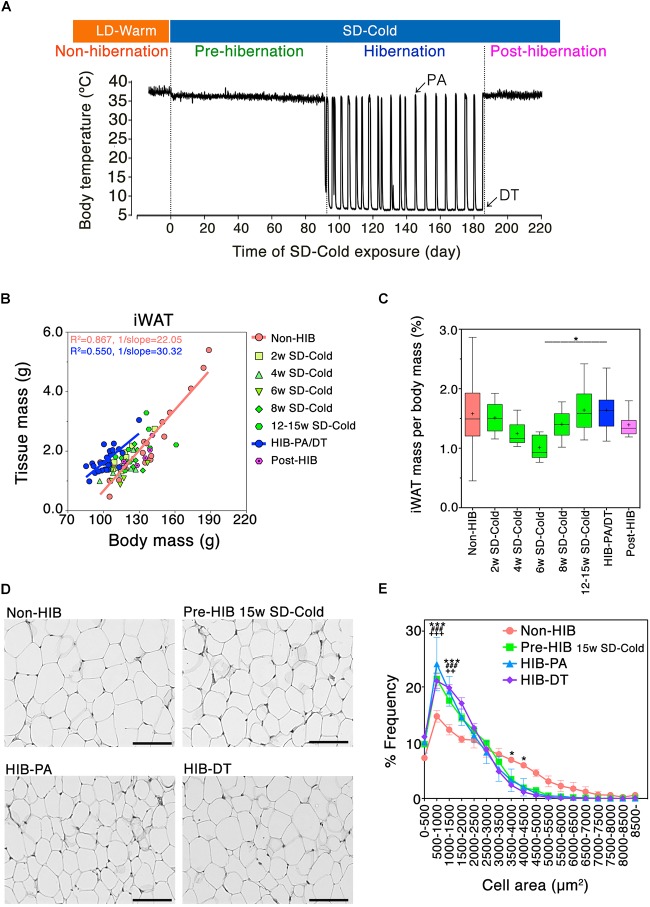
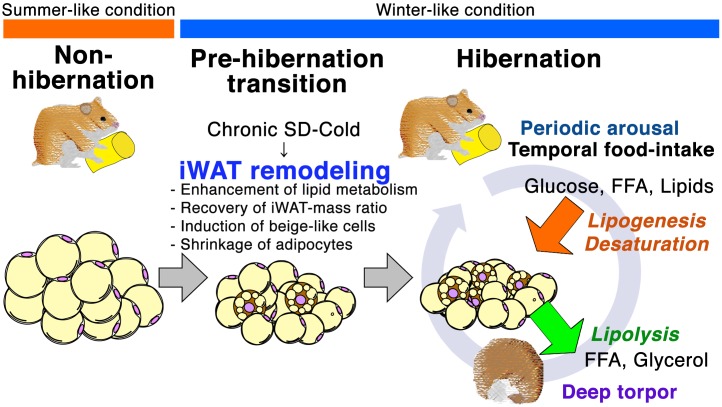
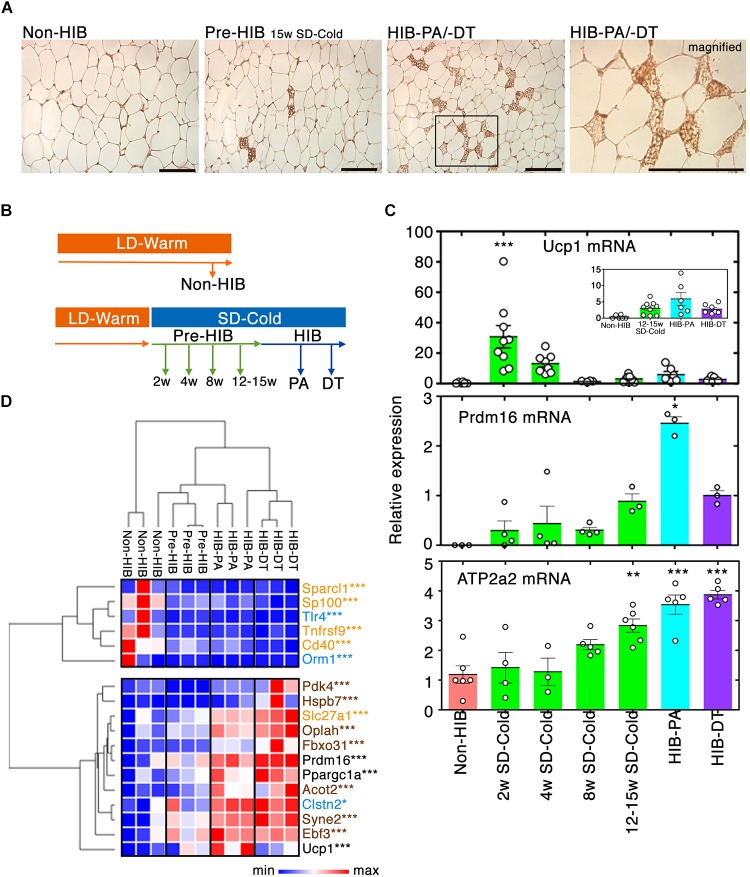
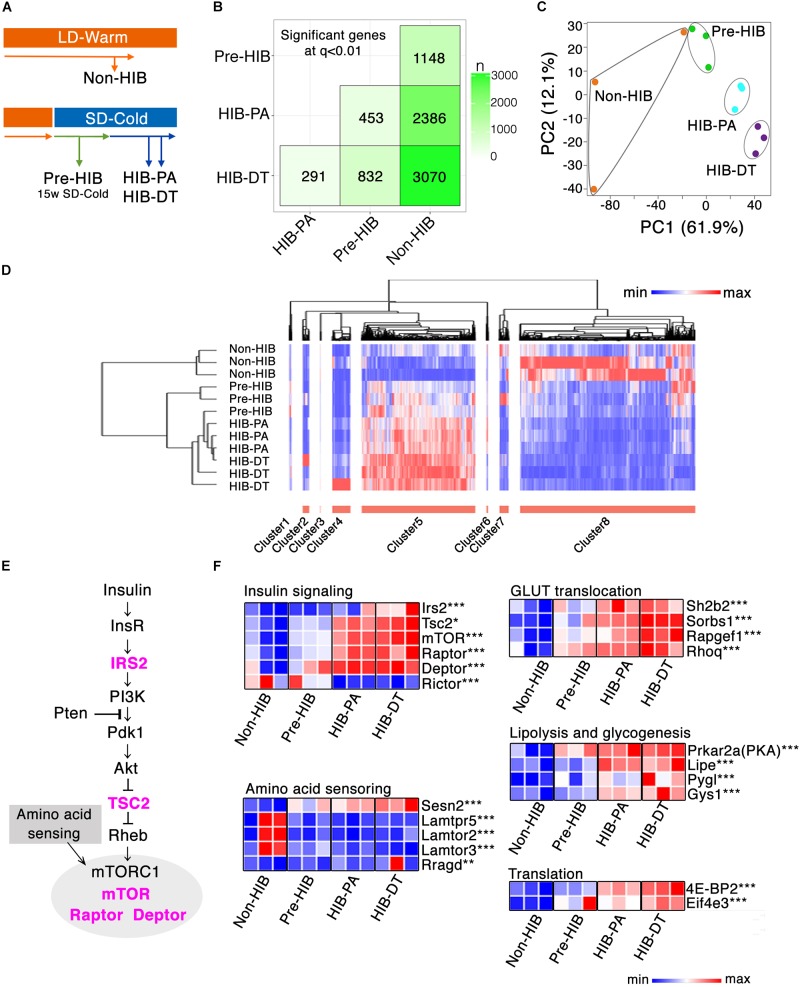
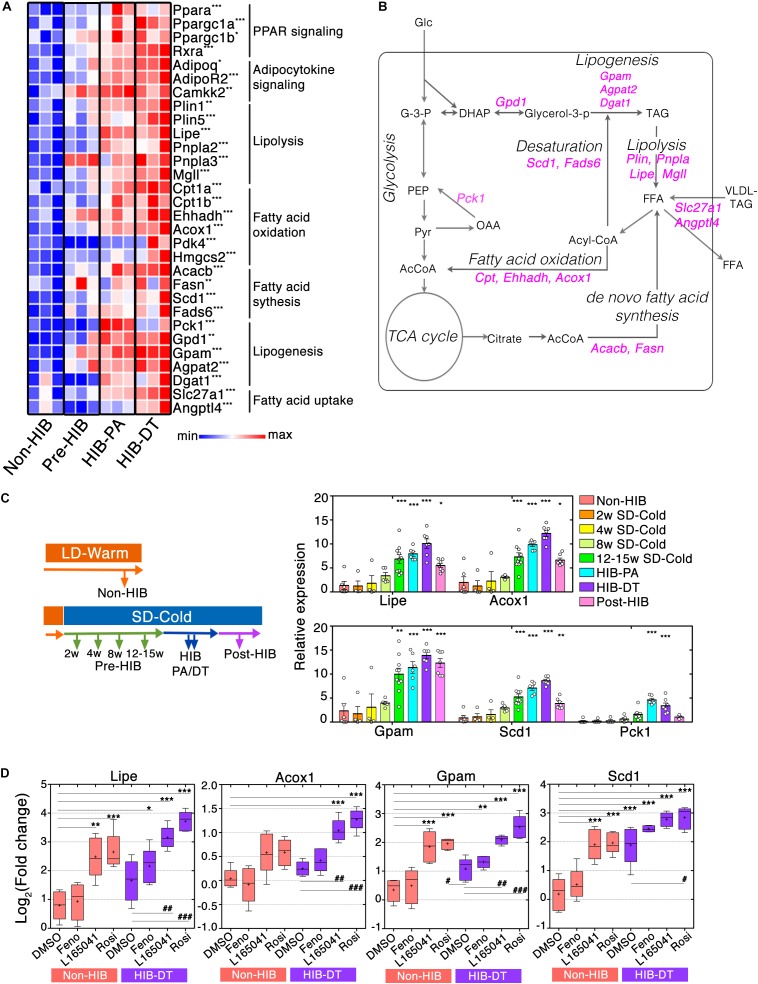
Mammalian hibernators store fat extensively in white adipose tissues (WATs) during pre-hibernation period (Pre-HIB) to prepare for hibernation. However, the molecular mechanisms underlying the pre-hibernation remodeling of WAT have not been fully elucidated. Syrian hamsters, a food-storing hibernator, can hibernate when exposed to a winter-like short day photoperiod and cold ambient temperature (SD-Cold). Animals subjected to prolonged SD-Cold had smaller white adipocytes and beige-like cells within subcutaneous inguinal WAT (iWAT). Time-course analysis of gene expression with RNA-sequencing and quantitative PCR demonstrated that the mRNA expression of not only genes involved in lipid catabolism (lipolysis and beta-oxidation) but also lipid anabolism (lipogenesis and lipid desaturation) was simultaneously up-regulated prior to hibernation onset in the animals. The enhanced capacity of both lipid catabolism and lipid anabolism during hibernation period (HIB) is striking contrast to previous observations in fat-storing hibernators that only enhance catabolism during HIB. The mRNA expression of mTORC1 and PPAR signaling molecules increased, and pharmacological activation of PPARs indeed up-regulated lipid metabolism genes in iWAT explants from Syrian hamsters. These results suggest that the Syrian hamster rewires lipid metabolisms while preparing for hibernation to effectively utilize body fat and synthesize it from food intake during HIB.
哺乳动物冬眠动物在冬眠前期(Pre-HIB)会在白色脂肪组织(WATs)中大量储存脂肪,为冬眠做准备。然而,WAT在冬眠前期重塑的分子机制尚未完全阐明。叙利亚仓鼠是一种储存食物的冬眠动物,当暴露于类似冬季的短日照光周期和寒冷环境温度(SD-冷)时能够冬眠。经历长时间SD-冷处理的动物,其皮下腹股沟白色脂肪组织(iWAT)中的白色脂肪细胞和类米色细胞较小。通过RNA测序和定量PCR对基因表达进行时间进程分析表明,在动物进入冬眠之前,不仅参与脂质分解代谢(脂解和β-氧化)的基因的mRNA表达上调,而且脂质合成代谢(脂肪生成和脂质去饱和)的基因的mRNA表达也同时上调。与之前在储存脂肪的冬眠动物中的观察结果形成鲜明对比的是,冬眠期(HIB)脂质分解代谢和脂质合成代谢的能力均增强,而之前观察到的储存脂肪的冬眠动物在HIB期间仅增强分解代谢。mTORC1和PPAR信号分子的mRNA表达增加,并且PPARs的药理学激活确实上调了叙利亚仓鼠iWAT外植体中的脂质代谢基因。这些结果表明,叙利亚仓鼠在为冬眠做准备时重新调整脂质代谢,以便在HIB期间有效利用体内脂肪并从食物摄入中合成脂肪。