USAID's Maternal and Child Survival Program/PATH, Kisumu, Kenya.
USAID's Maternal and Child Survival Program/PATH, Washington, District of Columbia, USA.
Matern Child Nutr. 2019 Jan;15 Suppl 1(Suppl 1):e12723. doi: 10.1111/mcn.12723.
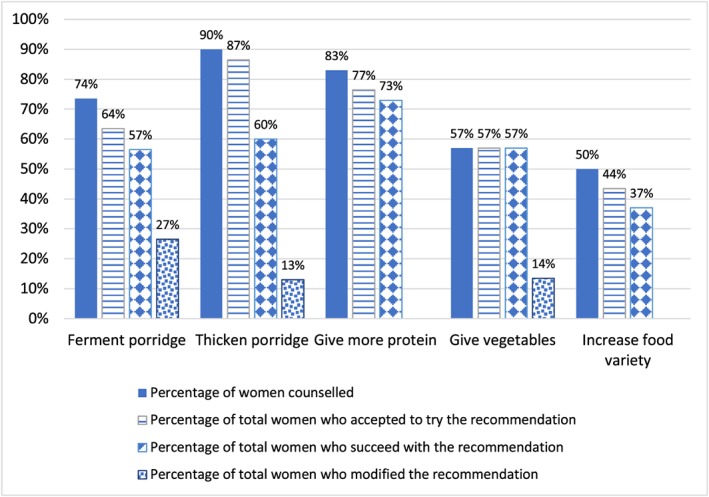
Optimal complementary feeding practices, a critical component of infant and young child feeding, has been demonstrated to prevent micronutrient deficiencies, stunting, overweight, and obesity. In Kenya, while impressive gains have been made in exclusive breastfeeding, progress in complementary feeding has been slow, and the country has failed to meet targets. Recent 2014 Kenya Demographic and Health Survey reveal that only 22% of Kenyan children, 6-23 months, met criteria for a minimum acceptable diet. This case study describes key actions for complementary feeding put in place by the Kenya Ministry of Health as well as approaches for improving and monitoring complementary feeding within existing health platforms. Experience from USAID's Maternal and Child Survival Program and Ministry of Health on development of 23 complementary feeding recipes through application of a national guide for recipe development and Trials of Improved Practices is described. Challenges in how to prepare, modify, and cook foods, including meat, for young children 6-23 months of age was relayed by mothers. Addressing cultural beliefs around complementary feeding meant providing reassurance to mothers that young children are developmentally able to digest fruit and vegetables and ready to consume animal-source protein. Through the Baby Friendly Community Initiative platform, cooking demonstrations and key hygiene actions were integrated with complementary feeding messages. Future programming for complementary feeding should consider development of context specific counselling messages on consumption of animal source foods, strengthen production and use of local foods through agriculture-nutrition linkages, and include complementary indicators through routine health monitoring systems to track progress.
最佳的补充喂养实践是婴幼儿喂养的关键组成部分,已被证明可预防微量营养素缺乏、发育迟缓、超重和肥胖。在肯尼亚,虽然在纯母乳喂养方面取得了显著进展,但在补充喂养方面进展缓慢,该国未能实现目标。最近的 2014 年肯尼亚人口与健康调查显示,肯尼亚只有 22%的 6-23 个月大的儿童符合最低可接受饮食标准。本案例研究描述了肯尼亚卫生部为补充喂养采取的关键行动,以及在现有卫生平台内改进和监测补充喂养的方法。描述了美援署母婴生存项目和卫生部在通过国家配方开发指南应用开发 23 种补充喂养食谱以及改进实践试验方面的经验。母亲们转达了为 6-23 个月大的幼儿准备、修改和烹饪食物(包括肉类)方面的挑战。围绕补充喂养的文化观念意味着要向母亲保证,幼儿在发育上能够消化水果和蔬菜,并准备好食用动物源蛋白质。通过母婴友好社区倡议平台,烹饪示范和关键卫生措施与补充喂养信息相结合。未来的补充喂养规划应考虑制定关于食用动物源食品的具体情况咨询信息,通过农业-营养联系加强当地食品的生产和使用,并通过常规健康监测系统纳入补充指标,以跟踪进展。