Department of Forest Breeding, Forestry Research Centre of Lourizán, Pontevedra, Spain.
PLoS One. 2019 Feb 12;14(2):e0211315. doi: 10.1371/journal.pone.0211315. eCollection 2019.
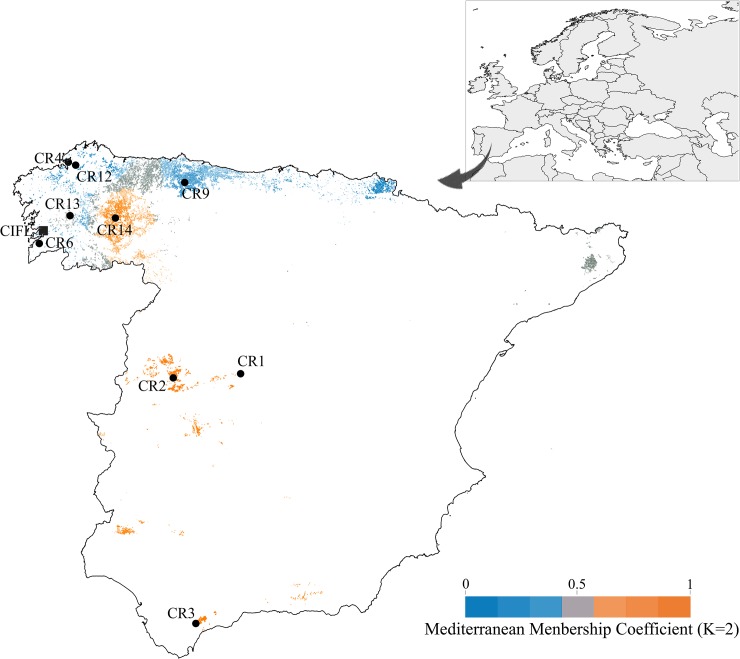
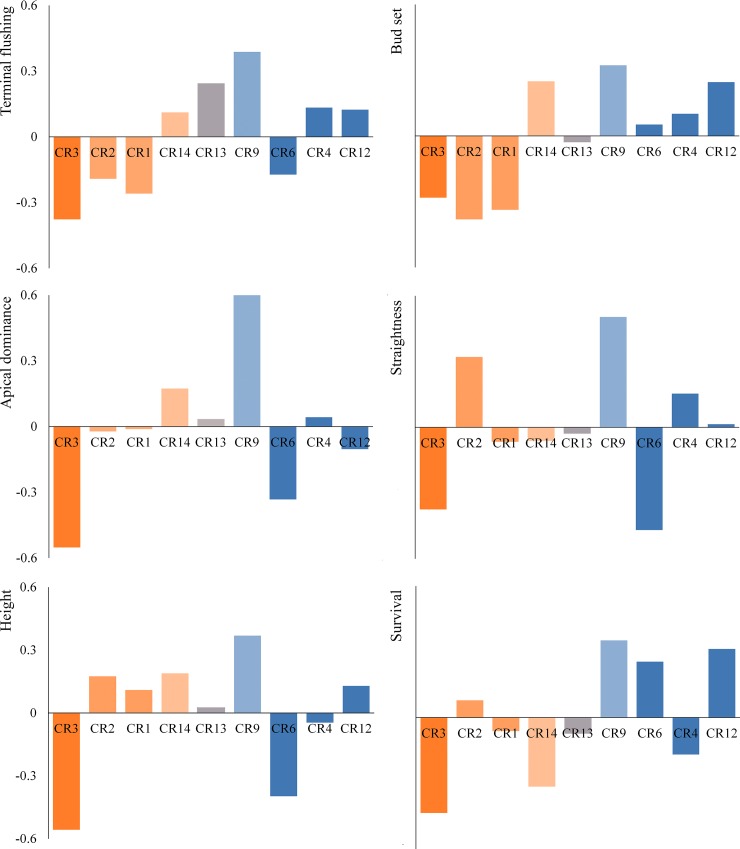
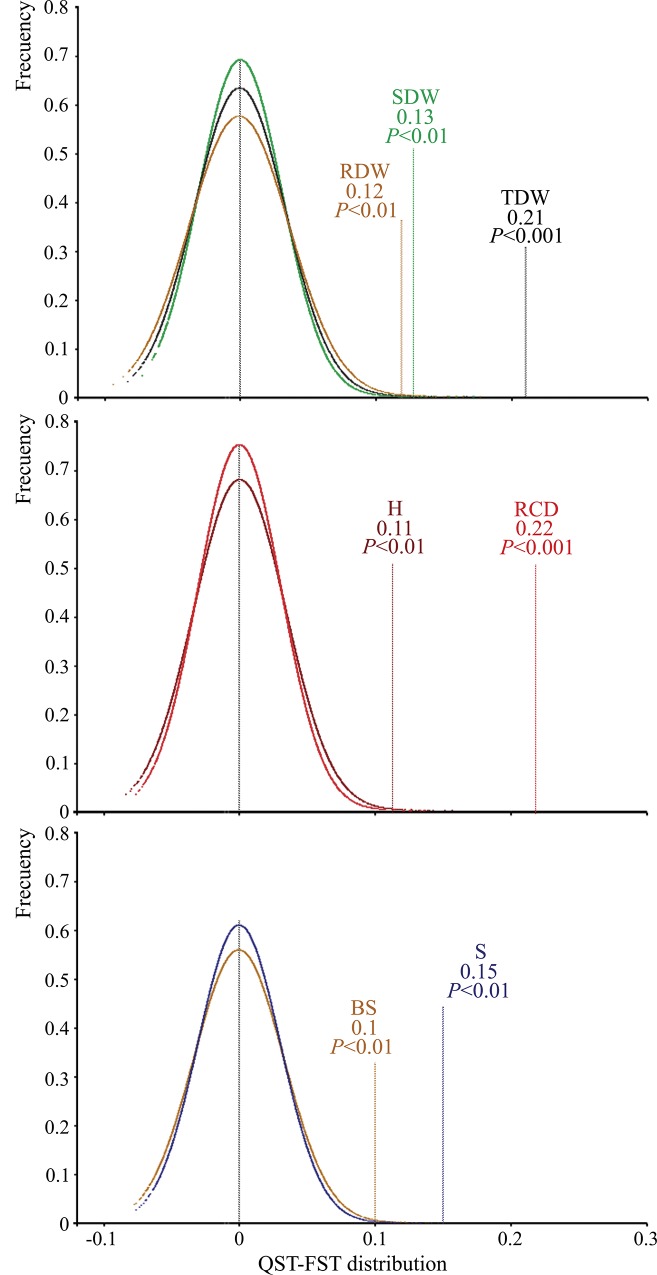
Nine wild Iberian provenances of Castanea sativa Mill. grouped in two gene pools, North Iberian Peninsula and Mediterranean, were evaluated for several adaptive traits in two provenance-progeny trials with the aim of evaluating the role of natural selection in shaping adaptive variation and increasing our understanding of the genetic structure of this species, as well as reporting complete information on the genetic variation among and within the studied populations. An annual growth rhythm experiment was evaluated during the first 3 years after establishment for phenology, growth, stem form and survival, and a periodic drought-stress experiment was evaluated for dry weight, growth, survival and other related drought traits in both well-watered and drought-stress treatments. The high genetic variability reported in both trials is largely due to the genetic variation among populations. The significant differences reported between quantitative genetic and neutral marker differentiation indicated the local adaptation of these populations through directional selection, mainly for phenology, growth and biomass allocation. A clinal variation among populations was determined through correlations of phenology with latitude and xerothermic index of the provenances, showing that central and southern Mediterranean populations had earlier phenology than northern populations and that drought played a relevant role in this differentiation. The significant correlation between phenological traits and the ancestry values in the Mediterranean gene pool supported the different pattern of behavior between both gene pools and also indicated the existence of two ecotypes: xeric and mesophytic ecotypes, corresponding to Mediterranean and North Iberian gene pools, respectively. The results obtained in the drought-stress experiment confirmed that, in general terms, xeric populations showed a greater adaptability to drought, with more developed root systems and higher survival than northern populations. Moreover, the genetic variability observed within populations indicated the potential response capacity of Iberian C. sativa populations to undergo fast adaptive evolution.
九个野生的欧洲榛(Castanea sativa Mill.)起源于伊比利亚半岛北部和地中海地区,被分为两个基因库。为了评估自然选择在塑造适应性变异方面的作用,以及增加对该物种遗传结构的了解,我们在两个起源-后代试验中评估了几个适应性特征,并报告了研究种群之间和内部的遗传变异的完整信息。在建立后的前 3 年,我们评估了一个年度生长节律实验,以评估物候、生长、茎型和存活率;在充分浇水和干旱胁迫处理下,我们还评估了一个周期性干旱胁迫实验,以评估干重、生长、存活率和其他相关干旱特征。两个试验报告的高遗传变异主要归因于种群间的遗传变异。定量遗传和中性标记分化之间的显著差异表明,这些种群通过定向选择进行了局部适应,主要是针对物候、生长和生物量分配。通过物候与纬度和起源的耐旱指数之间的相关性,确定了种群间的梯度变化,表明中南部地中海种群的物候期早于北部种群,干旱在这种分化中发挥了重要作用。物候特征与地中海基因库中祖先值之间的显著相关性支持了两个基因库之间不同的行为模式,同时也表明存在两种生态型:耐旱和中生生态型,分别对应于地中海和伊比利亚半岛北部基因库。干旱胁迫实验的结果证实,一般来说,耐旱性较强的种群具有更发达的根系和更高的存活率,比北部种群更能适应干旱。此外,种群内观察到的遗传变异表明,伊比利亚欧洲榛种群有潜力快速适应环境变化。