Biology of Non-coding RNA Group, Institute of Molecular Biology, Ackermannweg 4, Mainz, Germany.
International PhD Programme on Gene Regulation, Epigenetics & Genome Stability, Mainz, Germany.
PLoS Genet. 2019 Feb 13;15(2):e1007784. doi: 10.1371/journal.pgen.1007784. eCollection 2019 Feb.
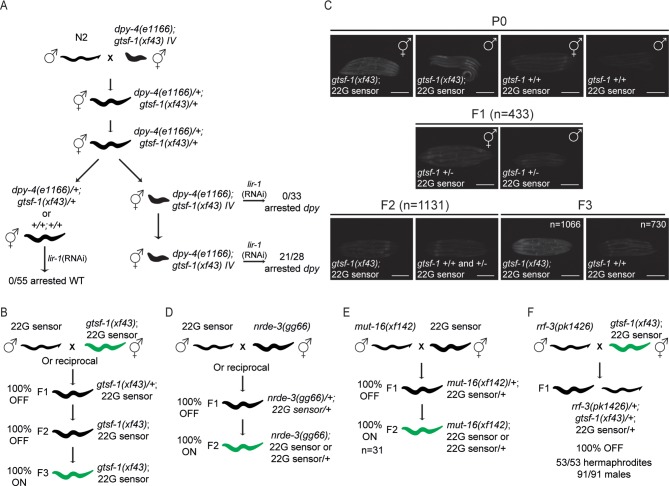
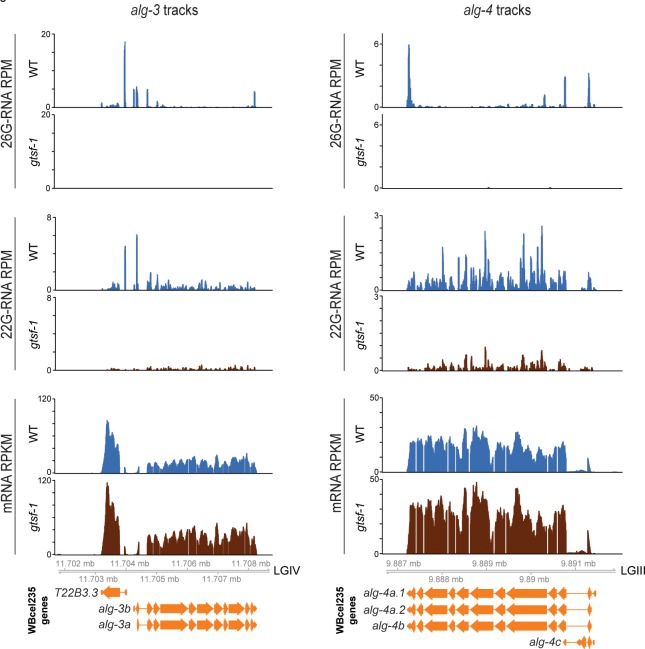
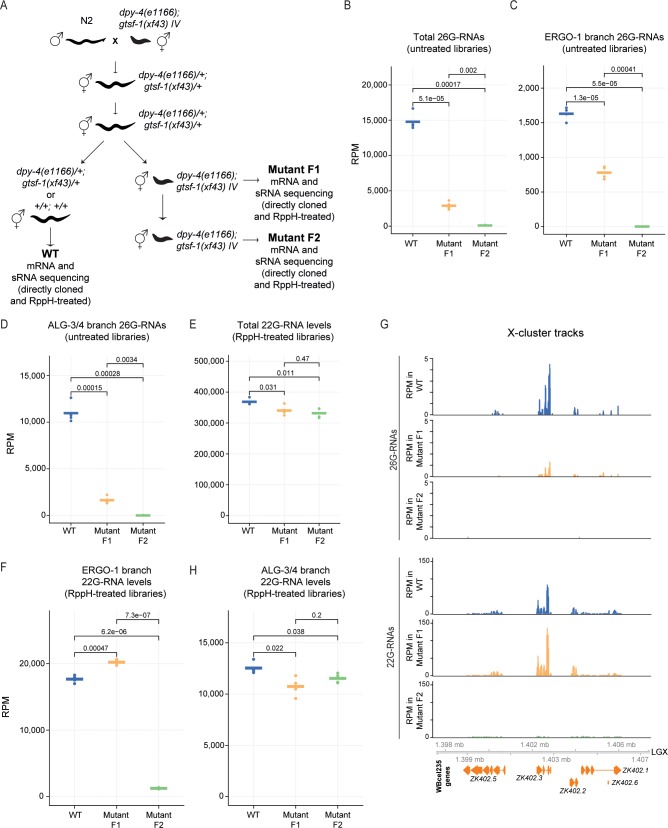
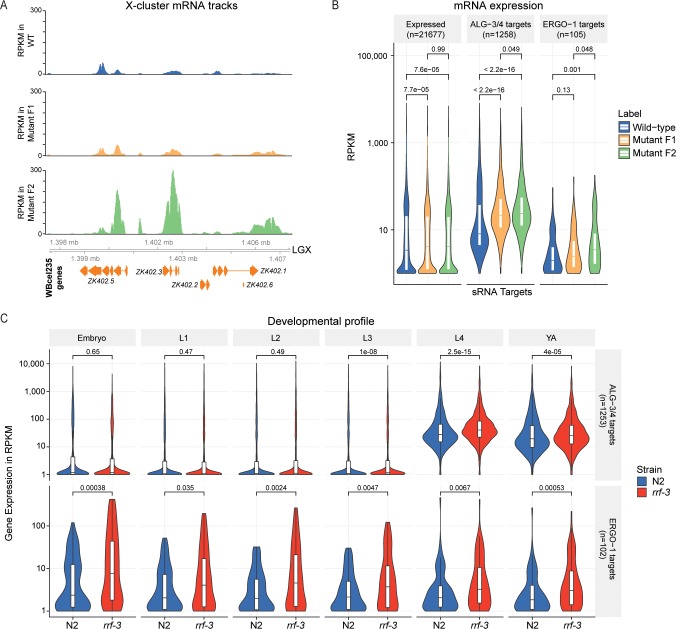
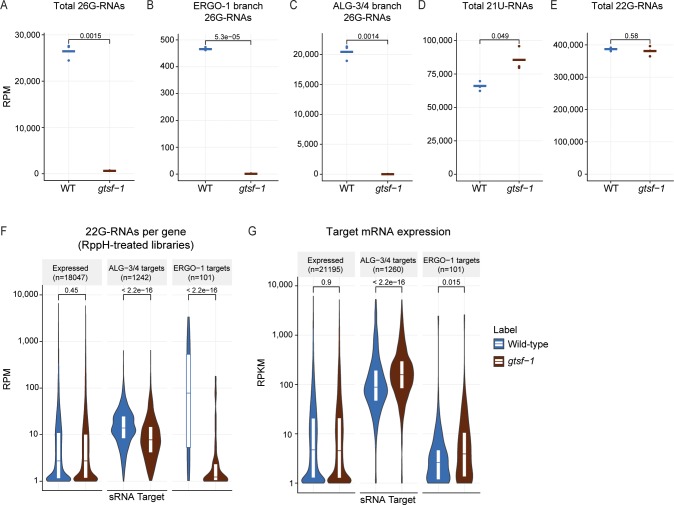
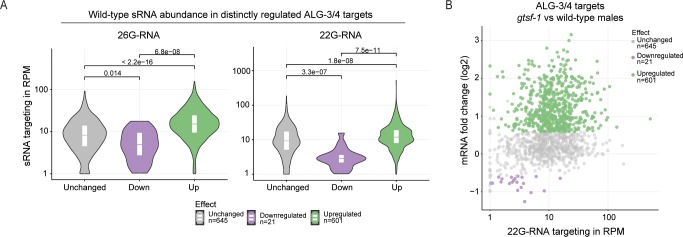
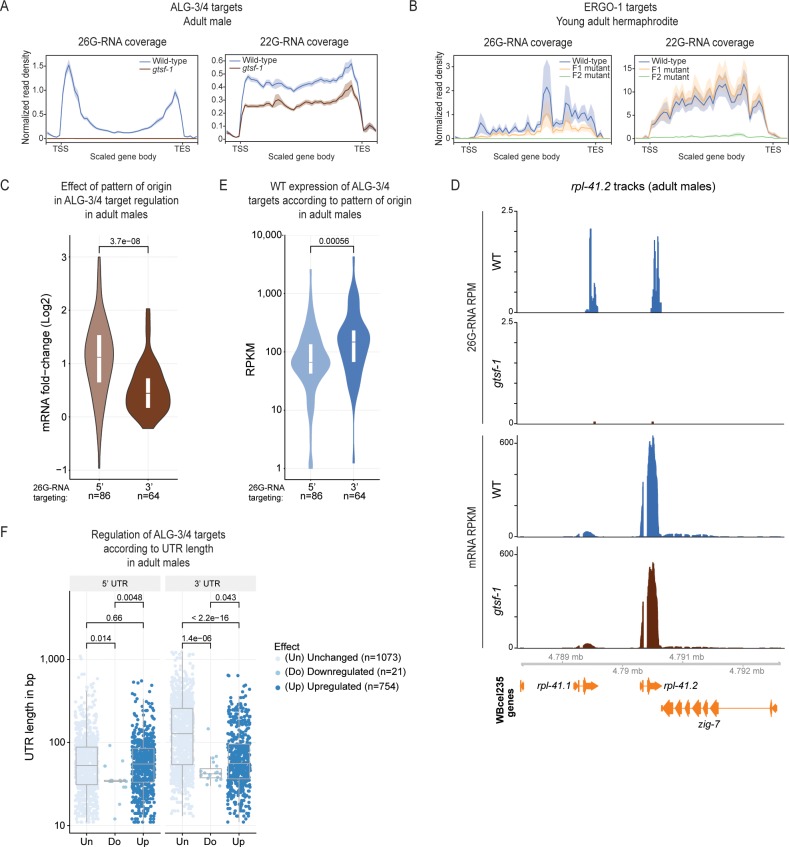
Endogenous small RNAs (sRNAs) and Argonaute proteins are ubiquitous regulators of gene expression in germline and somatic tissues. sRNA-Argonaute complexes are often expressed in gametes and are consequently inherited by the next generation upon fertilization. In Caenorhabditis elegans, 26G-RNAs are primary endogenous sRNAs that trigger the expression of downstream secondary sRNAs. Two subpopulations of 26G-RNAs exist, each of which displaying strongly compartmentalized expression: one is expressed in the spermatogenic gonad and associates with the Argonautes ALG-3/4; plus another expressed in oocytes and in embryos, which associates with the Argonaute ERGO-1. The determinants and dynamics of gene silencing elicited by 26G-RNAs are largely unknown. Here, we provide diverse new insights into these endogenous sRNA pathways of C. elegans. Using genetics and deep sequencing, we dissect a maternal effect of the ERGO-1 branch of the 26G-RNA pathway. We find that maternal primary sRNAs can trigger the production of zygotic secondary sRNAs that are able to silence targets, even in the absence of zygotic primary triggers. Thus, the interaction of maternal and zygotic sRNA populations, assures target gene silencing throughout animal development. Furthermore, we explore other facets of 26G-RNA biology related to the ALG-3/4 branch. We find that sRNA abundance, sRNA pattern of origin and the 3' UTR length of target transcripts are predictors of the regulatory outcome by the Argonautes ALG-3/4. Lastly, we provide evidence suggesting that ALG-3 and ALG-4 regulate their own mRNAs in a negative feedback loop. Altogether, we provide several new regulatory insights on the dynamics, target regulation and self-regulation of the endogenous RNAi pathways of C. elegans.
内源性小 RNA(sRNA)和 Argonaute 蛋白是生殖细胞和体细胞中基因表达的普遍调节因子。sRNA-Argonaute 复合物通常在配子中表达,并在受精时遗传给下一代。在秀丽隐杆线虫中,26G-RNAs 是触发下游次级 sRNA 表达的主要内源性 sRNA。存在两种 26G-RNA 亚群,每个亚群都表现出强烈的区室化表达:一种在精子发生性腺中表达,与 Argonautes ALG-3/4 结合;另一种在卵母细胞和胚胎中表达,与 Argonaute ERGO-1 结合。26G-RNAs 引发的基因沉默的决定因素和动力学在很大程度上是未知的。在这里,我们提供了关于秀丽隐杆线虫内源性 sRNA 途径的多种新见解。通过遗传学和深度测序,我们剖析了 ERGO-1 分支的 26G-RNA 途径的母体效应。我们发现,母本初级 sRNA 可以触发合子次级 sRNA 的产生,即使没有合子初级触发,这些 sRNA 也能够沉默靶标。因此,母本和合子 sRNA 群体的相互作用确保了整个动物发育过程中靶基因的沉默。此外,我们还探讨了与 ALG-3/4 分支相关的其他 26G-RNA 生物学方面。我们发现,sRNA 丰度、sRNA 起源模式和靶转录物的 3'UTR 长度是 Argonautes ALG-3/4 调控结果的预测因素。最后,我们提供的证据表明,ALG-3 和 ALG-4 以负反馈环的方式调节自身的 mRNA。总之,我们提供了关于秀丽隐杆线虫内源性 RNAi 途径的动态、靶标调控和自我调控的几个新的调控见解。