Department of Animal Pathology, Faculty of Veterinary Medicine, Miguel Servet, 177, 50013, Zaragoza, Spain.
UMR BIPAR, INRA, ANSES, Ecole Nationale Vétérinaire d'Alfort, Université Paris-Est, 94700, Maisons-Alfort, France.
BMC Evol Biol. 2019 Feb 13;19(1):54. doi: 10.1186/s12862-019-1379-2.
The evolutionary history of a species is frequently derived from molecular sequences, and the resulting phylogenetic trees do not include explicit functional information. Here, we aimed to assess the functional relationships among bacteria in the Spirochaetes phylum, based on the biological processes of 42,489 proteins in reference proteomes of 34 Spirochaetes species. We tested the hypothesis that the species in the genus Borrelia might be sufficiently different to warrant splitting them into two separate genera.
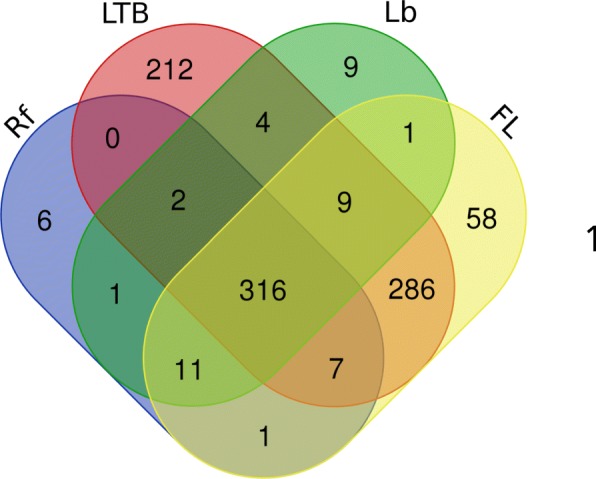
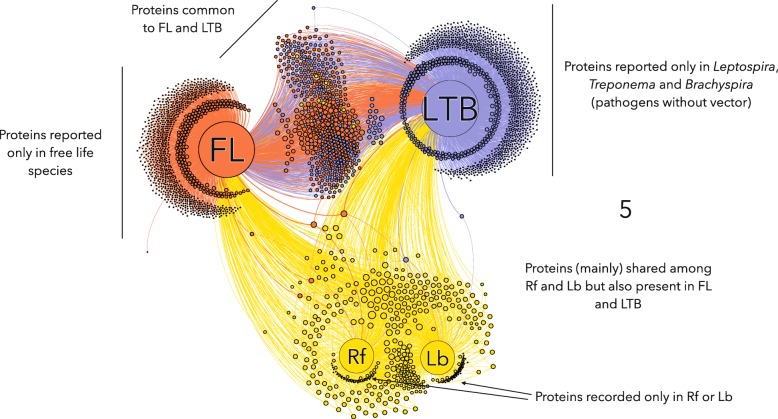
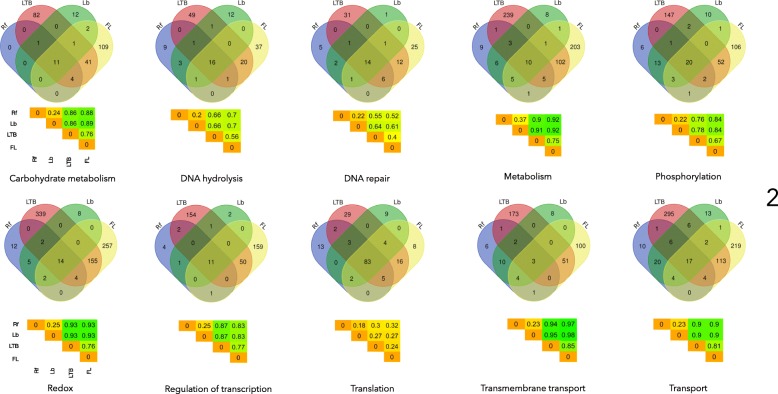
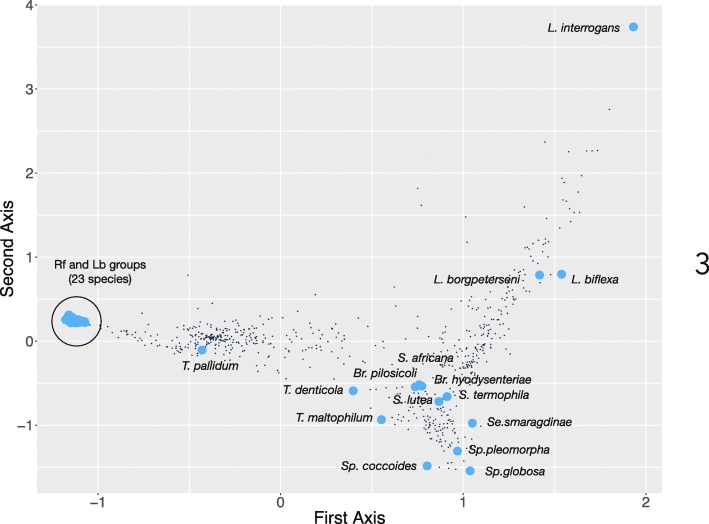
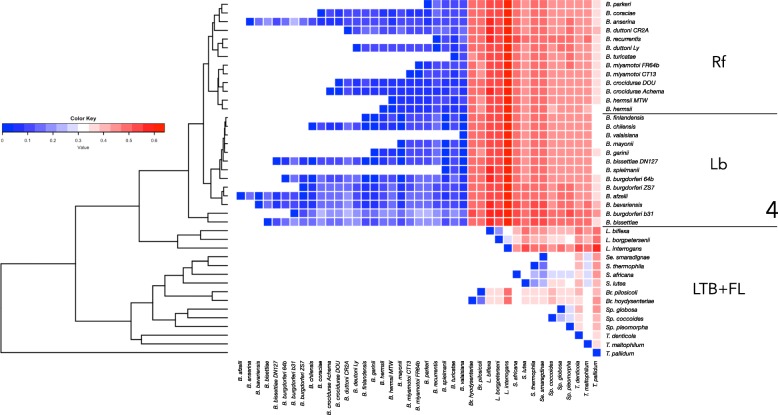
A detrended canonical analysis demonstrated that the presence/absence of biological processes among selected bacteria contained a strong phylogenetic signal, which did not separate species of Borrelia. We examined the ten biological processes in which most proteins were involved consistently. This analysis demonstrated that species in Borrelia were more similar to each other than to free-life species (Sediminispirochaeta, Spirochaeta, Sphaerochaeta) or to pathogenic species without vectors (Leptospira, Treponema, Brachyspira), which are highly divergent. A dendrogram based on the presence/absence of proteins in the reference proteomes demonstrated that distances between species of the same genus among free-life or pathogenic non-vector species were higher than the distances between the 19 species (27 strains) of Borrelia. A phyloproteomic network supported the close functional association between species of Borrelia. In the proteome of 27 strains of Borrelia, only a few proteins had evolved separately, in the relapsing fever and Lyme borreliosis groups. The most prominent Borrelia proteins and processes were a subset of those also found in free-living and non-vectored pathogenic species. In addition, the functional innovation (i.e., unique biological processes or proteins) of Borrelia was very low, compared to other genera of Spirochaetes.
We found only marginal functional differences among Borrelia species. Phyloproteomic networks that included all pairwise combinations between species, proteins, and processes were more effective than other methods for evaluating the evolutionary relationships among taxa. With the limitations of data availability, our results did not support a split of the arthropod-transmitted spirochaetes into the proposed genera, Borrelia and Borreliella.
物种的进化历史通常是从分子序列中推导出来的,而由此产生的系统发育树并不包含明确的功能信息。在这里,我们旨在根据 34 种螺旋体参考蛋白质组中的 42489 种蛋白质的生物过程,评估螺旋体门中细菌之间的功能关系。我们检验了这样一种假设,即伯氏疏螺旋体属中的物种可能存在足够的差异,值得将它们分为两个独立的属。
去趋势典范分析表明,所选细菌之间生物过程的存在/缺失包含强烈的系统发育信号,而这种信号并没有将伯氏疏螺旋体属的物种分开。我们检查了大多数蛋白质始终涉及的十个生物过程。这项分析表明,伯氏疏螺旋体属的物种彼此之间比自由生活的物种(Sediminispirochaeta、Spirochaeta、Sphaerochaeta)或无载体的致病性物种(Leptospira、Treponema、Brachyspira)更相似,后者高度分化。基于参考蛋白质组中蛋白质的存在/缺失构建的系统发育树表明,自由生活或无载体致病性非种间同种的种间距离高于 19 种(27 株)伯氏疏螺旋体种间的距离。系统发育蛋白质组网络支持伯氏疏螺旋体属种之间密切的功能关联。在 27 株伯氏疏螺旋体的蛋白质组中,只有少数蛋白质在回归热和莱姆疏螺旋体病组中分别进化。最突出的伯氏疏螺旋体蛋白和过程是在自由生活和非载体致病性物种中发现的蛋白和过程的子集。此外,与螺旋体门的其他属相比,伯氏疏螺旋体的功能创新(即独特的生物过程或蛋白质)非常低。
我们只发现伯氏疏螺旋体种之间存在很小的功能差异。包括物种、蛋白质和过程之间所有两两组合的系统发育蛋白质组网络比其他评估分类群进化关系的方法更有效。考虑到数据可用性的限制,我们的结果不支持将节肢动物传播的螺旋体分为拟议的属伯氏疏螺旋体属和伯氏疏螺旋体属。