Department of Neuroscience, University of Connecticut Medical School, Farmington, Connecticut, USA.
Department of Cell and Developmental Biology, University of Colorado School of Medicine, Aurora, Colorado, USA.
Glia. 2019 Jul;67(7):1277-1295. doi: 10.1002/glia.23602. Epub 2019 Feb 13.
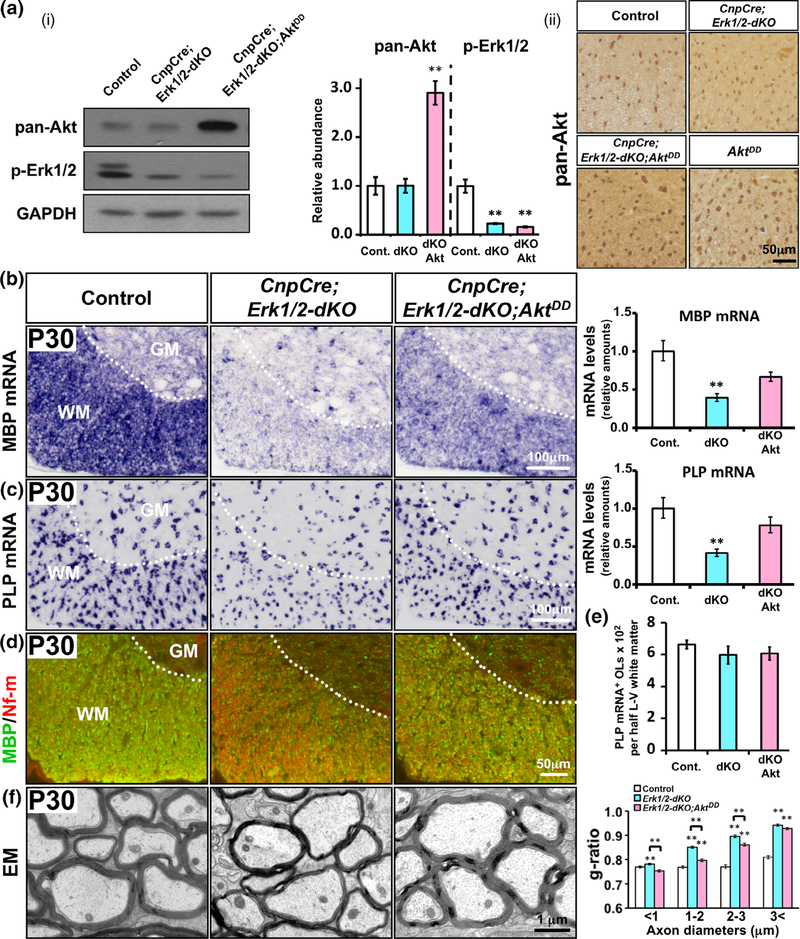
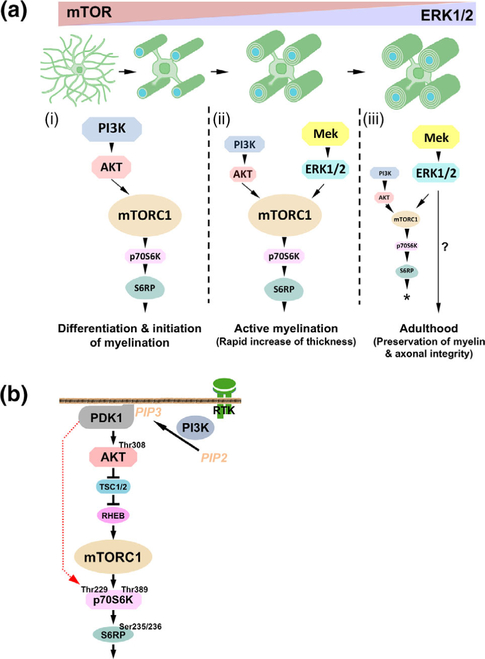
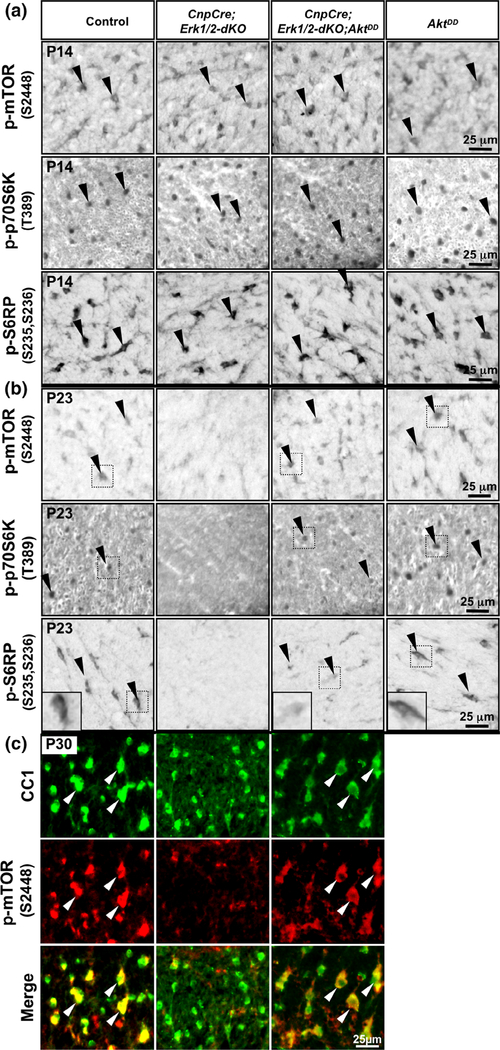
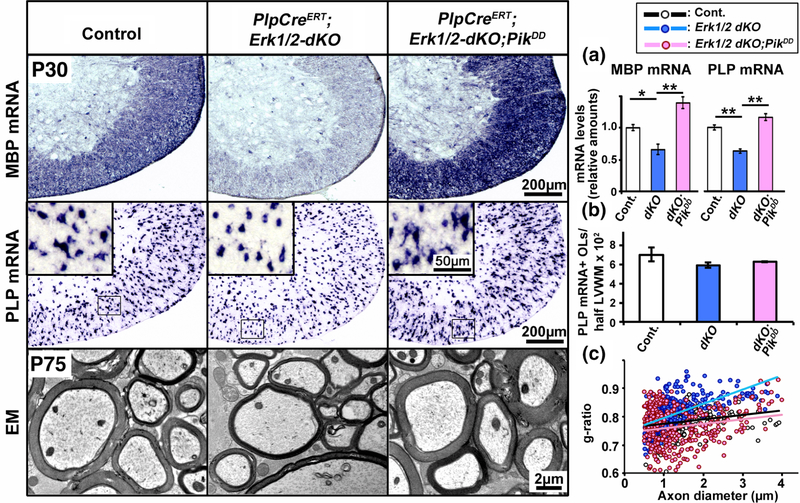
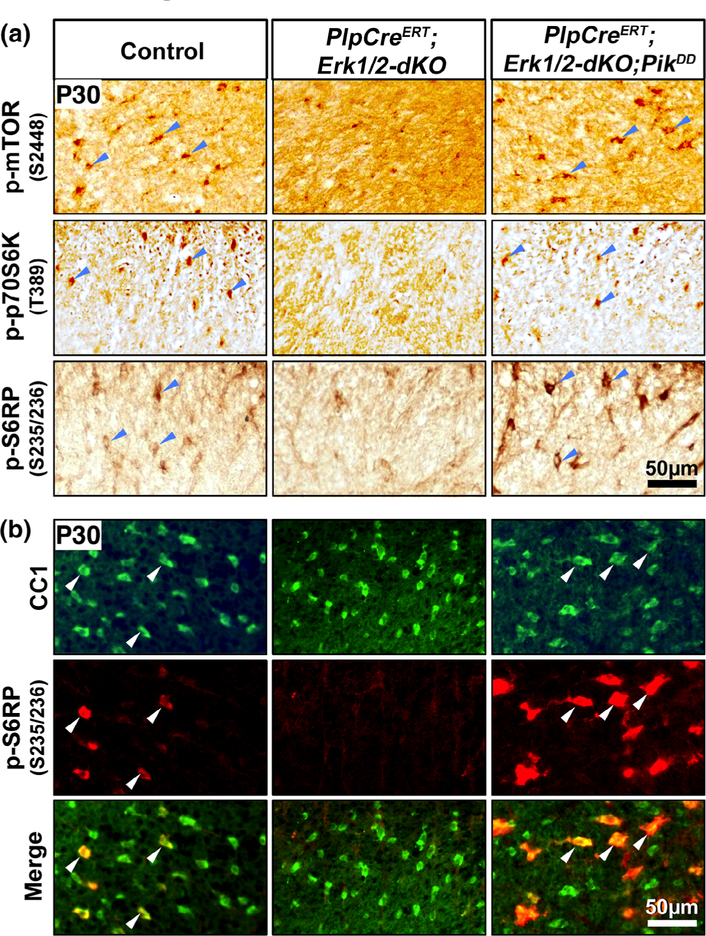
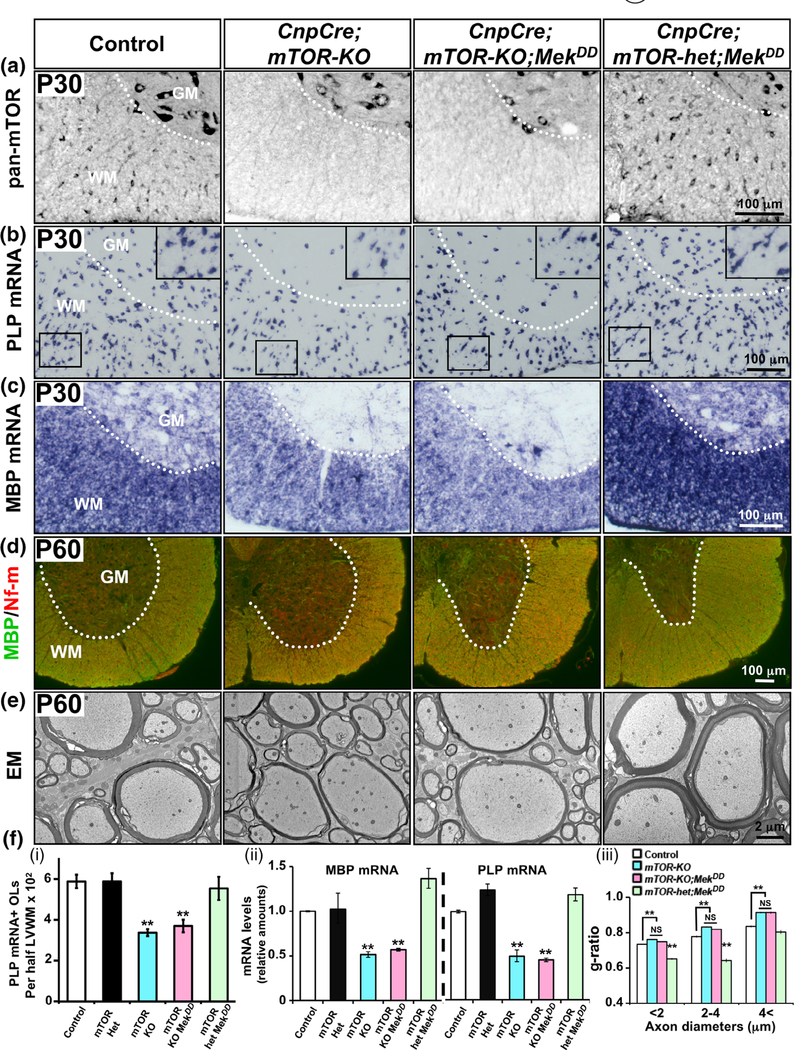
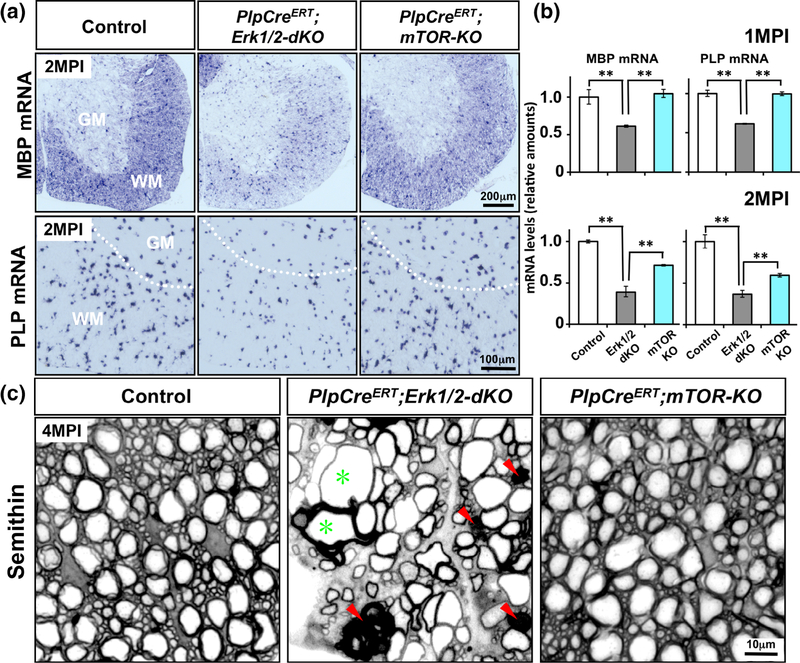
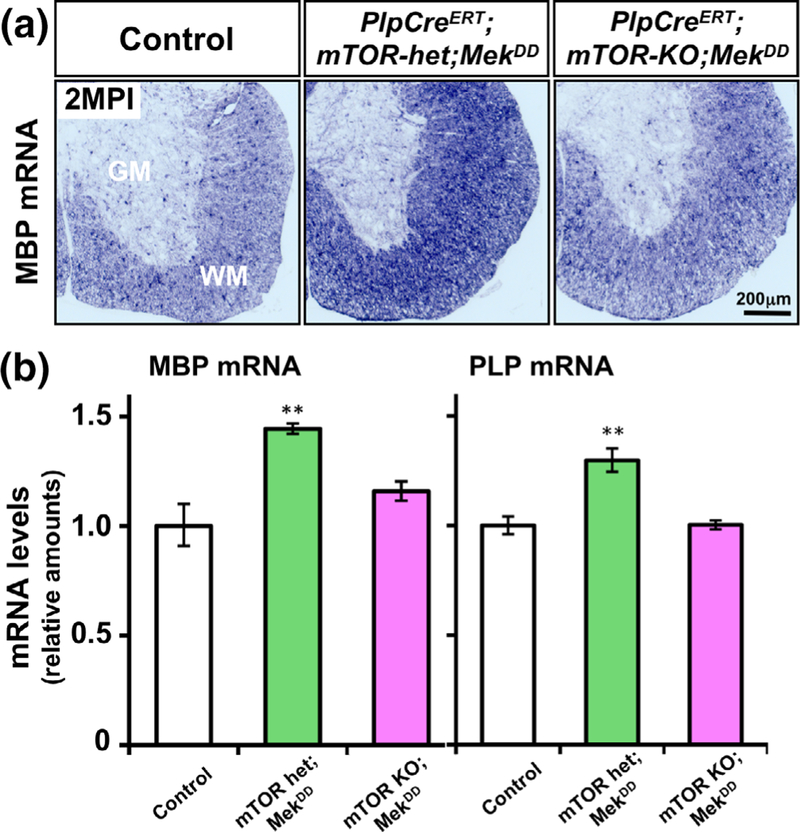
Multiple extracellular and intracellular signals regulate the functions of oligodendrocytes as they progress through the complex process of developmental myelination and then maintain a functionally intact myelin sheath throughout adult life, preserving the integrity of the axons. Recent studies suggest that Mek/ERK1/2-MAPK and PI3K/Akt/mTOR intracellular signaling pathways play important, often overlapping roles in the regulation of myelination. However, it remains poorly understood whether they function independently, sequentially, or converge using a common mechanism to facilitate oligodendrocyte differentiation, myelin growth, and maintenance. To address these questions, we analyzed multiple genetically modified mice and asked whether the deficits due to the conditional loss-of-function of ERK1/2 or mTOR could be abrogated by simultaneous constitutive activation of PI3K/Akt or Mek, respectively. From these studies, we concluded that while PI3K/Akt, not Mek/ERK1/2, plays a key role in promoting oligodendrocyte differentiation and timely initiation of myelination through mTORC1 signaling, Mek/ERK1/2-MAPK functions largely independently of mTORC1 to preserve the integrity of the myelinated axons during adulthood. However, to promote the efficient growth of the myelin sheath, these two pathways cooperate with each other converging at the level of mTORC1, both in the context of normal developmental myelination or following forced reactivation of the myelination program during adulthood. Thus, Mek/ERK1/2-MAPK and the PI3K/Akt/mTOR signaling pathways work both independently and cooperatively to maintain a finely tuned, temporally regulated balance as oligodendrocytes progress through different phases of developmental myelination into adulthood. Therapeutic strategies aimed at targeting remyelination in demyelinating diseases are expected to benefit from these findings.
多种细胞外和细胞内信号调节少突胶质细胞的功能,因为它们经历了复杂的发育髓鞘形成过程,然后在整个成年期维持功能完整的髓鞘,保持轴突的完整性。最近的研究表明, Mek/ERK1/2-MAPK 和 PI3K/Akt/mTOR 细胞内信号通路在髓鞘形成的调节中发挥重要作用,通常具有重叠作用。然而,它们是否独立、顺序或通过共同机制收敛以促进少突胶质细胞分化、髓鞘生长和维持,仍然知之甚少。为了解决这些问题,我们分析了多种基因修饰小鼠,并询问 ERK1/2 或 mTOR 的条件性功能丧失是否可以分别通过 PI3K/Akt 或 Mek 的组成型激活来消除。从这些研究中,我们得出结论,虽然 PI3K/Akt 而不是 Mek/ERK1/2 在通过 mTORC1 信号促进少突胶质细胞分化和髓鞘形成的及时启动中发挥关键作用,但 Mek/ERK1/2-MAPK 主要独立于 mTORC1 发挥作用,以在成年期保持髓鞘轴突的完整性。然而,为了促进髓鞘的有效生长,这两条途径在 mTORC1 水平上相互协作,无论是在正常发育性髓鞘形成的背景下,还是在成年期强制重新激活髓鞘形成程序的情况下。因此, Mek/ERK1/2-MAPK 和 PI3K/Akt/mTOR 信号通路独立和协作,以在少突胶质细胞经历不同的发育性髓鞘形成阶段进入成年期时维持精细调节、时间调节的平衡。针对脱髓鞘疾病中的髓鞘再生的治疗策略预计将受益于这些发现。